



♻️ Sustainable Christmas: How Swedes Reduce Waste and Save Resources During the Holidays
🎄 Eco-Friendly Christmas, the Swedish Way: What It Is and Why You’ll Notice It
Eco-friendly Christmas in Sweden is a celebration without unnecessary waste, rush, or overconsumption. Swedes try to reduce trash, save resources, and choose things that last for years. Visitors notice it quickly: less disposable stuff, more natural and practical choices. The best part is that it’s easy to join in—even on a short trip.
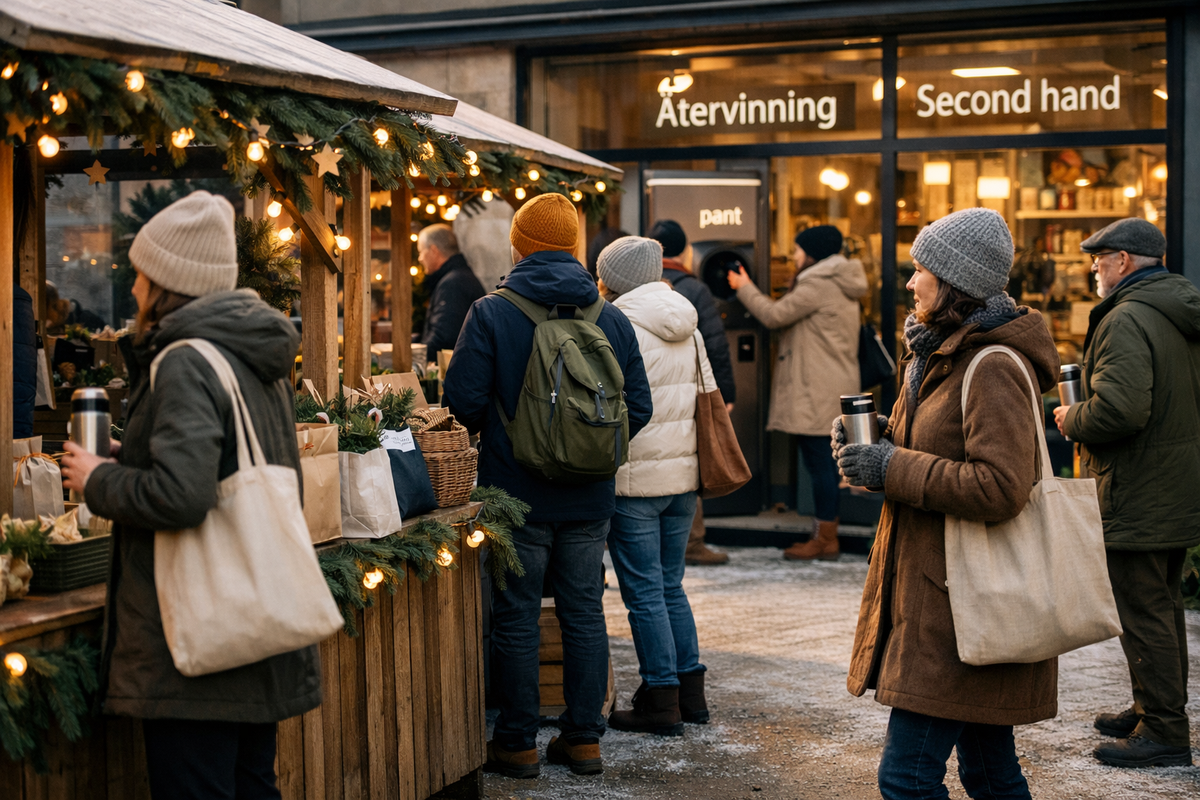
✨ How the “Green” Mindset Becomes Part of the Holiday
In Sweden, Christmas often feels calm and intentional, without piles of packaging and random impulse buys. People value “less, but better,” and you can see it in decorations, gifts, and food. You don’t need to be an expert to support this approach.
Eco-friendly habits are built into everyday life—from sorting waste to reusable options in cafés. That’s why even beginners quickly grasp the basics and don’t feel out of place. It makes traveling simpler and more pleasant.
If you’re visiting Scandinavia in winter for the first time, this mindset helps you catch the local rhythm faster. You’ll see sustainable traditions in real life, not just in theory. And you can take home a couple of habits that truly work.
♻️ Less Waste: Sorting and Recycling in Sweden During the Holiday Season
Waste sorting in Sweden is especially noticeable in December, when cities are filled with gifts and packaging. Paper, plastic, metal, glass, and food waste are often separated. Travelers don’t need to know everything perfectly—just avoid mixing clearly different materials. This simple habit immediately reduces trash and supports recycling.
🧩 How Not to Get Confused by Bins and Local Habits
The simplest rule is not to put packaging and food leftovers into the same bag if there are separate bins nearby. Hotels and apartments often provide basic sorting options. In the city, you’ll find återvinning recycling points, and they’re usually intuitive.
The pant deposit system is a practical Swedish habit that genuinely saves resources and reduces waste. You return cans and bottles to a machine and receive a receipt for a discount or refund. It’s easy to try even on a short trip, especially if you buy drinks at supermarkets.
“Holiday discipline” helps too: fewer disposable items and fewer extra plastic bags. Cities usually have plenty of bins and clear infrastructure, so you don’t need to accumulate trash. In the end, you support local practices and keep your travel routine tidier.
🎁 Gifts Without the Extra: Sustainable Ideas Swedes Actually Choose
Swedish holiday gifts often look simpler on the outside but stronger in meaning. People value usefulness, quality, and durability rather than stacks of boxes. That means fewer “dust-collector” gifts and less trash after the celebrations. For travelers, this makes it easier to choose souvenirs thoughtfully and keep luggage light.
🌿 Experiences, Second Hand, and “Things That Last”
Practical gifts are often linked to winter comfort rather than one-time holiday novelty. People are more likely to choose something well-made than many cheap items. This reduces waste and supports the idea of saving resources.
Second-hand and vintage shopping becomes especially visible in December and is seen as a normal choice. It’s easy to find unique items without overproduction and without excessive packaging. For travelers, it’s a chance to buy a souvenir with character and a story.
Experience gifts are also very “Swedish”: a museum ticket, a concert, a skating rink, a short day trip. They create almost no waste and fit travelers perfectly. And emotions usually last longer than any shiny wrapping.
- 🧣 One well-made item instead of a bundle of small stuff
- ♻️ Second hand or vintage with a story
- 🎟️ An experience: museum, concert, skating, a short trip
🎀 Wrapping and Decor: Beautiful Without Overproduction
Swedish Christmas decor often looks natural and calm, without too much plastic and glitter. People use paper, wood, candles, fir branches, and warm string lights. This style is more eco-friendly because items are used for years, not just one evening. Travelers can easily recreate it even in a rented apartment.
🕯️ Natural Materials and Reusable Choices
Instead of glossy film and plastic ribbons, people often choose paper, twine, and fabric ties. It’s easier to dispose of responsibly and nicer to hold. The result looks clean and Scandinavian-simple.
Small nature-inspired touches work best: pinecones, sprigs, dried citrus. They create atmosphere without extra shopping and without a post-holiday trash pile. For travelers, it’s also a budget-friendly way to make things feel festive.
Candles and candleholders are a key part of winter coziness, but it’s better to choose items that last. Clean, calm decor makes a space feel warmer without visual overload. In the end, you get the mood—and less waste.
🍽️ Julbord With Less Waste: How Swedes Plan Holiday Food
Julbord in Sweden can be generous, but the approach is usually calm and practical. People plan the menu in advance so they don’t buy too much and throw food away after the holidays. They choose ingredients that store well and can be used in several dishes. For travelers, this makes it easier to try seasonal food without overpaying for extras.
🥔 Seasonality, Portions, and a “Second Life” for Leftovers
In winter, the table is full of seasonal basics: root vegetables, cabbage, bread, fish, pickles. This set fits the climate and is often less resource-heavy than imported “exotics.” It also helps you taste what Swedish December truly feels like.
Swedes often watch portions: better to add more later than to throw food away. This reduces food waste and keeps the holiday simpler. For travelers, it’s a useful guideline at buffets and julbord venues.
Leftovers are usually turned into next-day meals: sandwiches, salads, soups, casseroles. It’s convenient, tasty, and saves money while traveling. If you’re staying in an apartment, this approach is especially helpful.
🧥 Mindful Winter Shopping: How to Buy “the Swedish Way” Without the Extra
Winter sales in Sweden can be active, but attitudes toward shopping are often calm. People try to choose quality and versatility rather than “one more discounted item.” This reduces waste and makes a wardrobe more practical for travel. For visitors, it helps avoid overpacking and overspending.
🛍️ Second Hand, Quality, and Calm Sales
Second-hand and charity shops are a popular option for winter finds. Sometimes it’s easier to buy something warm locally than to bring extra from home. It saves resources and gives you a chance to find something unique.
If you buy new, focus on materials and durability—not just the discount tag. In Sweden, winter functionality matters: warmth, wind protection, comfort. One well-made piece often replaces several random purchases.
Layering is a beloved Scandinavian strategy that truly works. It helps you adapt to the weather without buying “for every temperature.” The result is less spending and less waste.
🚆 Eco-Friendly Getting Around: How to Travel in Sweden at Christmas
In winter, it’s easy to get around Sweden without a car, and that often pleasantly surprises travelers. Trains and public transport help reduce your carbon footprint and simplify logistics. Short trips between towns let you see more without exhausting travel days. And walking around the city becomes part of the Christmas atmosphere.
🌨️ Trains, Public Transport, and Walks Instead of Extra Trips
A train is a comfortable option for winter travel, especially if you want to watch the scenery and relax. In cities, public transport is usually clear and tourist-friendly. That keeps your route flexible and calm.
Swedes love short day trips or weekend escapes to a nearby town. This format saves resources and leaves more time for experiences. For a first trip to Scandinavia, it’s a very convenient strategy.
On site, people often walk to lights, markets, waterfronts, and skating rinks. It’s the most eco-friendly way to explore a city and feel its rhythm. Plus, you’ll find cozy fika spots and local shops faster.
Do one trip by train or metro, then walk the rest: a market, a park, a fika café, and evening lights. This route saves time and energy while giving you more impressions. It works especially well in winter Sweden.
🧳 Traveler Checklist: How to Have an Eco-Friendly Christmas in Sweden for the First Time
You don’t need complicated rules to make your trip eco-friendly—just a couple of habits. A reusable bottle, a thermos cup, and a tote bag quickly cut down on single-use waste. At markets and cafés, it’s easier to pick options with minimal packaging. These small steps make travel cleaner, lighter, and calmer.
✅ A Mini Set of Habits That Works on Any Trip
Keep paper and deposit bottles separate, and put anything uncertain into general waste. This prevents recycling contamination and avoids problems in your accommodation. It’s especially handy when you’re always on the move.
At Christmas markets, it’s better to buy one good souvenir instead of many random small items. This saves budget and space in your suitcase. And it reduces the chance you’ll bring home things you won’t actually use.
Remember a few words: återvinning means recycling, pant is the bottle deposit return, hållbar means sustainable. This helps you read signs and feel confident. Your “green” experience then becomes a natural part of the trip.
✨ Finale: What You’ll Take Home From Sweden Besides Memories
Eco-friendly Christmas in Sweden shows that a holiday can be warm and beautiful without extra trash. You start noticing how small choices add up to a sustainable habit. On a trip, it feels especially easy because everything is compact and visible. That’s why a Christmas journey often inspires changes back home, too.
🌍 “Less, but Better” as a Holiday Souvenir
Start small: return deposit bottles, plan purchases, and reduce food waste. You don’t need perfection—consistency is enough. Within a week, you’ll already notice a difference.
Sweden is great because green solutions don’t feel complicated or forced. They’re simply part of culture and service, so they work without stress. That makes traveling calmer and more enjoyable.
If you want a winter route in Scandinavia, try starting with Sweden and a couple of simple rules. You’ll get holiday atmosphere and useful experience at the same time. And your memories will feel “lighter”—both in your mind and in your footprint.

0 comments
Log in to leave a comment