


🛍️ Preschool and School in December: Holiday Performances, Lucia, Gifts, and Holidays
🎄 December in Sweden: why it feels like “school Christmas”
December in Sweden is when even an ordinary weekday in skola and förskola starts smelling like cinnamon and candles. In many towns it gets dark early, so schools and preschools fill the day with “light” traditions—songs, lanterns, and paper stars. If you’re visiting Scandinavia for the first time, this month helps you understand local coziness without needing a guidebook lecture.
✨ Subheading: what tourists feel and what locals notice
For tourists, it’s a chance to see real everyday culture rather than a staged show. For locals, December often becomes a month of small family rituals—planning fika, concerts, and children’s performances. You start reading the season through tiny details, from candles in windows to holiday songs in supermarkets.
A simple tip is to pick travel dates that include at least one December tradition, not only markets and shop windows. Some of the most memorable moments happen in the morning, when the city is quiet and the windows already glow warmly. That’s why “school December” is perfect for a first-time Scandinavian trip.
What usually happens in December in skola and förskola
- Advent decorations and “pyssel” (crafts) almost every day
- Lucia on December 13: songs, a procession, a warm atmosphere
- Julavslutning: a calm end-of-term moment before jullov
📘 A quick beginner glossary: förskola, skola, and fritids
Swedish terms can look intimidating at first, but they’re actually logical and useful for travelers. Once you know the difference between förskola and skola, you’ll understand schedules and event notes much faster. And the word fritids explains why kids can still be at school after lessons end.
🧩 Subheading: a mini-translation that saves time
Förskola is preschool, where December is full of crafts, songs, and Advent preparation. Skola is school, where rehearsals and end-of-term moments appear as the holidays approach. Fritids is after-school care, and it’s often where calm activities and extra “pyssel” happen.
If you’re a tourist and you see these words on posters, don’t assume it’s something you can’t understand or enjoy. If you live in Scandinavia, this mini glossary helps you feel more confident in class chats and school updates. In December, a few familiar terms can turn confusing bustle into a clear story about traditions and care.
🕯️ Advent in preschool and school: crafts, decorations, and the holiday build-up
Advent in Sweden isn’t just “a calendar until Christmas,” it’s a gentle rhythm of anticipation. In preschools and schools you can see it everywhere, from paper stars to daily song practice. For travelers, it becomes a perfect background mood because the whole city feels tuned to warm light.
🎨 Subheading: pyssel, calendars, and small seasonal tastes
You’ll hear the word pyssel a lot, and it simply means easy crafts with paper, fabric, and natural materials. Children make window decorations, garlands, and cards, while adults keep the days calm and unhurried. The result is a December that feels homey even in big cities.
If it’s your first Scandinavia trip, plan one slow “atmosphere day” with a walk and a relaxed fika. Seasonal sweets are easy to find in cafés, especially in central areas and near busy transit spots. This is also a great month for photos, because lights and candles make grey weather look magical.
Advent mood: a mini checklist for your trip
- Stop for fika and try a seasonal pastry
- Catch the evening lights and winter window displays
- Plan one calm morning with no strict timing
👑 Lucia on December 13: a procession, songs, and the brightest moment of the season
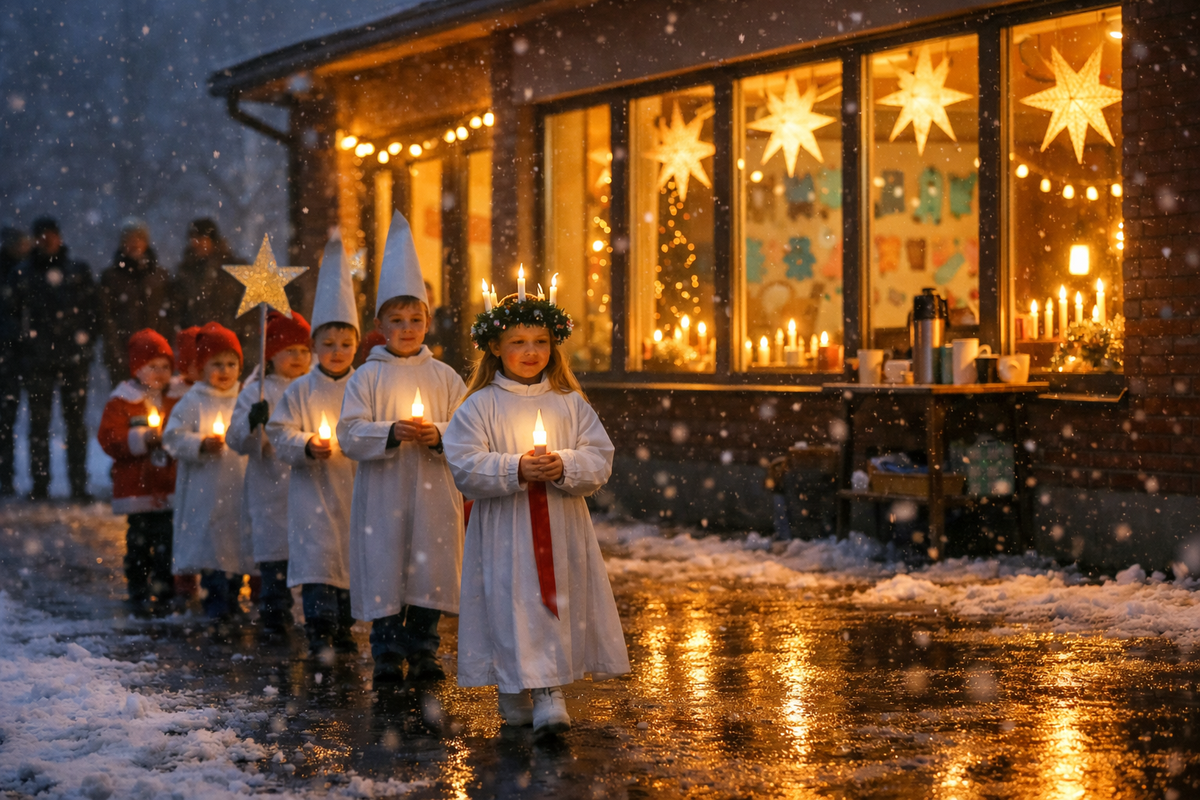
Lucia in Sweden is the tradition many people plan a whole trip around. It happens on December 13, and the magic is not about scale but about quiet voices, songs, and soft light. Even if you know nothing about it, the feeling is instantly understandable.
🎶 Subheading: where to watch Lucia and how to feel comfortable
You’ll often find luciatåg in churches, cultural venues, big public spaces, and sometimes as part of city events. As a tourist, it’s enough to stand slightly to the side and never block the walkway, because that’s the respectful local norm. Dress in warm layers, since waiting outside before a performance can take longer than expected.
For families, Lucia is a gentle way to experience Scandinavian winter without loud attractions. For locals, it also organizes the month and makes the season feel calmer. For first-time visitors, it becomes a natural anchor point for building a cozy city day around one meaningful event.
Where it usually happens
- churches and concert halls
- museums and city squares
- school and neighborhood events
Tourist etiquette
- arrive a bit early
- don’t block the procession route
- avoid flash photography if filming is allowed
🎤 School performances and julavslutning: how the term ends
In Sweden, December often ends with julavslutning, and it feels more like a warm seasonal wrap-up than a loud show. The format is usually simple: a few songs, kind words, and quiet pride. For newcomers, it’s a clear example of how Scandinavia values small things done sincerely.
🕊️ Subheading: why it’s so calm and how to read the atmosphere
Many schools aim to be respectful of different families, so the event is usually neutral and focused on tradition rather than strict rules. Sometimes there are holiday songs, sometimes short readings, and sometimes a candle-lit quiet moment. It stays gentle and easy to follow even if you don’t know the cultural background.
Tourists should know that many school events are for parents and guardians, and that’s completely normal. Still, the spirit of julavslutning spreads into the city through concerts, window displays, and winter lighting. If you live in Scandinavia, December is a good time to check schedules early and prepare without last-minute stress.
Julavslutning usually looks like this
🎁 Gifts and julklappar: what’s common in preschool and school
The word julklappar appears a lot in December, but in Swedish schools it usually means something small and thoughtful. Gifts for children are often simple, and exchanges follow rules so nobody feels uncomfortable. This matters to travelers because Scandinavian culture tends to prefer equality and calm.
🌿 Subheading: what’s appropriate and how not to overdo it
If a group does a gift exchange, there is often a small budget limit, and it keeps the mood friendly. For teachers and preschool staff, a card, a tiny token, or something “warm and simple” is more normal than a pricey present. The best strategy is to think about practicality and kindness, not the price tag.
Tourists traveling with kids can keep a couple of universal ideas ready so it’s easy to adapt. Residents usually benefit from checking the class chat early to avoid unnecessary shopping. In December, that saves both money and mental energy, which makes the season feel lighter.
Small julklappar that are usually appropriate
Tip: an expensive gift can feel awkward, while a small one feels kind and pressure-free.
🗓️ Jullov: how school holidays change travel and city life
Jullov is the Christmas school break, and the city rhythm changes noticeably around it. You’ll see more families out and about, and popular places may require a bit more planning. If you’re a tourist, it helps to think logistics through early, because December in Scandinavia rewards calm pacing and early bookings.
🧭 Subheading: practical planning without the stress
During the break, many after-school activities slow down, while daytime museum and park programs often become more family-focused. That’s great for travelers with children, because more daytime events and workshops appear. It’s also good for residents, because short winter trips become easier without the usual school routine.
A helpful approach is to plan in two layers: “must-do” and “if we feel like it.” The must-do layer is transport, accommodation, and one seasonal anchor like Lucia or a julmarknad visit. The flexible layer is walks, fika, and the slow moments that make Sweden feel real in December.
Jullov planning: 3 steps for a calm trip
🧳 A 1–3 day mini-guide: how to “catch” December Sweden
To make December Sweden unforgettable, you don’t need to do everything, you just need the right rhythm. Ideally you combine one bright seasonal anchor like Lucia with warm everyday city life and a relaxed fika. That way the trip feels truly Scandinavian instead of exhausting.
🚶♀️ Subheading: ready-to-use scenarios you can adapt
For a one-day plan, choose the city center, a julmarknad, and an evening walk with winter lights. For two days, add a museum, an ice rink, or a family-friendly activity so you alternate cold streets and warm indoors. For three days, include a short trip outside the city to see winter landscapes, then return for cozy city evenings.
If this is your first time in Scandinavia, keep clothing simple and focus on layers plus shoes that handle wet snow. Gloves and a hat matter more than people expect, because wind can ruin comfort quickly. Also plan small pauses, because short daylight is best enjoyed slowly, not as a sprint.
Itineraries for 1–3 days
1 day: the “seasonal minimum”
Walk in the center, visit a julmarknad, and end with an evening fika. If the schedule works, add Lucia or a small concert. Leave time for a warm mid-day pause.
2 days: family-friendly comfort
Day 1 is for city lights, day 2 is for a museum, an ice rink, or a family activity. Alternate outdoor time with warm breaks so kids don’t crash. Finish with a short evening walk and early rest.
3 days: city + winter landscape
Add a short trip outside the city for quiet snow and winter scenery. Return to the city for warmth, window displays, and a calmer evening pace. This way you get both variety and that soft Swedish December feeling.

0 comments
Log in to leave a comment