



🍪 Christmas Baking: Lussebullar, Pepparkakor, and Other Winter Sweets
🎄Introduction: why Christmas baking in Sweden is part of the travel experience
Swedish winter smells like cinnamon, ginger, and saffron, and you can feel it almost everywhere you go. In December, baking becomes a “route” just like museums, markets, and city-center walks. Even if it’s your first time in Scandinavia, flavors are the easiest way to understand the local coziness. And it’s also a great way to warm up and take a break without rushing.
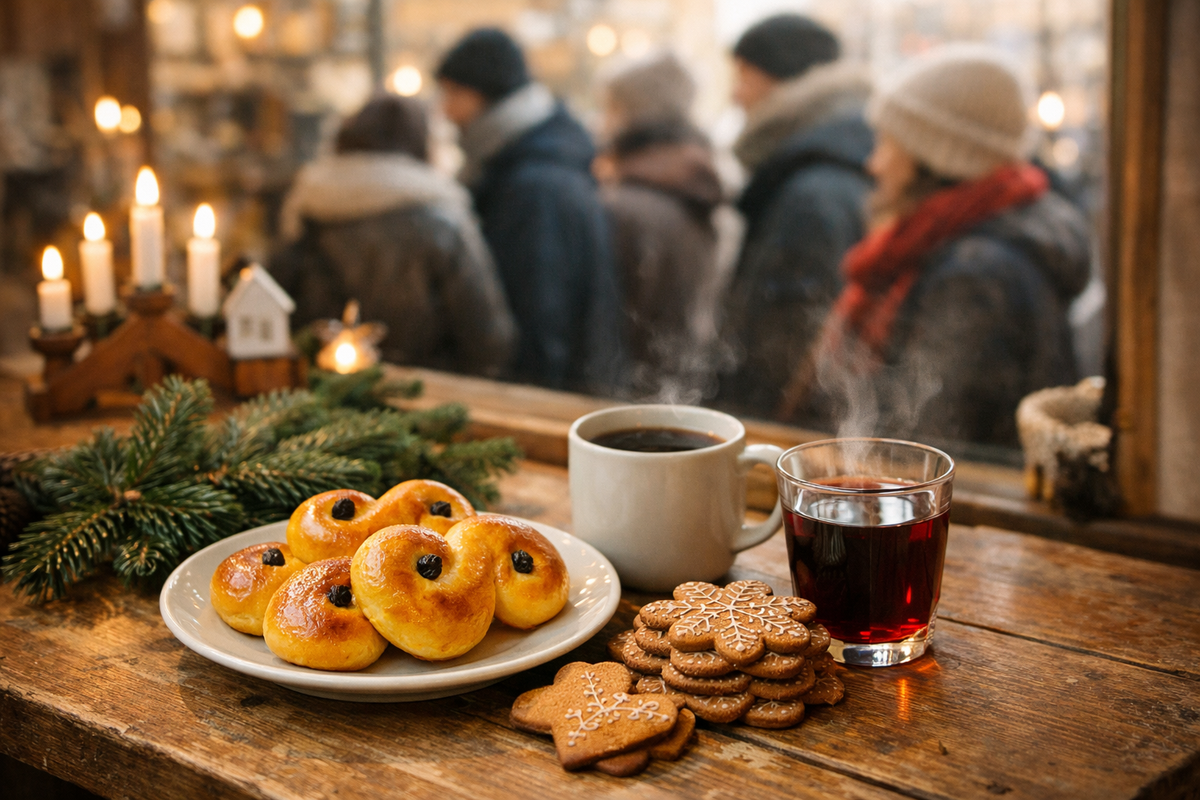
✨ Subheading: A taste that helps you “understand Sweden”
Christmas baking in Sweden isn’t just dessert — it’s a small ritual. People step into a bakery, grab a bun and coffee, and the day instantly feels calmer. For a traveler, it’s a quick way to “sync” with the city’s mood.
The best part is that it’s all very accessible and easy even without knowing the language. You’ll recognize familiar shapes in shop windows, and staff often help with gestures and a smile. Moments like these matter most in winter, when it gets dark early.
If you want a compact plan, start with the two biggest seasonal hits. That’s lussebullar and pepparkakor, and then you can add one or two more sweets depending on your mood. This way you get maximum impressions without overload.
In December in Sweden, Christmas baking is part of everyday fika and the city’s seasonal mood.
Start with lussebullar and pepparkakor, then add 1–2 seasonal items.
The best format is to taste in different places: a bakery, a supermarket, and a café.
🕯️Lussebullar: saffron buns for St. Lucia
Lussebullar are the “golden” taste of December, easy to recognize by their color and aroma. These buns often become a traveler’s first encounter with Swedish Christmas traditions. They’re convenient to try on the go, but even better in a warm café with a cup of coffee. And yes — even one bun can make a walk feel more festive.
🌟 Subheading: Saffron, softness, and the famous S-shape
Lussebullar are usually S-shaped, with a rich yellow color thanks to saffron. The taste is soft and creamy, sometimes with raisins inside. It’s a classic Swedish Christmas pastry that makes you want to recreate it at home.
The buns are closely tied to the St. Lucia season, but in practice they’re sold throughout most of December. You’ll find them in bakeries, cafés, and supermarkets — both individually and in packs. That’s convenient for travel because you don’t have to hunt for a “special” spot.
For the first time, try two versions: fresh from a bakery and packaged from a store. That way you’ll learn what you value more — aroma and fluffiness, or price and practicality. And if you don’t like raisins, look for versions without them.
🕯️ Mini-checklist: how to choose lussebullar
- Choose buns that feel soft and springy, without dry edges.
- Don’t like raisins? Pick a version without them or ask for “utan russin”.
- For the best first impression, go for a fresh bun + coffee or glögg.
🍪 Pepparkakor: gingerbread cookies that “crunch like Christmas”
Pepparkakor are a fast way to add Christmas to any day, even if you’re just out for a walk. People love them for their thinness, crunch, and bright aroma of spices. They’re one of the most popular “edible souvenirs” in Sweden. And they’re perfect if you don’t want a dessert that’s overly sweet.
🎁 Subheading: Spices, traditions, and a little wish-making game
Pepparkakor are usually thin, light, and very fragrant. Their flavor is built around cinnamon, ginger, and cloves, so they instantly smell like winter. They’re easy to carry while traveling because they don’t require any “special conditions.”
There’s a simple festive tradition: place a cookie on your palm and press to break it in one go. If it splits into three pieces, you can make a wish and consider it a lucky sign. These small games are great for atmosphere, especially when traveling with friends.
You’ll find classic rounds, shaped cookies, and kits for building gingerbread houses. For a first try, grab a small pack and compare different brands — they really do taste different. And if you want a cozy evening, a decorating kit turns an ordinary day into a Christmas one.
☕ Winter fika: how sweets become a ritual
Fika is a word you’ll hear in Stockholm, in small towns, and even at local workplaces. It’s not only about coffee — it’s about a pause, warmth, and connection. For travelers, fika is the easiest built-in rest during a busy itinerary. And in winter it’s especially pleasant, because it helps you stay warm and slow down.
🧣 Subheading: A warm stop between walks and shopping
Fika usually looks simple: a drink and something sweet on the side. But the point is to stop, breathe, and feel the moment. It makes travel gentler and less exhausting.
Plan fika as part of your walk, not as a random accident. Ideally, take a fika break every 2–3 hours, especially if you’re walking a lot. That way you’ll warm up and still have time to taste a few seasonal sweets.
If you’re with others, order different items and share. It helps you try more without overspending. And it’s also the easiest way to find your favorite flavor pairing.
Coffee or tea + one dessert. In winter, many people choose warm glögg.
Take fika every 2–3 hours. It’s a “warm stop” during winter walks.
Pick different sweets as a group and share. It’s the fastest way to find favorites.
🎁 Other winter sweets worth hunting down
Beyond buns and gingerbread, Swedish December has a whole “second line” of tasty finds. You’ll spot them at markets, in supermarkets, and in small bakeries. It’s a great way to diversify your tasting without complicated planning. And often these little extras become personal favorites.
🍬 Subheading: Knäck, risgrynsgröt, and seasonal treats
Knäck are caramel candies that look small but taste intensely rich. They’re sweet, sometimes with nuts, and pair perfectly with coffee. They also make great gifts because they’re often packaged nicely.
Risgrynsgröt is warm rice porridge with cinnamon, and it feels like a homemade winter dessert. It’s especially comforting after a cold walk when you’re tired and chilled. For first-time visitors, it’s one of the most approachable “Swedish tastes.”
Julmust is a seasonal drink many people associate directly with Christmas. It’s not baking, but it pairs wonderfully with gingerbread and caramel if you want a full “holiday flavor set.” Try it at least once to understand why locals love it so much.
Add 1–2 items to lussebullar and pepparkakor — and you’ll have a full winter taste of Sweden.
🛍️ Where to taste and what to bring home
The key is not to search for the one “perfect” place, because in Sweden it’s good in many formats. Bakeries give you the emotion of freshness, supermarkets give you accessibility, and cafés give you the fika atmosphere. If you’re visiting for a short time, this approach saves both energy and time. And it also helps you build a tasty souvenir set without overspending.
🧺 Subheading: Bakery, supermarket, and market — how to split the roles
A bakery is best for a first impression. Pastries there are usually softer, more fragrant, and especially tempting. It’s the ideal stop in the morning or in the middle of a walk.
A supermarket is the “fast and easy” option. It’s great for tasting sets, seasonal packs, and snacks for the road. For travelers, it’s a comfortable way to compare different brands without hunting around town.
For gifts, choose things that travel well. A tin of pepparkakor, gingerbread spices, and packaged knäck usually survive transport perfectly. If you’re bringing fresh pastries, buy them closer to departure.
✅ Practical tips for travelers: how to choose the “best”
Even if you don’t want to dive into details, you can build an ideal tasting plan with a simple scenario. Sweden has plenty of seasonal packs and clear product names, so it’s easy to navigate. The main thing is not trying to taste everything in one day. It’s much nicer to stretch your “sweet introduction” across several walks.
🔍 Subheading: A simple, no-stress, no-overspending algorithm
Start with the classics and note your impressions. Get lussebullar and pepparkakor, try them with coffee, and notice what you like more. After that, your choices become much more intentional.
Look for the key words on packages — they really help. Saffran usually points to saffron baking, and pepparkakor means gingerbread cookies. That makes shopping quick even without the language.
Try small portions and share if you’re not traveling alone. This way you can compare more flavors without overdoing the sugar. And always leave room for a spontaneous discovery in a bakery window.
- Classics: lussebullar + pepparkakor.
- Fika: coffee or glögg in a café.
- Compare: bakery vs supermarket.
- Souvenir: a tin of gingerbread + knäck.
✨ Finale: a small sweet route through winter Scandinavia
To feel Sweden in winter, you don’t have to build complicated plans or chase endless lists. Sometimes a couple of stops a day and one cozy fika are enough for the city to “open up.” Sweets make the trip warmer and more personal. And that’s exactly how the northern winter magic is born — the kind people travel here for.
🗺️ Subheading: 2–3 stops you can easily repeat
Start your morning with a bakery and one saffron bun. Then take a walk and step into a café for fika to compare a different dessert. This rhythm helps you avoid getting tired or cold.
Midday, add a small “for the road” purchase. It can be a tin of pepparkakor or a pack of knäck you can open in the evening. That way the atmosphere continues even in your hotel or at a friend’s home.
In the evening, leave time for a calm moment without rushing. Gingerbread, coffee, and warm light — and the day feels complete. The trip becomes not only about places, but also about sensations.

0 comments
Log in to leave a comment