


🧸 What NOT to Give in Sweden: Potential Cultural Pitfalls
🎁 What NOT to Gift in Sweden: How to Avoid Awkward Moments
In Sweden, a gift is a sign of thoughtfulness, not a competition in generosity.
People value a calm tone, respect for boundaries, and the idea of lagom—“just enough.”
If you’re visiting Scandinavia for the first time, a few simple rules will help you avoid cultural missteps.
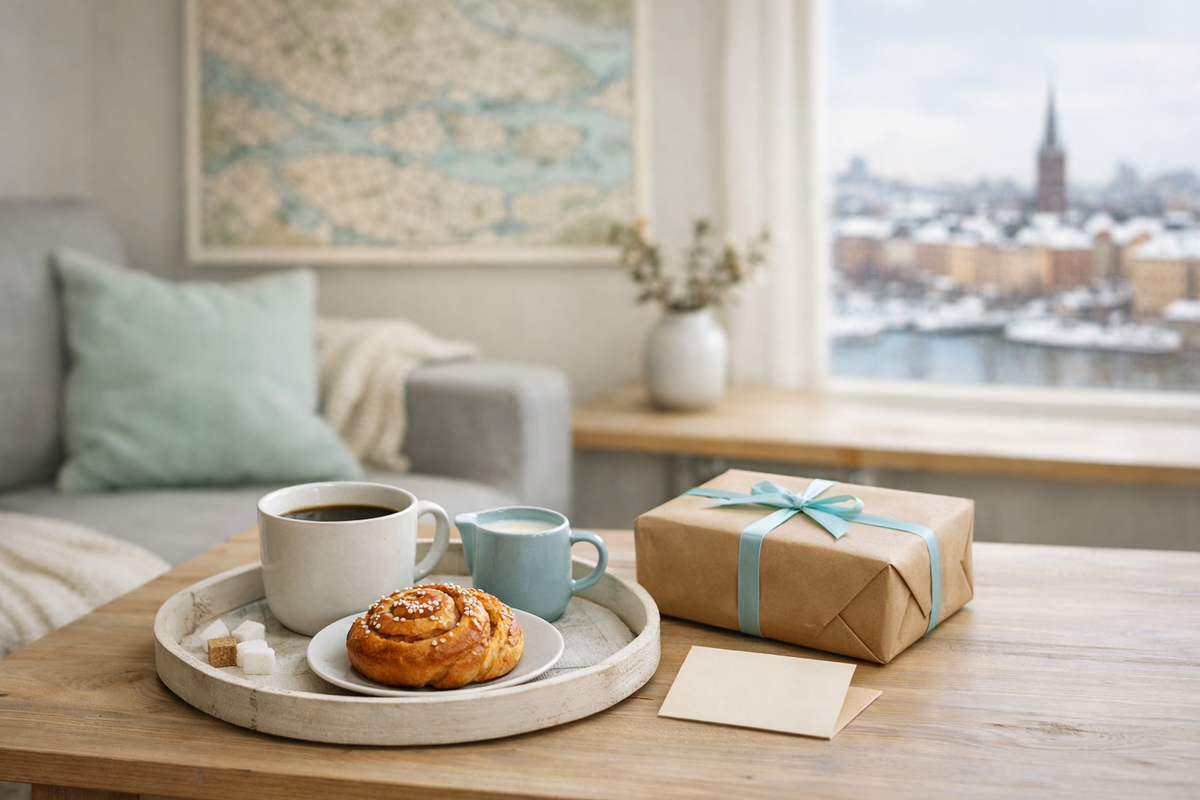
🧭 Why It’s Easy to Miss the Mark
Swedes often avoid situations where someone feels they must “return the favor.”
A very flashy gift can create pressure and awkwardness.
That’s why comfort matters more than a wow effect.
Context is everything: a dinner invitation, a fika meet-up, a birthday, or an office setting.
The same gift can feel lovely in a family circle and strange for acquaintances.
Understanding the situation is half the success.
This article gives quick examples of what to avoid and what to choose instead.
It’s useful for tourists and for people living in Sweden too.
At the end, you’ll find a mini checklist to quickly test any idea.
Gifts in Sweden are about tact and “lagom”.
Save this mini note: less show, more respect for boundaries.
🚫 Too Expensive or Too Personal
The most common mistake is giving “too much” to someone you’re not close to.
Instead of joy, it can create tension and a feeling they must match it.
The more formal the relationship, the safer it is to keep things simple and neutral.
🎯 Why an Expensive Gift Can Feel Uncomfortable
In Sweden, expensive gifts can be read as pressure or a status statement.
That can disrupt the sense of equality that people value strongly.
So electronics, jewelry, and big brands—without being asked—are risky.
Overly personal gifts can also feel like a hint.
Perfume, cosmetics, and clothing may sound like judging someone’s appearance or taste.
Even with good intentions, it can make people uncomfortable.
It’s safer to choose items that don’t require “explaining.”
A small, thoughtful gesture can feel warmer than a pricey object.
In Scandinavia, people often value the thought more than the price tag.
⚠️ The “lagom” rule
- Don’t apply pressure with price or scale.
- Avoid gifts that hint at someone’s appearance.
- Choose neutral, useful items.
💸 Cash and Gift Cards: Watch the Subtext
Cash feels practical, but it can come across as too blunt.
Sometimes it reads like “I didn’t think of anything” or “I’m buying my way out.”
Closeness and occasion matter a lot.
🪙 Why Cash Often Isn’t the Best Choice
For acquaintances and coworkers, cash can feel overly formal.
When visiting someone’s home, it may even feel like paying for the invitation.
That’s not the impression you want to leave.
Gift cards work when you truly know the person’s preferences.
But a generic gift card can look impersonal.
Especially if your relationship is still new.
A small item or a shared experience can feel much warmer.
Coffee, dessert, a museum ticket, or a walk together reduces pressure.
That way you give attention, not obligation.
💡 A softer alternative to cash
Go for “small + warm”: a card and something for fika, or a coffee together.
🍷 Alcohol and Food: “Universal” Isn’t Always Safe
Food and drinks seem like a safe bet, but context matters in Scandinavia.
People may have strong preferences, allergies, or ethical choices.
So it’s best to avoid anything that puts the recipient on the spot.
🥂 When Alcohol Can Be a Misstep
If you don’t know whether someone drinks, don’t make alcohol the main gift.
Even excellent wine can feel awkward if a person doesn’t drink.
This is especially risky at a first meeting.
Food can be tricky too because of allergies and diets.
Sweden has many vegans and people who carefully read ingredients.
Exotic “surprise” items are best saved for close friends.
The safest choice is simple sweets for fika.
Chocolate, cookies, and straightforward pastries usually go over well.
It feels like care, not a test.
🍪 Quick food check before you buy
🏠 Home Gifts That Can Sound Like Criticism
Home is a very personal space, and Swedes treat it with care.
Some “useful” gifts can easily turn into a hint.
It’s best to avoid anything that can be read as judging someone’s home life.
🧼 What Can Feel Double-Edged
Cleaning kits, air fresheners, and “powerful” detergents can feel like a comment.
Even if you meant well, it may sound like “your place needs fixing.”
That subtext is usually unwelcome.
Strong scents are another risk because of sensitivities and allergies.
Scented candles and diffusers are best only for people you know well.
Otherwise they can become items someone feels obliged to keep.
Decor can also be tricky since Scandinavian interiors are often minimalist.
Bright or bulky items may not fit and create the “where do I put this?” problem.
It’s safer to keep things compact, neutral, and functional.
🏡 A subtle line
Avoid gifts that may hint at cleanliness, smell, or “how things should be” at home.
🌿 Living Gifts: Flowers, Plants, and Why “A Pet” Is Almost Always No
A living gift looks sweet, but it always comes with care and time.
In Sweden, comfort and respect for household rules matter a lot.
So don’t gift something that turns into an obligation.
💐 Flowers and Plants: How Not to Miss the Mark
Flowers can be a great choice if the bouquet is small and neutral.
Very formal arrangements can feel too much for a casual visit.
Also, some people are sensitive to pollen and strong fragrance.
Plants are best kept low-maintenance and compact.
That way no one worries about “failing” to care for it.
And many homes have pets, so plant safety can matter.
Pets are almost never a good gift.
That’s a big responsibility and must be a shared, conscious decision.
Even a “cute surprise” can become a serious problem.
🌱 Best “living” option
A small low-maintenance plant, or a modest bouquet with no strong scent.
🧸 Gifts for Kids and Families: “Cute” Doesn’t Always Mean “Welcome”
Many Scandinavian families prefer calm, developmental gifts.
Noisy toys or “aggressive” themes may not match the parents’ approach.
To avoid mistakes, go for gentle, universal choices.
🔊 What Can Become a Problem
Toys that beep loudly and flash can feel stressful at home.
It can turn into constant noise rather than a joyful gift.
Parents may not be thrilled even if the child is excited.
Clothes and shoes are tricky because of sizes and style preferences.
Even high-quality items can miss the mark and feel awkward.
Families then feel obliged to thank you for something they can’t use.
Safer choices support creativity and shared time.
Books, puzzles, and art kits usually work really well.
They fit nicely into Scandinavian family culture.
🎨 Safe ideas for kids
🧑💼 Coworkers and Acquaintances: Office Gift Etiquette in Sweden
Swedish workplace culture values boundaries and equal treatment.
That’s why office gifts tend to be small, neutral, and low pressure.
The more formal the relationship, the simpler the gesture should be.
🎭 What to Avoid at Work
Overly personal gifts can feel like crossing a line.
Perfume, jewelry, and clothing are usually for close friends, not coworkers.
Even a nice gift can create discomfort.
“Joke gifts” are risky because humor varies widely.
What you find harmless, someone else may find insulting.
In an office setting, it’s best not to gamble.
The safest approach is something shareable.
Treats for fika feel natural and friendly.
You support the team vibe without awkwardness.
☕ The office “safe gift”
Bring something for fika for everyone: small, neutral, friendly, no subtext.
✅ Safe Gifts: What to Choose Instead
When in doubt, pick a universal, easy-to-accept format.
In Sweden, people value thoughtfulness without show or status.
Here are options that usually feel warm and appropriate.
☕ Small, Friendly Ideas
Classic choices include tea, coffee, chocolate, cookies, and small sweets.
They work for hosts, friends, acquaintances, and coworkers.
They also fit naturally into fika culture.
Souvenirs are best when practical and compact.
Choose something usable rather than a big decorative item.
That respects people’s space and style.
Experiences can feel even better than objects.
A coffee together or a simple walk can be surprisingly meaningful.
It also fits the travel spirit of sharing time, not things.
✅ Three low-risk categories
- ☕ For fika: coffee, tea, chocolate, cookies
- 📝 A card: warm words, no pressure
- 🎟️ An experience: coffee, a walk, a museum
🧭 Mini Checklist Before You Buy
A one-minute reality check can save you from awkward moments.
This is especially helpful if you’re new to Sweden or meeting locals for the first time.
Use it to quickly judge whether your idea is truly appropriate.
✅ Five Questions That Prevent Missteps
Does the gift create pressure or a feeling of debt.
Could it hint at appearance, habits, or someone’s home being “wrong.”
Is the price level right for the occasion and relationship.
Could it clash with diet, allergies, or personal principles.
Does it demand care, storage space, or ongoing responsibility.
Will the person feel comfortable receiving it in front of others.
If you hesitate on any point, pick a neutral alternative.
In Sweden, respect for boundaries is highly valued.
And simplicity often looks like the most elegant choice.
🧾 Quick checklist

0 comments
Log in to leave a comment