



💰 Daily costs
🧭 What a Daily Budget Is and Why It Matters
A daily budget is a practical guideline that helps travelers comfortably plan a trip to Sweden. It covers everyday expenses such as food, transport, attractions, and small personal purchases. For a first trip to Scandinavia, this is especially important, as prices here are higher than in many other European countries. At the same time, expenses in Sweden are transparent and easy to predict. Understanding your daily budget reduces stress and makes the journey more mindful.
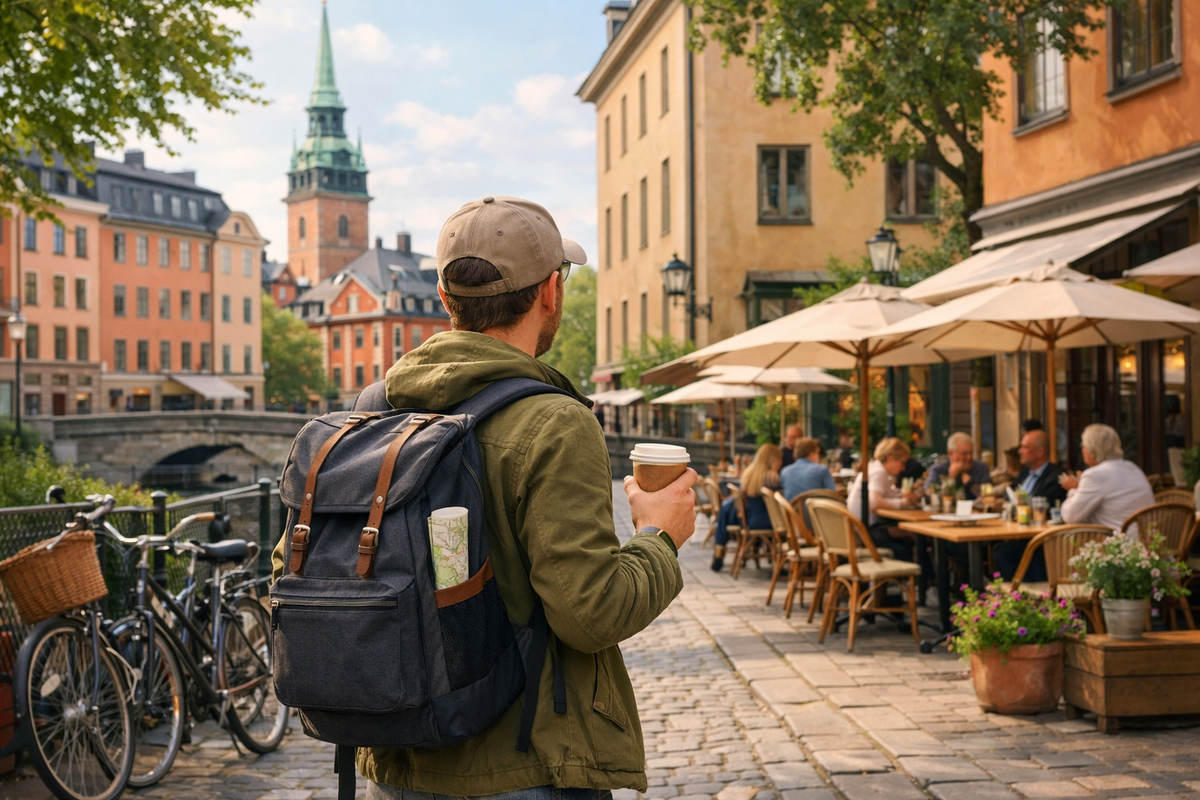
🔍 What Is Included in a Tourist’s Daily Expenses and How to Track Them Properly
A daily budget usually includes meals, public transportation, entrance fees, and small everyday expenses. Even takeaway coffee or a bottle of water can noticeably affect the total. That is why it is important to consider not only major costs but also regular small purchases. This approach gives a more realistic picture of overall spending.
Many travelers note that expenses in Sweden are easy to control. Public transport runs reliably and has a clear pricing system. Food prices are known in advance and rarely fluctuate. This makes planning simple even for first-time visitors.
A daily budget does not mean strict saving or giving up enjoyment. It is a way to travel calmly and without unpleasant surprises. It helps you choose between options without feeling guilty about spending. This is especially important for a first visit to Scandinavia.
When planning a daily budget in Sweden, always leave a small financial buffer. It comes in handy for spontaneous decisions such as visiting a museum, taking an extra trip, or stopping by a cozy café along the way.
This approach is especially useful for a first trip to Scandinavia.
📊 Average Daily Budget for Tourists in Sweden
The average daily budget in Sweden depends on your travel style. A budget-friendly format suits those who enjoy walking and shopping at supermarkets. Most travelers choose a comfortable mid-range budget. It allows dining in cafés and visiting attractions. This approach offers a good balance between expenses and experiences.
💵 Realistic Budget Levels for Different Travel Styles
Budget travelers reduce costs by choosing ready-made meals, walking routes, and free activities. This format is especially convenient for short trips. It requires minimal planning. At the same time, it remains quite comfortable.
A mid-range budget is the most popular option among travelers. It includes cafés, public transport, and museum visits. This format allows for freedom and flexibility. Expenses remain predictable and manageable.
A more flexible budget offers maximum comfort. Travelers can dine out more often and book excursions. Day trips outside the city become easier to include. This option is ideal for a relaxed, unhurried vacation.
☕ Food and Drinks: How Much Does It Cost to Eat in Sweden
Food takes up a significant part of a tourist’s daily budget. Prices in Sweden are higher than the European average, but food quality is consistently high. Cafés and restaurants offer clear menus and transparent pricing. Supermarkets help significantly reduce expenses. Combining these options is considered the most practical approach.
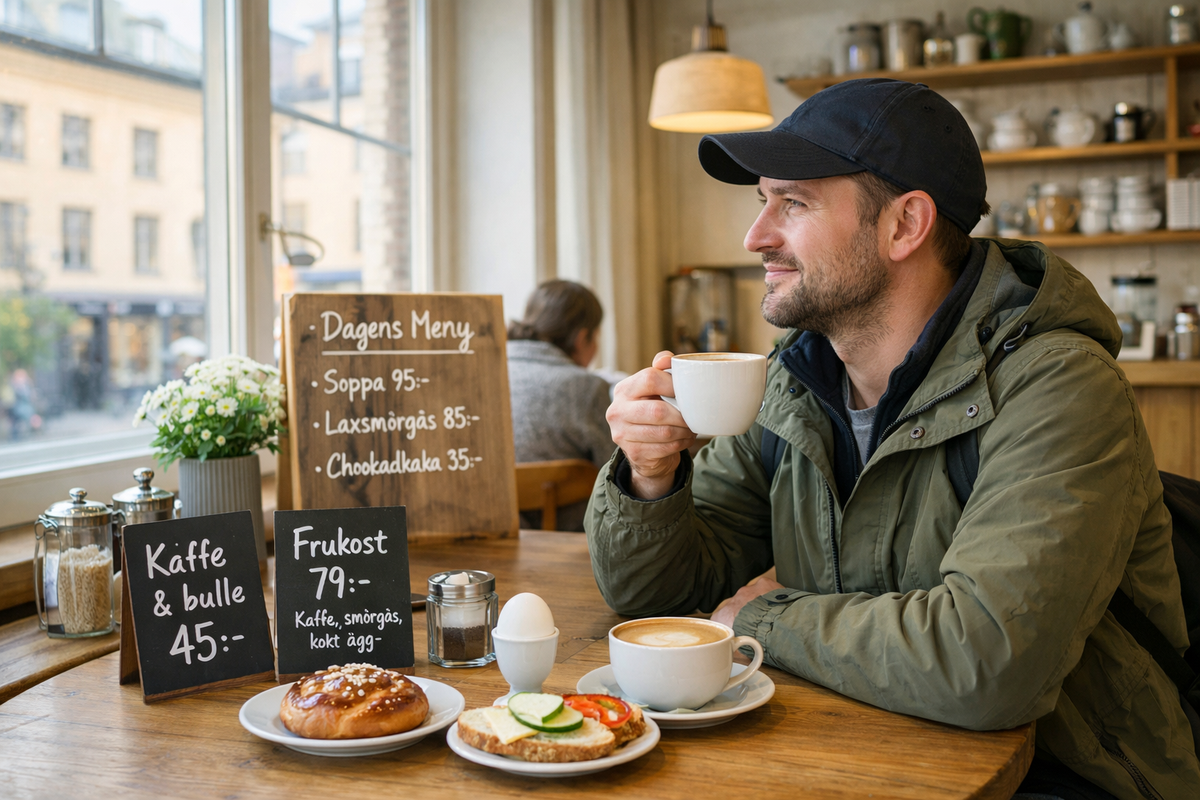
🍽 Where Tourists Can Eat and Save Without Sacrificing Quality
Breakfast is often included in accommodation. This helps reduce morning expenses. On weekdays, business lunches are popular. They are filling and cheaper than the regular menu.
Fika is an important part of Swedish culture. Coffee and a pastry are an affordable and pleasant ritual. It works perfectly as a break between walks. Travelers quickly adopt this habit.
Supermarkets offer ready-made meals and fresh products. Ingredient quality is high. This is convenient for active days. Especially for travelers who spend a lot of time exploring on foot.
Fika is more than just coffee — it is part of everyday culture. This break helps you slow down, relax, and avoid spending money on a full meal.
For tourists, it is an ideal budget-friendly pause between sightseeing.
🚍 Transport and Getting Around
Getting around Sweden is convenient and intuitive for tourists. Public transport runs reliably and on schedule. Tickets are easy to purchase via mobile apps. Walking routes often replace short trips. This has a positive effect on the daily budget.
🚶 How to Move Around the City and Spend Less
Travel passes are more cost-effective than single tickets. They work across different types of transport. This is convenient for tourists. Especially for active sightseeing days.
City centers in Sweden are compact. Many attractions are located close to each other. Walking helps save money. It also allows travelers to better experience the atmosphere of the city.
Bicycles are popular among locals. Rentals are widely available for tourists. This option is eco-friendly and convenient. It fits perfectly into the Scandinavian lifestyle.
🏛 Attractions and Entertainment
Sweden offers a wide range of activities for every budget. Nature is freely accessible. Museums often have free admission. Even a simple walk becomes an experience. This helps reduce overall daily expenses.
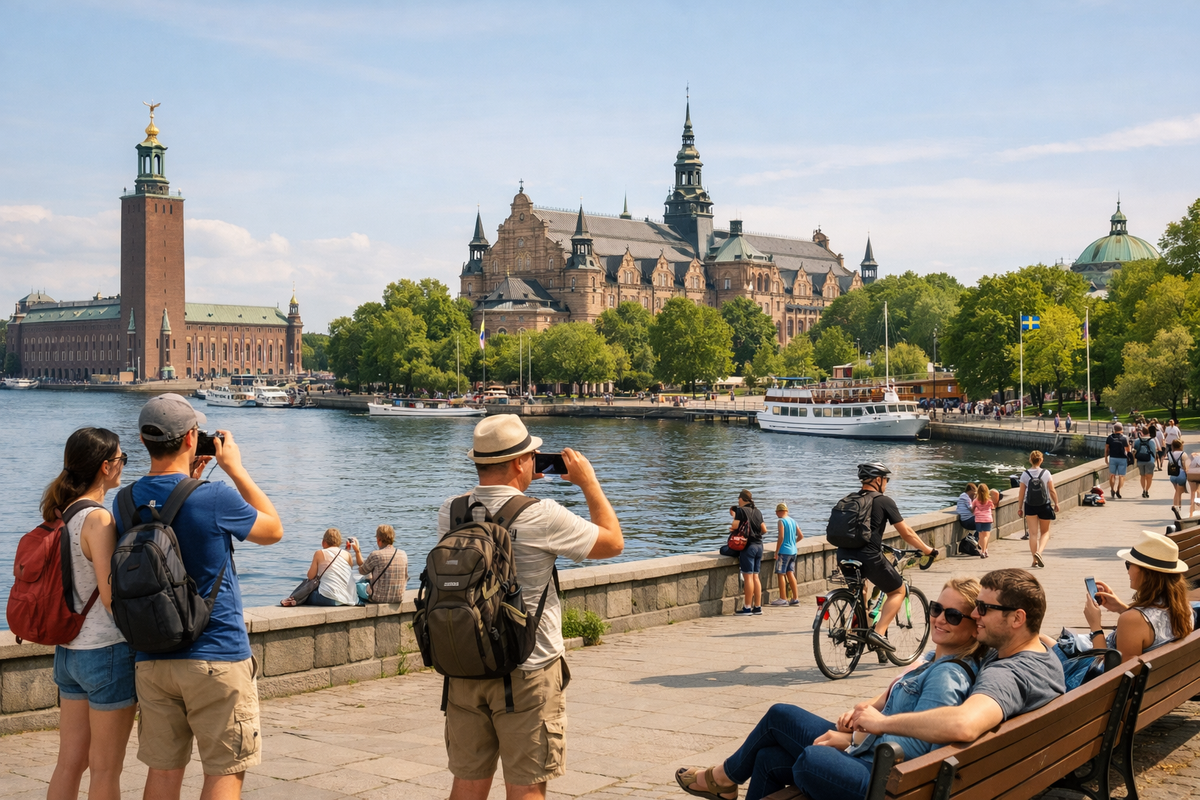
🎟 How to Enjoy Experiences Without Exceeding Your Budget
Many museums are free year-round or on certain days. Exhibitions are modern and engaging. This is an excellent option for first-time visitors. And a great way to save money.
Nature routes are accessible all year. Parks, waterfronts, and viewpoints are well maintained. They are part of everyday city life. And they require no spending.
Excursions should be chosen carefully. One high-quality guided tour is better than several superficial ones. This approach saves both money and energy.
In Sweden, nature, parks, and urban spaces are a full part of the travel experience. They are accessible without tickets and perfectly complement paid attractions.
This makes the daily budget more flexible and predictable.
❓ Questions and Answers (FAQ)
A comfortable daily budget is easy to plan and suits most travelers.
Yes, by using public transport and free activities.
Prices are higher than average, but there are many affordable options.
Travel passes significantly reduce transportation expenses.
Yes, museums, nature areas, and city routes are often free.
Yes, thanks to convenience, security, and a clear spending system.

0 comments
Log in to leave a comment