



🧭Planning and entry to Sweden
✨ A stress-free trip
Sweden can feel like an easy country to travel to—until small practical details catch you off guard. Most “stress” doesn’t come from the route itself, but from connectivity, payments, and transport. That’s why it’s worth building a solid base at home instead of improvising at the airport. This plan helps you get oriented quickly, even if it’s your first time. Next, we’ll go step by step—from choosing the season to a final pre-departure check.
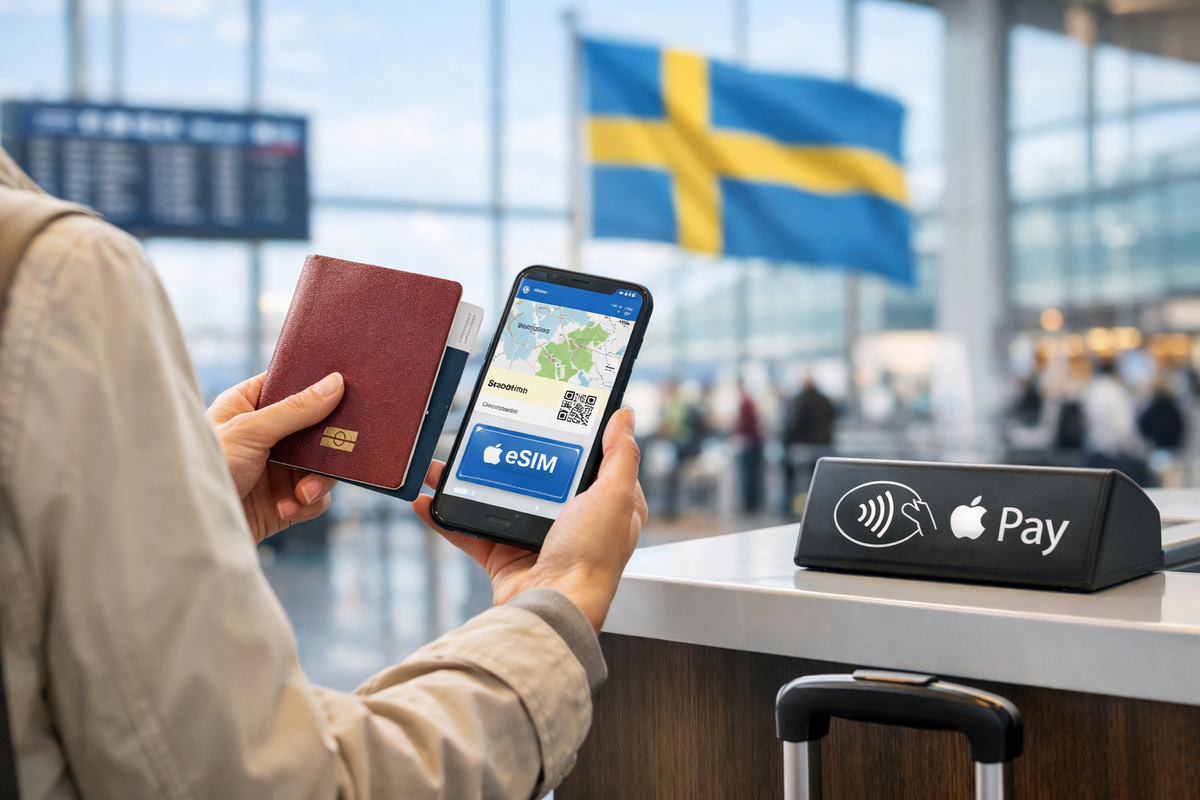
🧭 What to prepare in advance so you don’t waste time on arrival
Sweden loves order, and travel feels smoother when everything is in its place. Set up three essentials first: documents, internet, and money. That eliminates most risks on day one.
Next, choose your trip format: city breaks, nature, or a mix. Your season, transport, and packing list depend on that. The clearer your travel style, the fewer unnecessary expenses.
Don’t try to “do it all”—a comfortable pace is better. Build in time for transfers, weather surprises, and rest. That’s when Sweden feels calm and enjoyable.
🗓️ 🌤️ When to go to Sweden
The season in Sweden strongly shapes your experience, even if you visit the same city. Summer brings long days and a light, open feel, while winter is cozier and darker. Spring and autumn often offer better prices, but you’ll need more flexibility with clothing. If nature is a key part of your trip, weather becomes the main factor. Picking the right dates saves money and makes the trip noticeably more comfortable.
🍃 Seasons, prices, and the best choice for your travel style
Summer is ideal for walking, the water, islands, and “everything on foot” itineraries. Autumn is quieter and colorful, but wind and rain are more likely. Winter shines with Christmas atmosphere, northern destinations, and warm evenings indoors.
Peak periods often align with holidays and school breaks. During these times, accommodation costs rise and convenient tickets sell out faster. The best approach is to book earlier and keep a couple of alternative dates.
Choose a season based on your goal—not just what’s popular. City trips work in almost any month if you like museums and cafés. For nature, plan with extra buffer days so you’re not dependent on a single sunny window.
🎒 ✅ What to pack: a compact checklist
Packing for Sweden is easier when you think “what works in this weather,” not “what looks good.” Wind and rain protection often matters more than a heavy coat. The most common mistake is packing too much while forgetting small essentials. A smart kit makes moving around lighter and faster. Below is a practical, no-fluff approach.

🧥 Items that truly help in Swedish weather
Layers are your best friend: a base layer, a warm layer, and a protective outer layer. Even in summer, a light windbreaker or rain jacket can be useful. Choose shoes you can comfortably walk in all day.
Keep documents and insurance available offline—not only in email or chats. A power bank matters because maps, tickets, and banking apps drain your battery quickly. It also helps to save your accommodation address and check-in instructions in notes.
Don’t overpack—many items are easy to buy locally. Bring a small first-aid kit, blister plasters, and your personal comfort essentials. In darker seasons, a reflector on your jacket or bag is a genuinely useful habit.
🎒 Mini checklist “for the road”
- 🧥 Clothing layers + wind/rain jacket
- 👟 Comfortable walking shoes
- 🔋 Power bank + cables
- 📄 Documents & insurance (offline copies)
- 🗺️ Offline maps + accommodation address in notes
Tip: keep the essentials in your carry-on so you don’t search for them on the go.
🛂 📄 Entering Sweden: documents and border checks
Border control is usually smooth if your travel story is clear. Officers typically check basic logic: where you’re going, how long you’re staying, and where you’ll live. Questions are often brief, but it’s better to have confirmations ready. The most annoying moment is hunting for files without internet at the counter. Ten minutes of preparation can save you an hour of stress.
🔎 What to have ready and what they may ask
Check passport validity and entry rules for your citizenship in advance. Keep your accommodation booking and return ticket accessible, even if you’re not asked. Sometimes proof of funds is relevant, so having access to your banking app helps.
Save everything offline: passport scan, insurance, bookings. A short itinerary note can make your answers confident and consistent. If you have transfers, keep a simple list of cities and dates in one place.
For bringing items in, follow a simple rule: pack only what you truly need. Keep medicines in original packaging, and for uncommon prescriptions, bring clear documentation. If you plan to carry food or alcohol, check limits beforehand to avoid surprises.
✈️ 🧭 How to get to Sweden
Your route to Sweden can be direct, or it can include connections and combined options. A beginner mistake is focusing only on ticket price and forgetting the time and effort needed to reach your accommodation. Sometimes landing at a less central airport is still better overall if the transfer is easier. It also helps to plan your airport-to-city ride in advance rather than deciding in a queue. A clear first-transfer plan makes the whole trip feel calmer.
🚉 Flights, ferries, overland routes, and your first transfer
Flying is often the fastest option, especially for short trips. Ferries are great if you enjoy a slower journey and want travel to feel like part of the experience. Overland routes work well if you’re building a wider regional itinerary or driving.
It’s smart to have two transfer scenarios: a main option and a backup. The main option should be simple and predictable; the backup covers delays and timetable changes. If you arrive late, check what’s actually available at night.
Keep day one simple: your goal is reaching your accommodation without stress. Save the address and check-in instructions offline. And build in buffer time so you’re not sprinting with luggage.
🚆 🗺️ Getting around within Sweden
Sweden is easy to travel around when you know what you’re using and how tickets work. Tourists most often get confused by zones and ticket types in cities. Between cities, it’s best to choose based on what you value: comfort or price. If nature is a big part of your trip, the logic changes and a car can become the simplest solution. Here’s a compact system that keeps things clear.
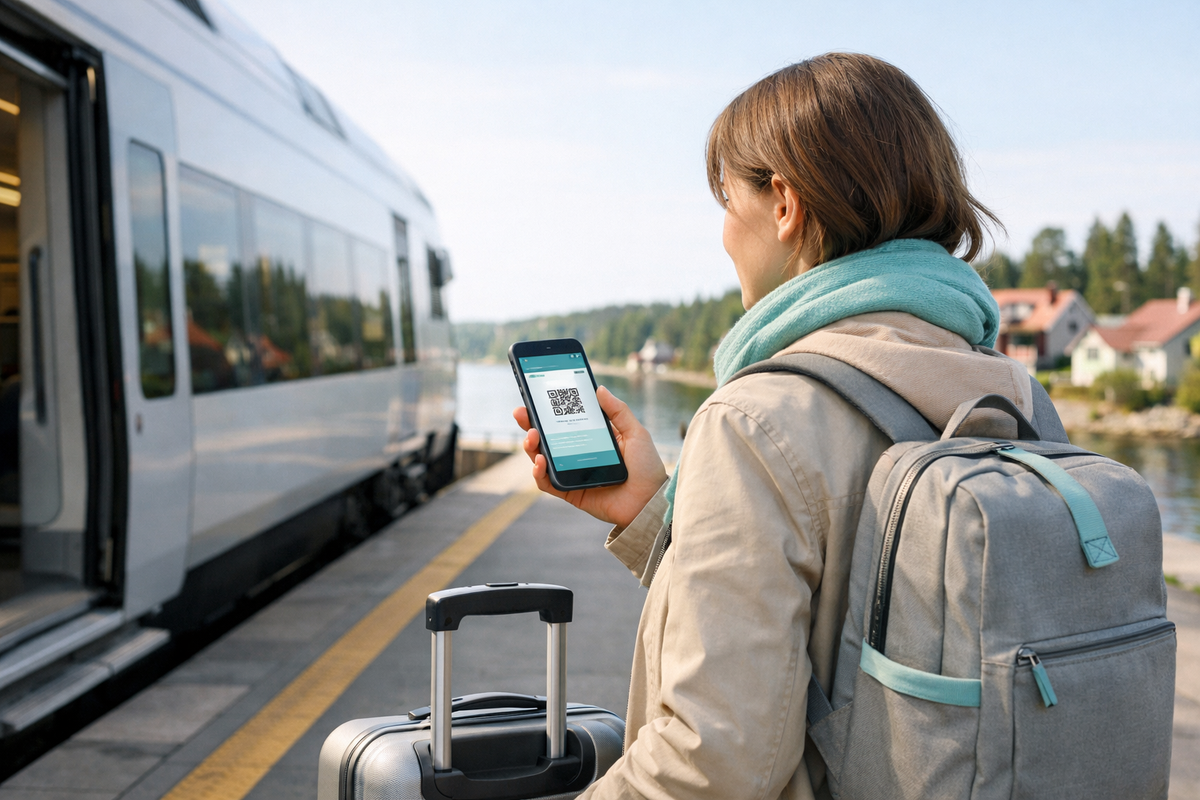
🚌 Trains, buses, city transport, and car rental
Trains are great for comfort and predictability on popular routes. Buses are often cheaper and can sometimes be more direct. For intercity trips, it’s worth comparing both by time and price.
In city transport, zones and ticket rules matter most. Download the official operator app and buy tickets before boarding. That saves time and reduces the risk of purchasing the wrong ticket type.
Car rental makes sense for “lots of nature and small places.” Consider parking rules, speed limits, and winter driving if relevant. If you’re unsure, go hybrid: cities by public transport, nature by car.
📶 📲 Connectivity: eSIM, SIM cards, Wi-Fi
In Sweden, internet isn’t about social posts—it’s practical: maps, tickets, banking, and messaging. The biggest mistake is assuming you’ll have Wi-Fi everywhere, immediately. Another risk is buying an eSIM at the last minute and setting it up under pressure. Ideally, you want internet working as soon as you land. That’s easy if you prepare a little ahead of time.
🌐 How not to be without internet in your first hour
An eSIM is convenient because you can activate it at home and skip the store search. Before buying, check whether your phone supports eSIM and has an available eSIM slot/profile. After installation, test it by opening maps and a messenger.
Your backup plan should be simple: offline maps and your accommodation address saved in notes. If something doesn’t connect instantly, you can still reach your place calmly. Also, adjust auto-updates and data limits so background apps don’t consume your plan.
Don’t keep important info only in the cloud or chats. Save key bookings and instructions offline. That way, a temporary connection issue won’t ruin your first day.
🧾 Money and payments: a mostly cashless country
In Sweden, card payments are the default, and cash is rare. Tourists usually face not a lack of payment options, but unexpected holds and deposits. A card may work in one place and fail in another due to limits or bank settings. That’s why it’s best to prepare two payment methods and a small “buffer.” It’s a simple way to avoid awkward moments at checkout or during check-in.
💳 Cards, contactless, deposits, and unexpected holds
The best minimum is two independent ways to pay. That can mean two cards, or one card plus a phone wallet. This prevents you from being dependent on a single bank or a single piece of plastic.
Deposits for car rentals—and sometimes accommodation—can temporarily freeze part of your balance. It can feel like you “lost money,” even though it’s just a hold, not a charge. Keep extra room in your limits and don’t run your trip on the last euros.
Cash might be useful occasionally, but it’s rarely necessary as a main tool. More important is understanding your bank’s conversion and fees. If in doubt, check the rules at home and enable transaction notifications.
🧠 What most often goes wrong (and how to avoid it)
Most travel problems repeat across different people, which is good news. It means you can prevent them with simple decisions in advance. The most common “breakdowns” are internet, payments, transport tickets, and weather. If you have a plan for “what if…,” you won’t panic or overpay. This section is short prevention, without extra theory.
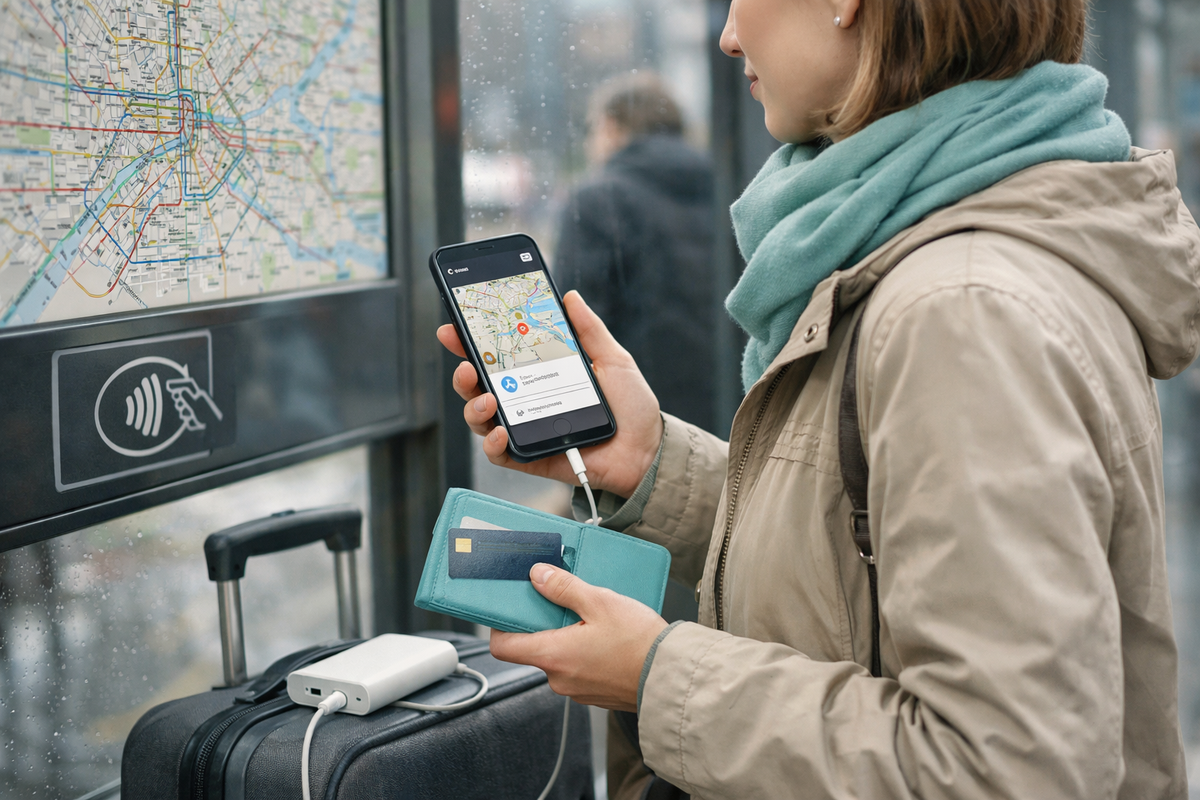
🚧 Typical tourist mistakes and quick fixes
Arriving without internet means losing navigation, tickets, and messaging. The fix is simple: activate eSIM in advance, plus offline maps and your accommodation address in notes. Then you can still get where you need to go even if something glitches.
“A card doesn’t work” is usually solved by a backup payment method and checking limits. Deposits can temporarily freeze funds and it’s not always obvious in the moment. With a second card, the situation becomes routine instead of stressful.
Ticket-zone confusion is solved by using the official operator app and buying tickets before boarding. Weather is solved by layers and a rain jacket—not by hoping the forecast stays kind. And a little extra time buffer helps you avoid rushing transfers.
🧩 Quick “anti-mistakes”
👶🐾 🧩 Notes for trips with kids and pets
Travel with kids and animals doesn’t require “more points,” but a calmer scenario. The most common mistake is packing the schedule too tightly and stacking too many transfers. The simpler the logistics, the easier it is for everyone. It’s also important not to learn transport rules at the last minute—especially for pets. Below is a practical minimum that helps you avoid surprises.
🧸 How to prep documents and keep the trip comfortable
With kids, check documents in advance—especially if only one parent is traveling. Plan routes with fewer transfers and more predictability. On day one, choose a simple path and know where to buy basic items.
With pets, confirm requirements for microchip, vaccinations, and documents early. Review the carrier’s rules and your accommodation policies so you’re not solving it on the spot. Bring water, small food, and familiar items for the trip.
Keep extra time and don’t turn the itinerary into a marathon. Fewer moves and more rest usually wins. That’s how the trip stays genuinely comfortable.
✅ 🧾 Final checklist before you leave
A last check before departure often matters more than a perfect route. It protects you from “everything exists, but nothing opens without internet.” A final checklist helps you confirm you’re ready for day one. You can run through it in five minutes before walking out the door. And if something is missing, you still have time to fix it calmly.
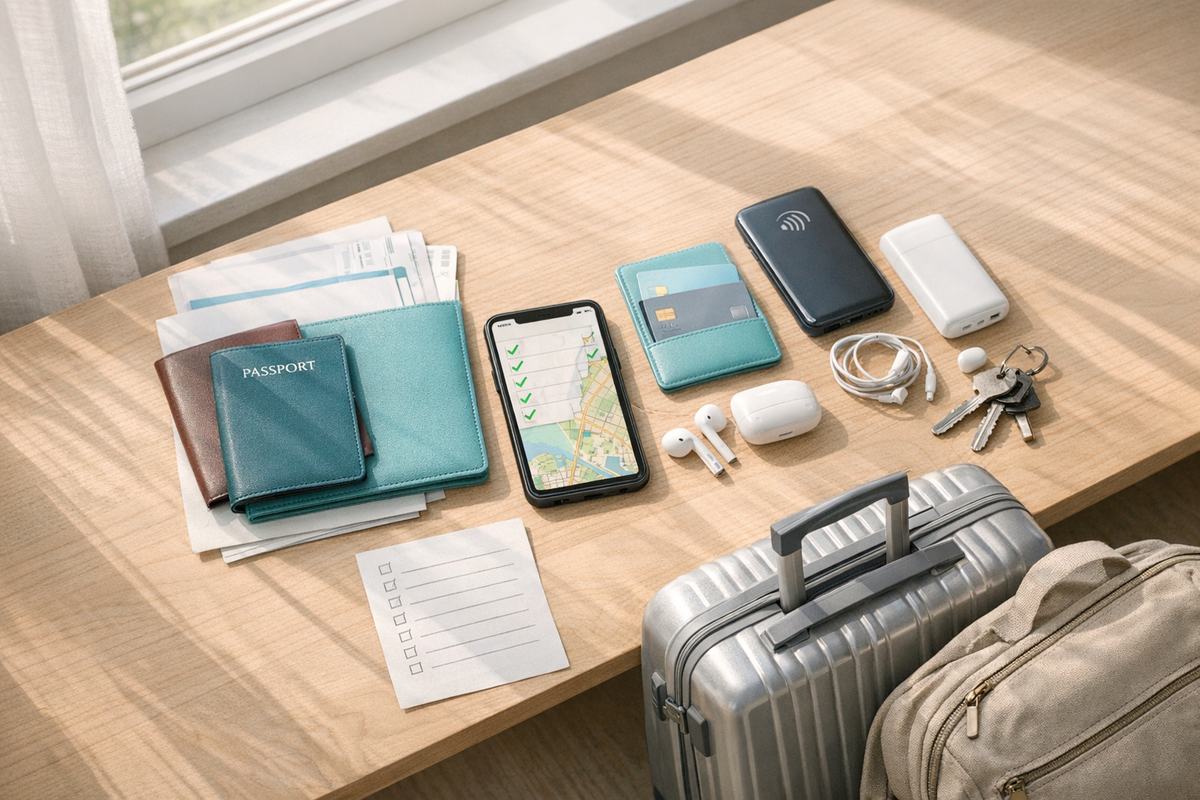
🧷 A 5-minute quick check
Build a “trip folder”: documents, insurance, tickets, and accommodation booking. Make offline copies and save key contacts in notes. This protects you if your connection drops or your phone runs low.
Check connectivity: eSIM/SIM, roaming settings, offline maps. Check payments: two methods and enough limit buffer. These two areas cause most first-day surprises.
Prepare your “airport → accommodation” route plus a backup. Plan where you’ll get food/water and how you’ll reach your neighborhood. Then your trip starts steady and confident.
❓ 📌 Questions & Answers (FAQ)
Oftast nej – kort och kontaktlöst fungerar nästan överallt. Ha ett andra betalningsalternativ för säkerhets skull.
eSIM is easier because you can activate it before you travel and use it right after landing. A physical SIM can help if you need a long-term local number.
Typically your purpose of travel, length of stay, and where you’ll be staying. Sometimes they ask for bookings and return tickets, so keep them offline.
Buying tickets early and comparing trains vs buses often gives the best price. Trains are usually more comfortable; buses can be cheaper on shorter routes.
Switch to your backup payment method and check bank limits/alerts. Deposits are usually temporary holds and release later automatically.
With kids, focus on simple logistics and documents, especially if one parent travels alone. With pets, check microchip/vaccination/doc rules and carrier policies ahead of time.

0 comments
Log in to leave a comment