



☕ Fika trail
☕ Fika — more than coffee
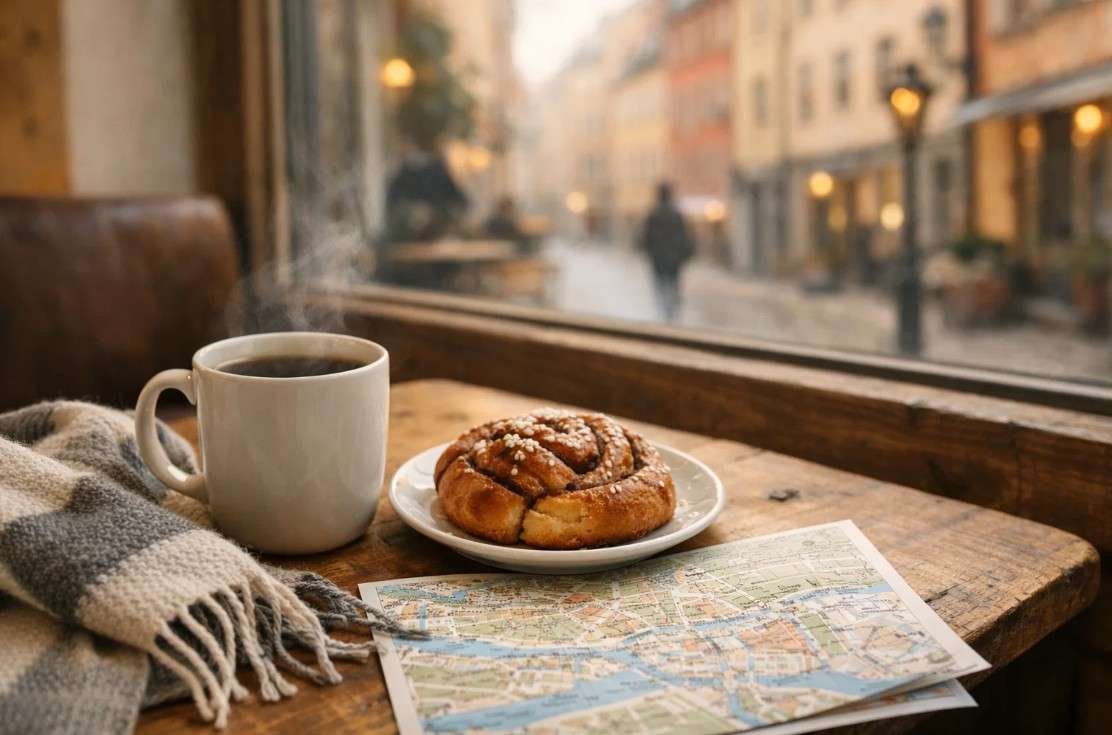
Fika in Sweden is not just a coffee break but a small ritual of calm. It helps you feel the Scandinavian rhythm of life even during a short trip. Fika fits naturally into city walks and softens the pace of travel. What matters most are the pause, the coziness, and the moment of awareness. For visitors, it is a quick way to experience local culture without long explanations. For Scandinavians, fika remains a daily habit of recharging.
🧡 Why travelers should understand fika
Fika helps you slow down and avoid rushing through attractions. It sets a comfortable rhythm and makes the day feel more balanced. Through fika, you discover local flavors and notice small urban details. Cafés are perfect places to plan the next step or check the weather. It is also an easy way to adapt if this is your first time in Scandinavia.
Fika works well as a natural “anchor” between locations, especially in large cities. You rest, reset, and then continue exploring with more energy. During colder months, it offers warmth and shelter from wind and rain. When traveling with others, fika helps everyone sync their energy levels. Even solo travel feels calmer with a warm pause in the day.
Fika is a social habit that is easy to adopt. Swedes do not rush in cafés, and that reduces internal stress. There is no strict etiquette — being present is enough. As a result, the trip feels deeper than a simple checklist of sights. This is why “fika in Sweden” often becomes one of the warmest memories of a journey.
🥐 Buns without fika don’t exist
Swedish baked goods are part of culture just like museums or waterfronts. The most famous bun is the cinnamon bun, kanelbulle, and it is almost always available. But there are many other options with cardamom, vanilla, almonds, or seasonal berries. Buns are easy to try while walking through different neighborhoods. This turns a simple walk into a light food-focused route. Even locals constantly discover new flavors in nearby cities.
🍯 Which buns to try first
Start with a kanelbulle to understand the classic Swedish fika taste. Then try a cardamom bun if you enjoy deeper, spicier aromas. For a richer option, choose a bun with cream or vanilla filling. If you see almond-based pastries, they are great for a more dessert-like fika. During berry season, go for pastries with fresh or baked fruit.
It is better to try one bun per stop rather than everything at once. This prevents sugar fatigue and allows real comparison. Freshness matters, and popular bakeries usually sell out quickly. If unsure, follow what locals are ordering. In colder seasons, cinnamon and cardamom feel especially comforting. In summer, lighter options are often more enjoyable.
Do not turn this into a challenge — fika should stay relaxed. A good rhythm is one bun in the morning and one later in the day. Traveling with others makes sharing easy and fun. This way you build a small tasting experience without extra cost. And yes, “cinnamon bun Sweden” is genuinely worth planning around.
- Kanelbulle — classic cinnamon and comfort.
- Kardemummabulle — aromatic cardamom flavor.
- Vaniljbulle — soft, creamy vanilla notes.
- Seasonal pastries — berries in summer, spices in autumn and winter.
🗺️ How to build fika into your Sweden itinerary
Fika works perfectly as a route logic: moving from area to area with warm pauses in between. This is especially helpful for first-time visitors to Scandinavia. Routes can be built around interests such as architecture, water views, museums, shopping, or local life. In every format, fika acts as a moment to slow down. In winter or shoulder seasons, cafés become your comfortable daily base. In summer, fika often moves outdoors to terraces and parks.

🧭 Choosing a route by interest
If you love history, plan fika stops near old towns and viewpoints. For modern architecture, look for cafés in newer districts or waterfront areas. Museum days benefit from fika breaks that prevent information overload. Food-focused travelers can create light tasting routes without rushing. Slow travel works best by exploring one neighborhood per day on foot.
Season matters too: winter routes should be compact and café-friendly. Spring and autumn benefit from mixed walking and indoor pauses. Summer allows for longer outdoor stretches with fika by the water. If time is limited, focus on two or three strong areas rather than everything. This approach suits first-time visitors especially well.
Consider transport efficiency when linking districts. Fika can start the day or gently end it before dinner. Ideally, plan one pause in the morning and one later on busy days. This keeps the itinerary stable and enjoyable. You will see more because you feel less tired. And the trip becomes something you experience, not rush through.
🍁 Seasonality: when fika feels best
Fika changes with the seasons, and that is part of its charm. In winter, it is about warmth, soft light, and spiced pastries. Spring brings more walking and lighter flavors. Summer turns fika into open-air pauses by water and greenery. Autumn returns with spices, coziness, and long conversations over coffee. For first-time visitors, seasonality helps set the right rhythm. Even short trips feel complete when aligned with the time of year.
🌦️ Adapting your trip to weather and mood
In winter, plan more café stops and fewer long transfers. This keeps the journey comfortable and relaxed. Spring allows flexible combinations of parks and indoor breaks. In summer, choose places with terraces and outdoor seating. Autumn is perfect for bakeries with seasonal pastries and slow walks. This approach protects your energy and mood.
Traveling with children makes seasonality even more important. In colder months, fika offers warm breaks and easy snacks. In summer, it helps avoid walking during peak heat. During shoulder seasons, cafés work as a reliable backup in case of rain. You are never stuck — just adjusting gently.
For newcomers to Scandinavia, the key is buffer time. Weather can change quickly, and an extra half hour indoors makes a big difference. Seasonal planning creates a more local experience. You live in the same rhythm as residents. And that feeling lasts longer than any checklist.
🏨 Where to stay if fika is your focus
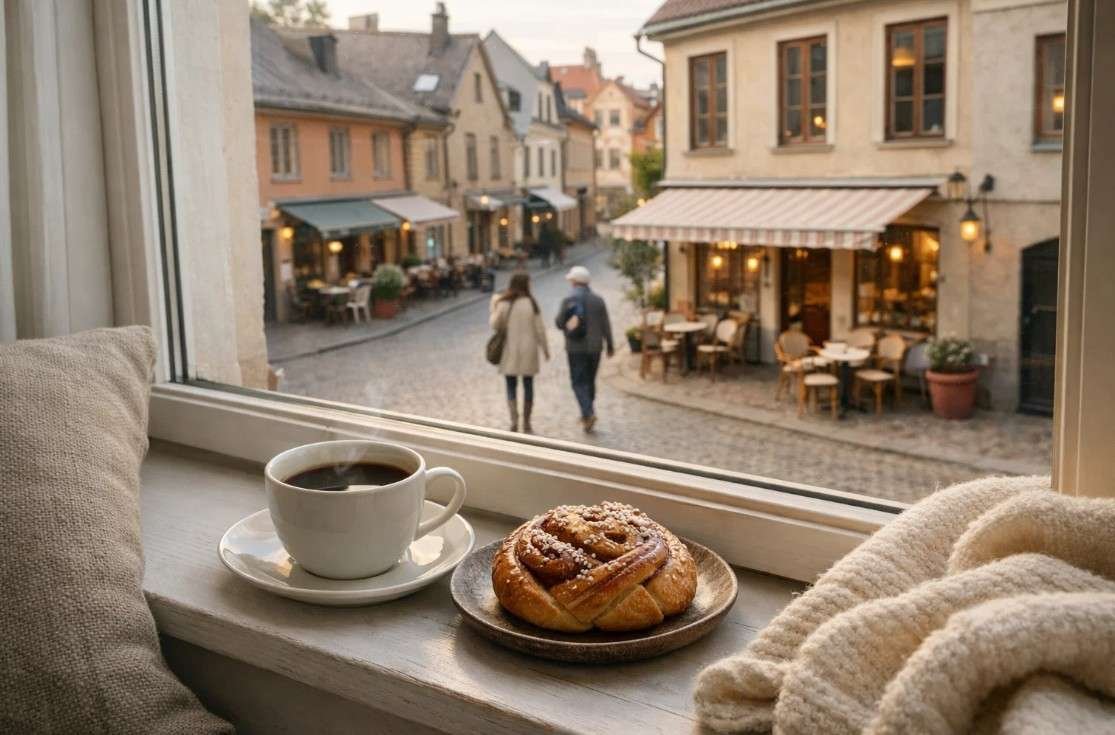
A good base matters because fika favors walking and short distances. First-time visitors benefit from staying where cafés are plentiful and logistics are simple. Central areas allow flexible mornings without early transport. Waterfront or park-adjacent districts add scenic walks. In large cities, one well-chosen neighborhood is often better than constant moving. In smaller towns, your base naturally becomes the route.
📍 A practical way to choose your area
Look for accommodation within a 10–15 minute walk of several cafés. This gives freedom and variety. Morning walkers may prefer parks or water nearby. History lovers should stay closer to old quarters. Short trips benefit from minimizing commute time. Fika works best when it feels natural, not forced.
Check transport links if you plan day trips, but avoid areas that feel empty after dark. Starting the day with a good café nearby improves the whole experience. For first-time travelers, this reduces stress and confusion. You settle into the city faster and feel comfortable.
Budget travelers can stay slightly outside the center if the area feels lively. Local cafés often provide a more authentic experience and better prices. The key is safe, pleasant walking routes. Then fika becomes part of daily life, not a task. And you understand why Swedes protect this ritual so carefully.
⏱️ How much time to plan for fika
Fika seems small, but it shapes the entire day. Without time reserved, it turns into rushed coffee. A few planned pauses make the trip smoother. Fika helps balance busy itineraries and keeps spirits high. It is especially useful during the first days of adaptation. Slower usually means better.
🕰️ A simple timing formula for beginners
Plan 25–40 minutes per fika to sit comfortably. One pause per day is enough for light itineraries, two for long days. In winter, two shorter fikas often work better. In summer, one relaxed outdoor fika may be enough. Active travelers benefit most from these pauses.
Avoid squeezing fika between transport connections. Place it after intense activities. When traveling with others, agree that fika is part of the plan. This prevents tension and rushing. The result is a calmer and more enjoyable day.
For a 2–3 day trip, plan 2–4 fika stops in total. A week-long stay allows it to become a daily habit. Fika can also save money by replacing heavier meals. The key is not to turn it into a checklist. Let it become your travel rhythm.
💡 Practical tips for a first trip to Scandinavia
Fika becomes easier when you know a few basics. Avoid peak hours if you want a calm experience. Morning coffee with a bun is a great way to start the day. Classic choices are usually the safest. Queues in small cafés are normal and often worth it. Most importantly, do not rush — fika is about the pause.
✅ Making fika truly enjoyable
Choose places where sitting feels comfortable, not just photogenic. Drink water with your coffee, especially after long walks. Share buns if sweets feel heavy. On rainy days, fika can replace part of outdoor sightseeing without losing the mood. It keeps the day warm and flexible.
Language is rarely a problem, as English is widely spoken. Knowing a few pastry names adds charm and confidence. Families should look for simple menus and spacious seating. Slow travelers and remote workers often use fika as a daily anchor. It brings stability in a new place.
Fika is not limited to cafés. In summer, it can be a picnic with coffee and a bun in a park. In winter, it is a refuge between museums and walks. Either way, it makes the journey feel Scandinavian. And that is exactly what many visitors come for.
❓ Questions & Answers
A coffee break with rest and often a bun, deeply rooted in Swedish culture.
The classic cinnamon bun, kanelbulle.
More café stops in winter, outdoor fika in summer, flexible plans in between.
In a walkable area with several cafés nearby and good local atmosphere.
Around 25–40 minutes per stop, one or two times a day.
Yes, it helps slow down and adapt to the local rhythm.

0 comments
Log in to leave a comment