



🚗 Parking & congestion taxes
🚗 Why It’s Important to Understand Parking and Road Charges
A road trip through Sweden offers freedom, scenic drives, and flexible planning. However, to keep the experience truly comfortable, it’s essential to understand how parking and road charges work. The system is not chaotic — it is logical and transparent — but it may differ from other European countries. Misreading signs or zones can lead to fines or unexpected expenses. This is especially important for a first trip to Scandinavia. A little preparation turns a potentially confusing topic into a simple and manageable part of your itinerary.
💳 Main Types of Charges in Sweden
Sweden does not have traditional toll highways, but there are specific types of road charges. These mainly apply to large cities and certain infrastructure projects. The system is automated and based on license plate recognition. Travelers should understand where these charges apply. This allows you to plan your budget and choose the best travel format. Below are the main categories visitors may encounter.
🚦 Congestion Tax (congestion tax / trängselskatt)
Stockholm and Gothenburg apply a congestion charge when entering certain zones. Cameras record the vehicle’s license plate at control points. The charge is calculated automatically and paid later, usually through the vehicle owner or rental company. The amount depends on the time of day and weekday.
During peak hours the charge is higher, and during off-peak times it is lower. In some cities, no charge applies on weekends. The goal is to balance traffic flow. For visitors, this means considering the timing of city entry.
If you stay outside the city center and drive in once per day, the cost remains minimal. Frequent trips within the zone can increase expenses. In some cases, it is more convenient to park near your accommodation and use public transport. This is particularly practical during the busy summer season.
🌉 Toll Bridges and Ferries
Some bridges and international crossings require a toll payment. The cost depends on vehicle type and route. Payment may be automatic or ticket-based. This is important when planning cross-border travel within Scandinavia.
Domestic ferries are usually paid separately but are not part of the congestion tax system. In high season, popular routes may require advance booking. If your route includes islands or archipelagos, study logistics in advance. This prevents unexpected costs and waiting times.
On short city-focused trips, these tolls may not apply at all. However, on longer Swedish road trips, they become part of the travel budget. Marking them on your route map is helpful. That way, your journey remains predictable and stress-free.
- City center congestion charges.
- International bridges and selected crossings.
- Ferries in popular tourist regions.
🅿️ How to Quickly Understand Parking Rules
Swedish parking systems rely on careful reading of signs. A single pole may include multiple information panels. Always check time restrictions, weekdays, and additional symbols. Parking is often allowed but limited by hours. The system becomes intuitive once you slow down and read carefully. After a few days of travel, the logic feels natural.
🟢 Signs, Time Limits, and Restrictions
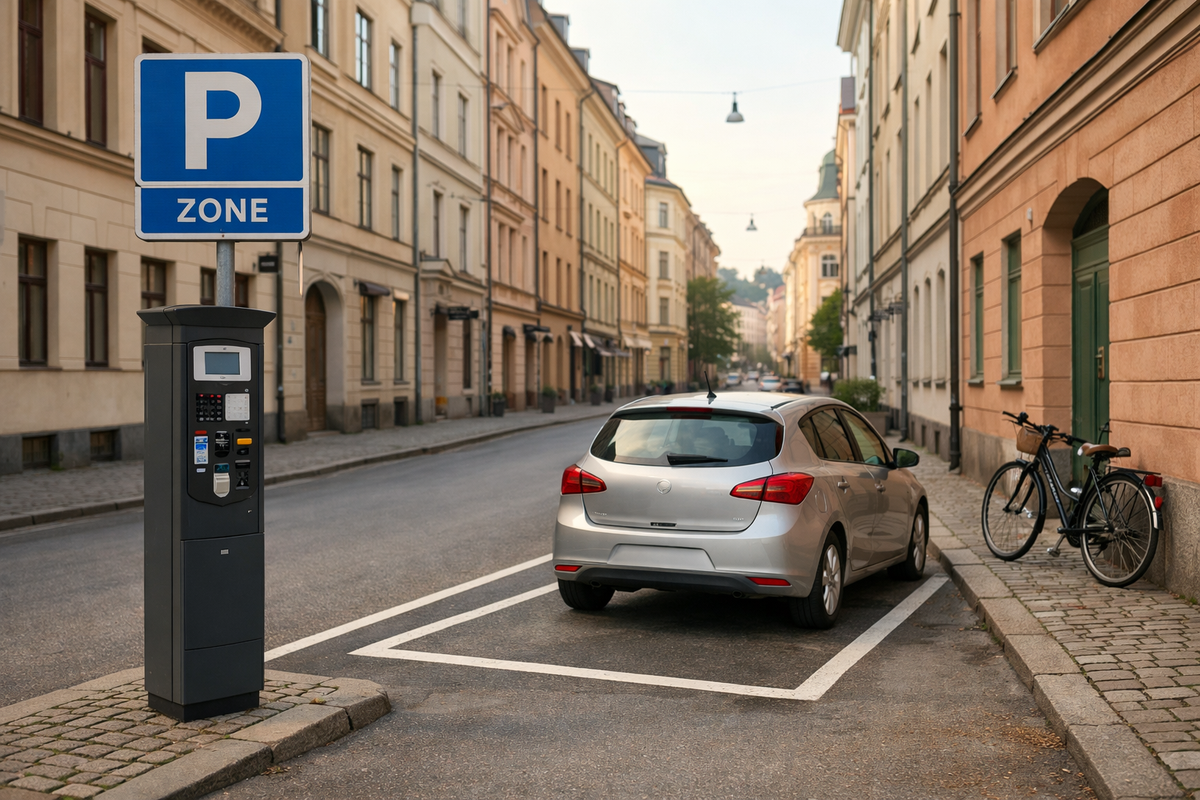
The blue “P” sign indicates allowed parking, but conditions are listed below it. Additional panels may specify free periods, paid hours, or maximum duration. Red text usually indicates restrictions. Black text outlines standard conditions.
If specific hours are shown, parking may be free outside those times. Different rules may apply on weekdays versus weekends. City centers tend to have stricter regulations than residential neighborhoods. Always read the entire signpost.
Special attention is needed during winter street cleaning schedules. Parking may be prohibited on certain days even if spaces appear available. Violations can lead to fines or towing. Taking one extra minute to check prevents problems.
🏢 Private vs Municipal Parking
Municipal parking follows city regulations. Private parking areas belong to shopping centers, residential buildings, or companies. Payment rules and penalties may differ. Enforcement can sometimes be stricter on private lots.
Private areas often require registering your license plate in an app. Even if parking is free for the first hours, registration may still be mandatory. This is a common trap for visitors. Always read entrance information carefully.
Municipal parking zones usually follow standardized city markings. Payment is handled through common parking apps. These tend to be more predictable for travelers. If unsure, check the operator’s name on the sign.
Always check whether the parking operator is municipal or private. This affects payment methods and potential fines.
📱 How to Pay for Parking
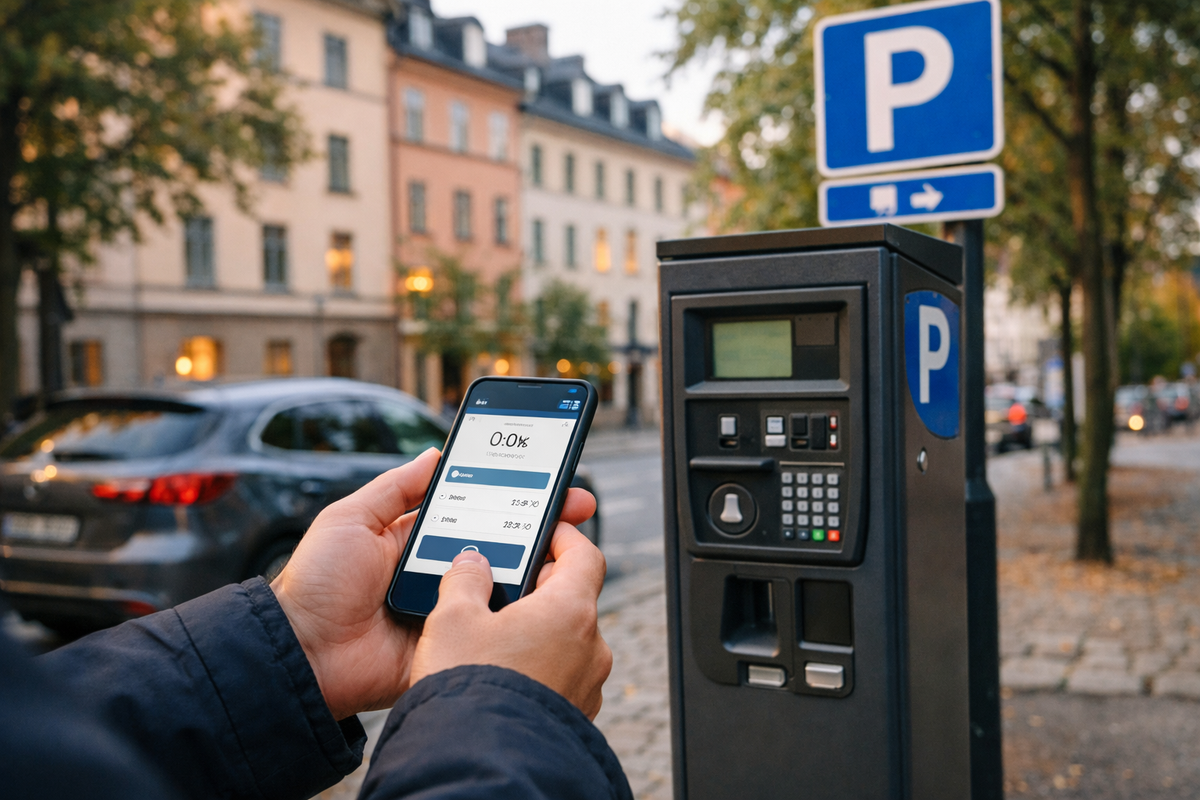
In Sweden, almost everything can be paid cash-free. Cash is rarely used. The most convenient method is through mobile apps. However, parking meters are still widely available. Always confirm that you selected the correct zone.
📲 Apps
Parking apps allow you to extend your parking session remotely. This is helpful if your walk or visit takes longer than planned. Payment is linked to your vehicle’s license plate. There is no need to return to the car.
Major cities support several popular services. Registration only takes a few minutes. It is best to install the app before your trip. This saves time once you arrive.
Apps clearly show the zone, rate, and duration. This reduces mistakes. A payment history is also stored. That can be useful if questions arise.
💳 Parking Meters and Card Payment
Parking meters accept bank cards. The screen displays the zone number and rate. In some cases, you must manually enter your license plate number. A printed ticket is usually not required, as payment is digitally recorded.
Meters are ideal if you prefer not to download apps. They are easy to use and typically offer an English interface. In tourist areas, they are common. However, some zones may only allow mobile payments.
If driving a rental car, double-check the license plate entry. A single incorrect digit may result in a fine. Always review the information before confirming. It only takes a few seconds.
🌦 Planning Your Route by Season and Interests (Including Charges)
The season affects not only scenery but also logistics. In summer, cities are busier and parking fills quickly. In winter, traffic is calmer but road conditions require caution. Shoulder seasons offer a balance of comfort and pricing. It is also worth considering whether you need a car at all. In some cases, public transport may be more efficient.
☀️ Summer / ❄️ Winter / 🍂 Shoulder Season
Summer is ideal for coastal drives and nature trips. Days are long and schedules flexible. However, tourist pressure is higher. Parking in popular areas may be limited.
Winter has fewer visitors and lighter infrastructure demand. However, weather and road conditions must be considered. Travel times may increase, especially in northern regions. Planning buffer time is important.
Shoulder seasons work well for city-focused trips. Prices are lower and crowds smaller. Parking is easier to find. It is an excellent option for a first introduction to Sweden.
🚆 When It’s Better Without a Car
In major city centers, a car can become inconvenient. Parking costs are higher and congestion charges apply more often. Public transport is efficient and well-developed. Sometimes it is better to leave the car on the outskirts.
If your itinerary focuses mainly on museums and city walks, a car may not be necessary. This reduces costs for parking and tolls. However, for regional exploration, a vehicle remains the best option. It depends entirely on your travel style.
🏨 Where to Base Yourself and How Many Days to Plan
Choosing the right base reduces parking costs and simplifies logistics. Select a city or area with convenient highway access. This is especially helpful for day-trip strategies. Fewer relocations create a calmer rhythm. Scandinavia is best experienced at a relaxed pace. Always allow a little extra time.
🏙️ One City Base + Day Trips
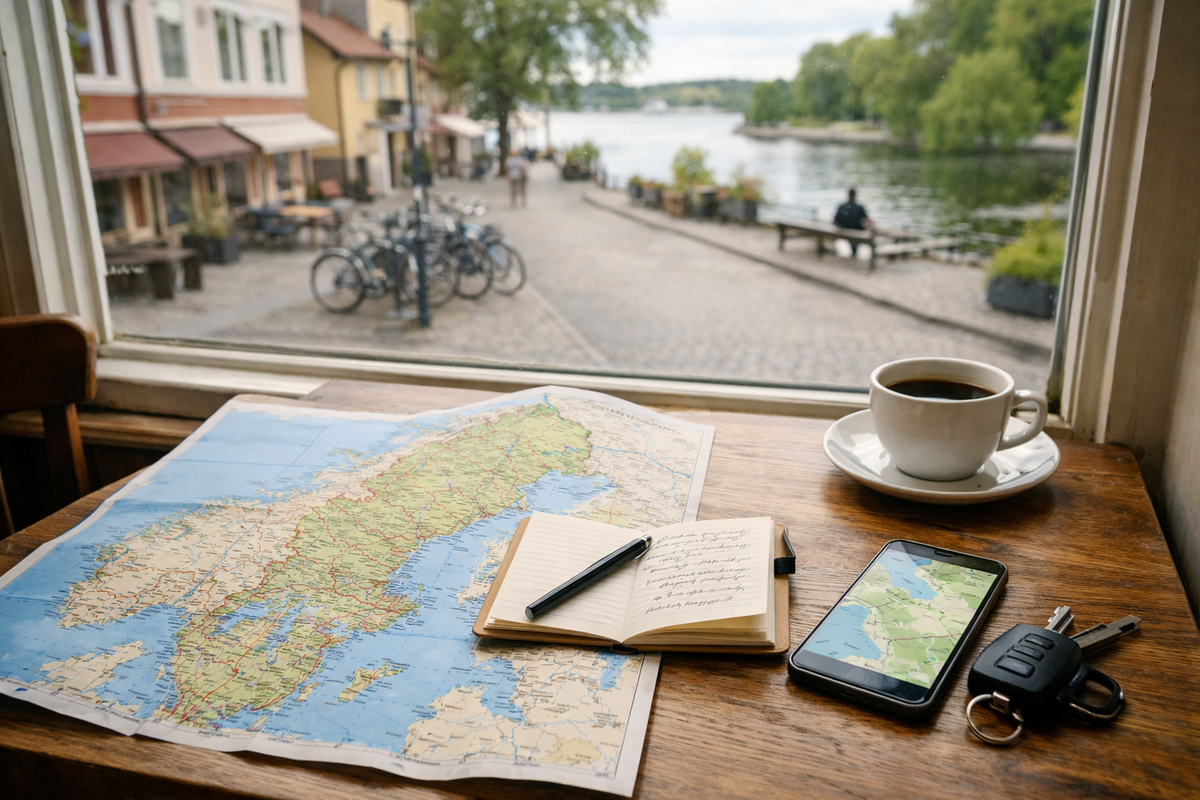
Using one city as your base is a smart strategy for first-time visitors. From there, you can make day trips to nature or nearby towns. This reduces repeated parking searches. It also lowers congestion-related expenses.
If your base is outside the center, parking is often cheaper or free. Highway access is also easier. This format works well for both tourists and regional residents. It creates a stable and efficient itinerary.
📆 3–4 / 7–10 / 10–14 Days
Three to four days are ideal for one city and its surroundings. This is a compact and manageable format. Seven to ten days allow adding a second region. The pace can still remain comfortable.
Ten to fourteen days make a full Swedish road trip possible. You can combine cities, nature, and coastline. However, avoid overloading the itinerary. Fewer stops with more time in each location create a richer experience.
Plan your schedule so that each location includes time for unhurried exploration. In Sweden, a calm rhythm makes the journey part of the rest.
✅ Checklist: How Not to Overspend
Install parking apps before your trip. Always verify zone numbers and time restrictions. Clarify toll procedures with your rental company. Include a small budget buffer for charges. Take your time — careful reading saves money.
❓ Questions & Answers
No, charges are calculated automatically.
No, but there are city congestion charges and specific toll infrastructure.
Yes, outside city centers and during certain hours.
Yes, especially if you plan to explore regions and nature.

0 comments
Log in to leave a comment