



🧭 Classic 5–7 days
🧭 Classic 5–7 Days: Why This Is the Perfect Format for Sweden
Sweden is an ideal destination for a 5–7 day trip, especially if this is your first introduction to Scandinavia. In one week, you can experience classic cities, water, nature, and the local rhythm of life without rushing. This format does not require complicated logistics or long transfers. The route can easily be adapted to the season, weather, and personal interests. The pace remains comfortable even for travelers who dislike packed schedules. That is why the classic itinerary is considered the most universal and reliable option.

✨ Why a One-Week Trip Works Best
A week in Sweden allows you to avoid turning your trip into a marathon and gives you time to adapt. You have the chance to settle into the city, understand public transport, and feel the atmosphere of neighborhoods and waterfronts. At the same time, there is space for short excursions and spontaneous decisions, which often become the highlights of the trip. This rhythm is especially important for a first visit to Scandinavia, where calmness and balance are highly valued.
The 5–7 day format offers a sense of freedom within the itinerary. Plans can be adjusted easily without losses, days can be rearranged, and weather changes are less stressful. You are not tied to a strict schedule and do not feel pressure to “see everything.” This makes the journey feel more natural and relaxed.
A classic one-week trip works well for solo travelers, couples, and families. It does not require renting a car and fits perfectly with public transportation. This format creates a feeling of a complete journey while still leaving you eager to return.
🍃 How to Choose a Route Based on Season and Interests
Choosing a route in Sweden largely depends on the season and your expectations for the trip. In summer, it makes sense to focus on walking, water, and open spaces. Spring and autumn work best with a cultural and urban focus. In winter, the itinerary becomes more compact and atmospheric. Personal interests play a key role in shaping the route. The classic format easily adapts to different scenarios without a full redesign.
🌦 Season as the Foundation of the Route
In summer, long daylight hours allow you to spend more time outdoors and expand the itinerary with islands and natural areas. Transfers feel easier, and city life blends naturally into waterfront walks. This is the season when a classic route can be slightly more intensive while remaining comfortable.
In spring and autumn, the trip becomes more intimate. Cities feel calmer, there are fewer tourists, and the pace naturally slows down. During these seasons, routes often focus on neighborhoods, museums, and local spots where details and atmosphere matter most.
In winter, it is best to reduce distances and choose one central base. Atmosphere, light, interiors, and cultural activities take priority. A classic route at this time turns into a cozy urban journey with minimal transfers and maximum comfort.
If you are choosing between several options, select a route that can easily be shortened or expanded without a full rebuild. Flexibility is one of the main advantages of the classic format in Sweden.
🗺 A Classic 5–7 Day Itinerary: Logic and Pace
A classic itinerary is usually built around one main city that becomes the base for the entire trip. Short excursions or nearby destinations are added from there. This approach saves time and reduces fatigue. It is especially convenient for a first visit, when simple logistics matter most. The travel rhythm remains steady and predictable. Impressions build gradually, without overload.

🔄 How to Distribute Your Days
The first days are best dedicated to the main city, allowing you to settle in and find your rhythm. Walks through neighborhoods, waterfronts, and the city center create a strong foundation of impressions and help with orientation. Excursions and day trips are best planned for the middle of the journey, when you already feel confident.
Day trips are best done without changing accommodation whenever possible. This reduces stress and saves time on packing. Returning to the same base creates a sense of stability and comfort, especially for first-time visitors.
It is important not to try to cover the entire country in one week. Sweden reveals itself through details and unhurried moments. Fewer places with more depth make the route feel coherent and memorable.
🏡 Where to Base Yourself: One Location or Several
Choosing where to stay has a major impact on the overall experience. In the classic format, one central base usually works best, especially for a first visit. It simplifies planning and makes the journey feel calmer. Changing bases can sometimes be justified, but it requires careful timing. Season, distance, and transportation all matter. In most cases, simplicity wins.
🛏 Accommodation Logic
One base reduces the number of transfers and saves energy. You quickly learn your surroundings and feel more confident navigating the city. This is especially noticeable in the first few days, when everything is new. The trip becomes more relaxed overall.
Changing accommodation makes sense when destinations are far apart or interests differ greatly. However, it increases the workload and demands precise scheduling. For beginners, this approach can feel exhausting.
Planning three to four nights in one place is optimal. It creates a stable rhythm, allows time to slow down, and makes it easier to adjust plans based on weather or mood.
For your first trip, choose accommodation close to public transport or within walking distance of the center. This noticeably simplifies daily routes and reduces fatigue.
⏳ How Much Time to Plan and How to Avoid Overloading
The most common planning mistake in Sweden is creating an overly packed schedule. The country does not reward rushing and reveals itself best at a calm pace. The classic itinerary works precisely because of balance. It is better to leave space than to try to see everything. This makes impressions deeper. And the trip truly feels like a break.
⚖ Balancing Plans and Rest
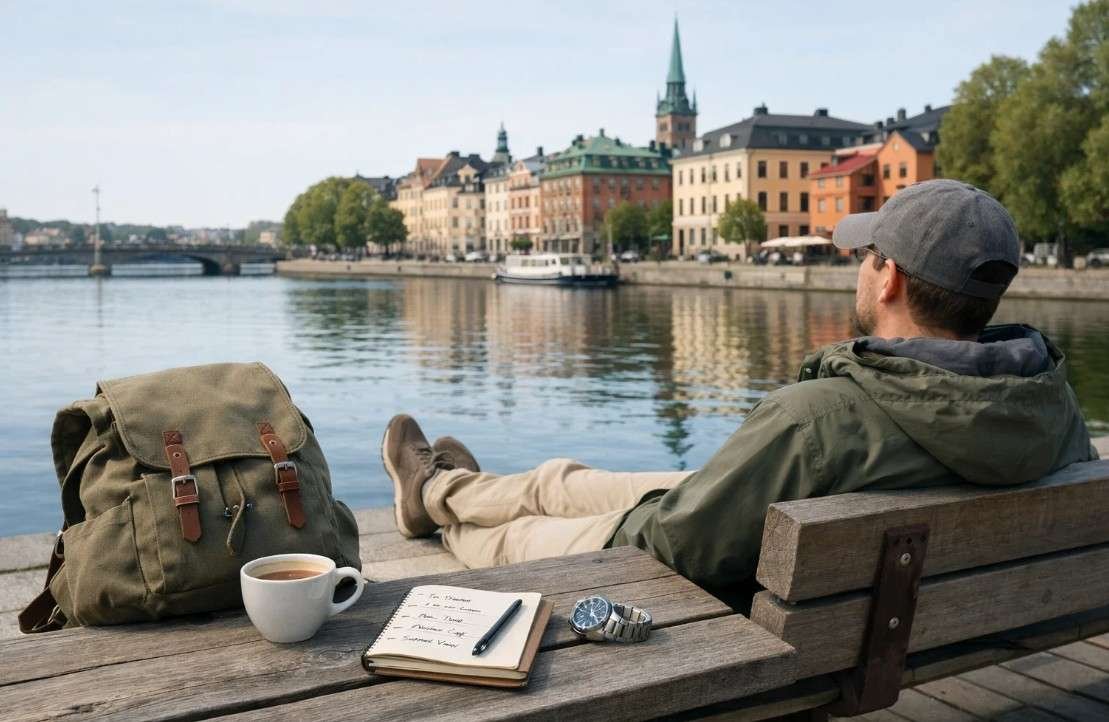
Planning no more than one or two key activities per day is ideal. The remaining time should be left for walks, pauses, and spontaneous decisions. Cafés, parks, and waterfronts are an essential part of the route, not empty gaps between sights.
Weather in Scandinavia can change plans, and that is perfectly normal. A flexible itinerary adapts easily when buffer time is built in. This flexibility often saves both the trip and your mood.
The final days are best kept light, without long transfers. This helps you end the journey smoothly and avoid exhaustion before heading home.
🎒 Practical Tips for a First Visit to Scandinavia
Your first trip to Sweden is much easier if you avoid overcomplicating things. Simple solutions work best here. A classic itinerary reduces uncertainty and helps you feel confident. It suits even travelers with little independent travel experience. The key is not trying to make everything perfect. Sweden welcomes spontaneity.
✔ What to Keep in Mind
It is better to plan around rhythm rather than a checklist of places. Time buffers and flexibility matter more than the number of stops. Do not be afraid to change plans during the trip — this is part of the local mindset and a normal scenario.
Accommodation and transport are best booked in advance, but without obsession. Most classic routes do not require a car. Public transportation is convenient and logical, which is especially valuable for a first visit.
The classic format is the best starting point for discovering Sweden. It builds confidence, helps you feel the country, and often becomes the beginning of deeper future trips.
Treat the itinerary as a framework, not a strict plan. In Sweden, this mindset is what makes a trip truly successful.
❓ Questions & Answers
Five to seven days offer the best balance between comfort and experiences.
Yes, public transportation is suitable for most classic routes.
For a first visit, one central base with short excursions is usually easier.
Yes, with a focus on cities, museums, and atmosphere.
Late spring, summer, and early autumn are considered the most versatile seasons.
Yes, the classic 5–7 day format is designed for relaxed, unhurried travel.

0 comments
Log in to leave a comment