



🧊 Winter safety basics
🧊 What You Should Know About Winter in Sweden
Winter in Sweden looks magical, but it requires attention to detail. Short daylight hours influence the pace of travel and activity planning. Weather can change quickly, especially near water and in northern regions. However, Scandinavian infrastructure is well adapted to snow and cold. The most important thing is to plan your route with extra time. Thoughtful preparation makes your trip calm and safe.
🧤 Who These Tips Are Especially For
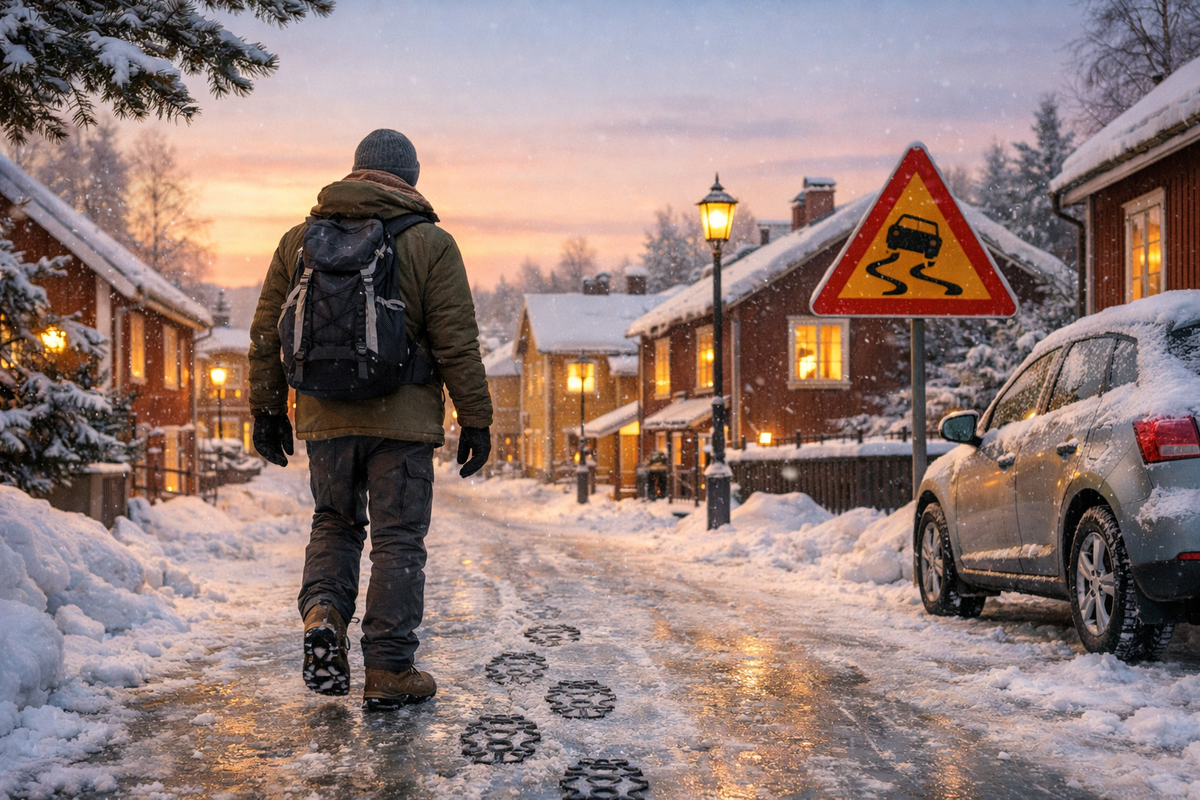
Winter advice is useful for both tourists and residents of the region. First-time visitors should understand the specifics of Nordic winter in advance. Even a simple walk requires proper footwear and awareness of icy surfaces. Families with children need to consider daylight hours and rest breaks. Nature lovers should always check weather conditions beforehand.
In winter, your travel rhythm should be slower. Outdoor activities require realistic evaluation of your energy and the weather. Short transfers reduce stress and fatigue. Planning around the forecast helps avoid unpleasant surprises. Flexibility is the key tool of winter safety.
Sweden is safe in winter with a reasonable approach. Simple rules work better than complicated strategies. Preparation saves energy and money. A calm pace increases comfort. And winter becomes part of the enjoyment.
🌨️ Climate and Regional Differences
Southern Sweden is milder and more humid, so wet snow and icy sidewalks are common. Central Sweden has more stable winter conditions but still experiences temperature swings. The north is colder, drier, and has very short daylight hours. The region directly affects your route format and level of preparation. When planning a winter trip to Sweden, compare weather conditions across all destinations. This significantly improves safety and reduces risks.
🗺️ How to Quickly Assess Conditions
In the south, waterproof footwear is essential. In central Sweden, be aware of evening temperature drops. In the north, wind protection and extra time are crucial. Daylight is shorter than many expect. Your travel pace should adapt to the season.
Check not only temperature but also wind. Precipitation and visibility affect both roads and walks. If conditions worsen, shorten your route. In winter, flexibility matters more than ambition. This is a basic safety principle.
Understanding the climate helps you choose the right travel format. Some regions suit city trips better, others nature experiences. The clearer your expectations, the easier it is to adapt. And the smoother your journey will be. This is especially important for a first visit.
🧭 How to Choose a Route Based on Season and Interests
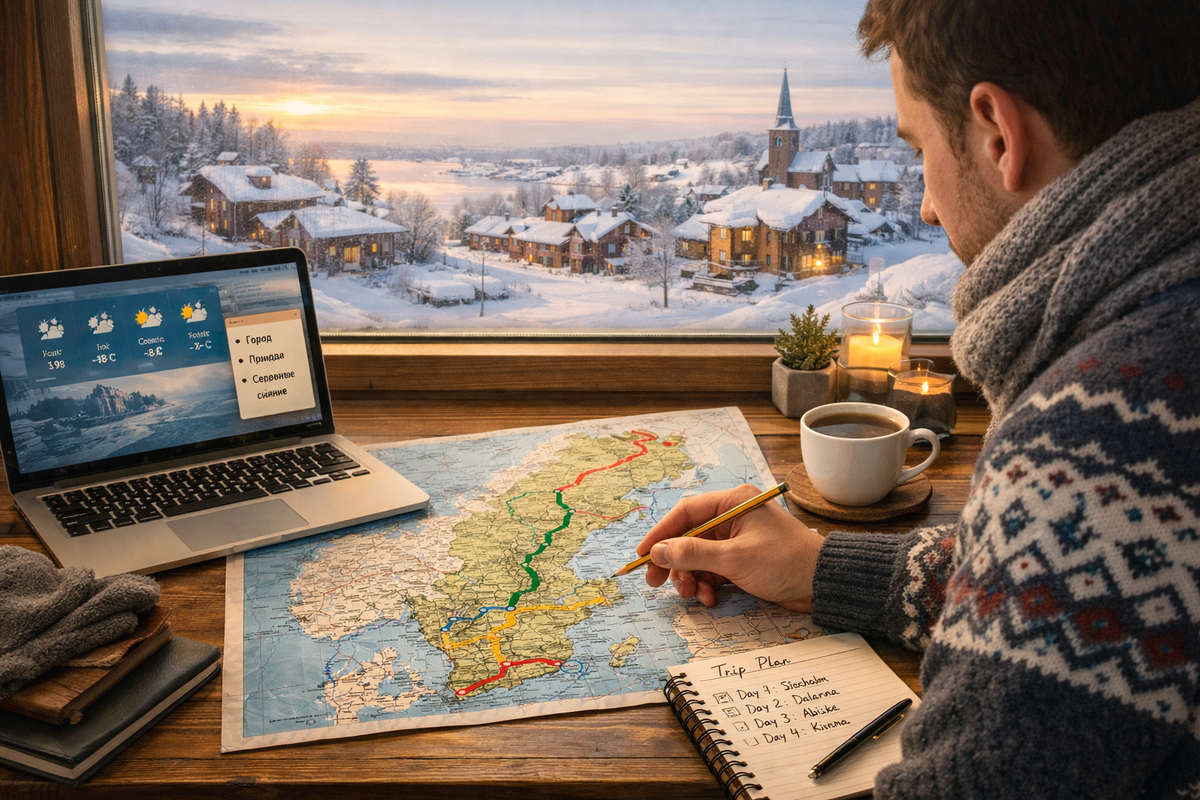
In winter, your itinerary should be compact and realistic. Fewer locations with more time in each is a smart strategy. For a first visit, choose one region rather than trying to see everything. Northern lights require several evenings in one place. City-based trips are easier to adapt to changing weather. A calm itinerary is the foundation of winter safety.
🎯 Route Scenarios
A city-focused trip suits beginners. It is less weather-dependent. There is always an indoor alternative. Transfers are short and convenient. This is a comfortable starting point.
A mixed itinerary combines city and nature. One city serves as your base. Day trips are short and flexible. Plans can easily change. This is the most versatile option.
A northern route requires more preparation. The pace should be slow. Evenings are best spent in one location. Travel only in good weather. This approach reduces risks.
🏠 Where to Base Yourself in Winter
Choosing the right base in winter affects safety more than it seems. Staying in one city or town for several nights reduces logistical pressure. Frequent transfers are more tiring in winter. Proximity to transport and shops increases comfort. For a first visit, the “city base + day trips” principle works best. It simplifies adaptation to Nordic winter conditions.
🛎️ How to Choose Accommodation
Check transport accessibility. Consider lighting on nearby streets. If traveling by car, confirm parking conditions. Having shops and cafés nearby makes daily life easier. Practical comfort matters more in winter.
Location is more important than a panoramic view. A short walk to public transport saves energy. In bad weather, a backup plan is essential. A calm neighborhood improves the feeling of safety. Convenience is a priority.
Flexibility is the main criterion. You should be able to adjust plans easily. Weather sets the rhythm. Your base should support that rhythm. Then the trip feels smooth and secure.
- One base for 3–5 nights.
- Close to public transport.
- Easy to adjust plans.
⏳ How Much Time to Plan for Your Trip
In winter, plan your time with a buffer. A short trip means 3–4 days in one city. A combined route requires 7–10 days. Northern regions deserve at least 4–5 days. Weather may change your schedule. A relaxed timeline reduces stress.
🧾 How to Calculate Your Time
A city break works well in 3–4 days. Enough for atmosphere and walks. No rushing between locations. Comfortable for beginners. And safe.
City plus nature needs about a week. Easier to adapt to forecasts. Time for rest remains. Cold weather tires you faster. Breaks are important.
The north requires multiple evenings. Northern lights are never guaranteed. Extra days increase your chances. And reduce pressure. It is a smart approach.
🚆 Transport and Roads in Winter
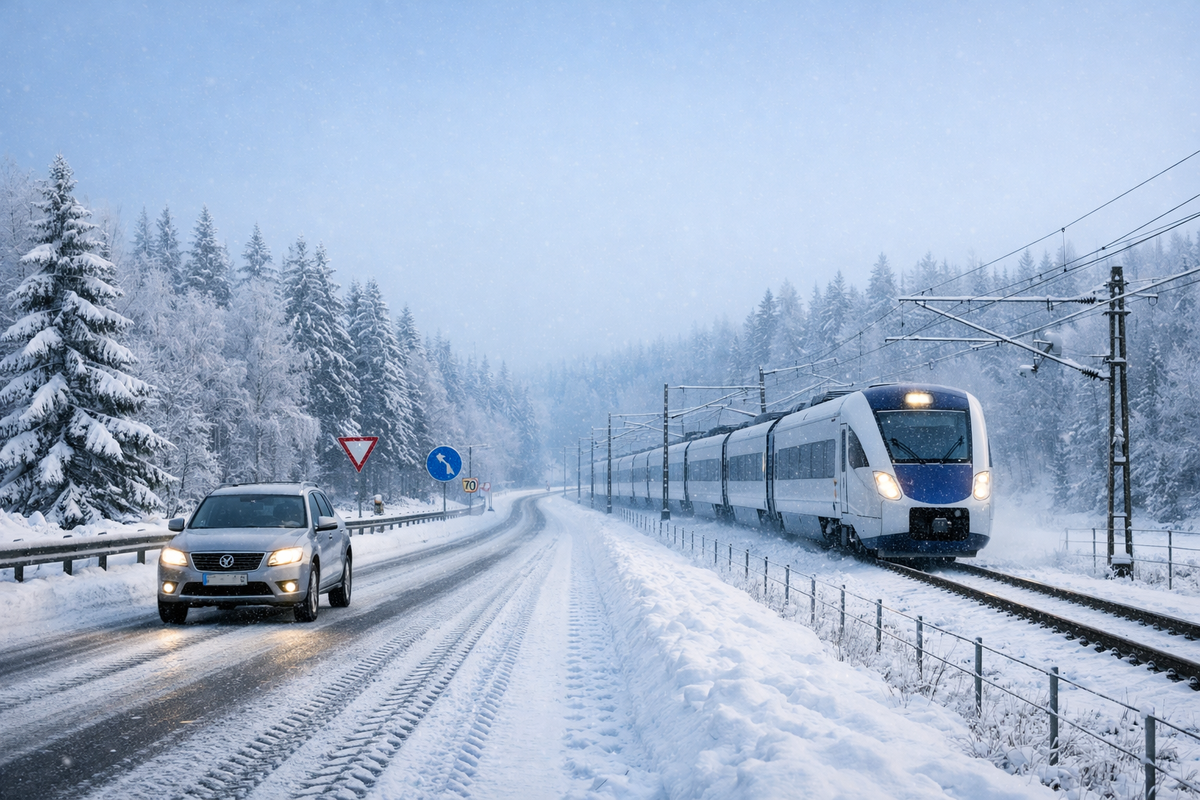
In winter, you can travel comfortably with or without a car. Public transport works well in cities. A car gives flexibility but requires confidence. Winter tires are mandatory. Icy roads are possible even in urban areas. Transport choice is part of your safety strategy.
🚗 How to Decide
Without a car is easier for first-time visitors. Less stress and fewer risks. Transport is reliable. No parking concerns. A comfortable option.
With a car, keep daily distances short. Avoid driving at night. Check the forecast before departure. Do not rush on winter roads. Safety is more important than speed.
Sometimes it is better to cancel a trip. Weather can change quickly. Flexibility is normal. It is not a limitation but self-care. And care for your journey.
City travel — public transport. Nature trips — car with caution and short distances.
🧣 Clothing, Gear, and Personal Safety
Layering is the main principle of winter clothing. Wind increases the feeling of cold. Footwear must provide good grip. Gloves and a hat are essential. Phones lose battery faster in low temperatures. Proper gear reduces risks significantly.
🎒 Essential Items
A moisture-wicking base layer. An insulating mid-layer. A windproof jacket. Stable winter shoes. Spare gloves and a power bank.
Reflective elements help in twilight. Walk carefully on icy surfaces. Do not overestimate your balance. Take warming breaks. Comfort improves safety.
Safety is a habit of preparing in advance. Better to slow down than rush. Winter demands respect. But it generously rewards the prepared. And makes your trip memorable.
❓ Questions & Answers
Yes, with proper planning and appropriate clothing.
In one city in southern or central Sweden.
No, public transport is often sufficient.
At least 4–5 days in one place.
Do not rush and always plan with extra time.

0 comments
Log in to leave a comment