


🧭 When is the best time to visit Sweden, Norway, Finland and Denmark: a comparison by season and type of holiday
⏰ Why the timing of your trip to Scandinavia is so important
Sweden, Norway, Finland and Denmark are located at the same latitude, but feel different depending on the season. In winter, snow and polar nights reign supreme, in summer there is almost endless light, and in spring and autumn, nature and cities undergo gentle transitions, each with its own character.
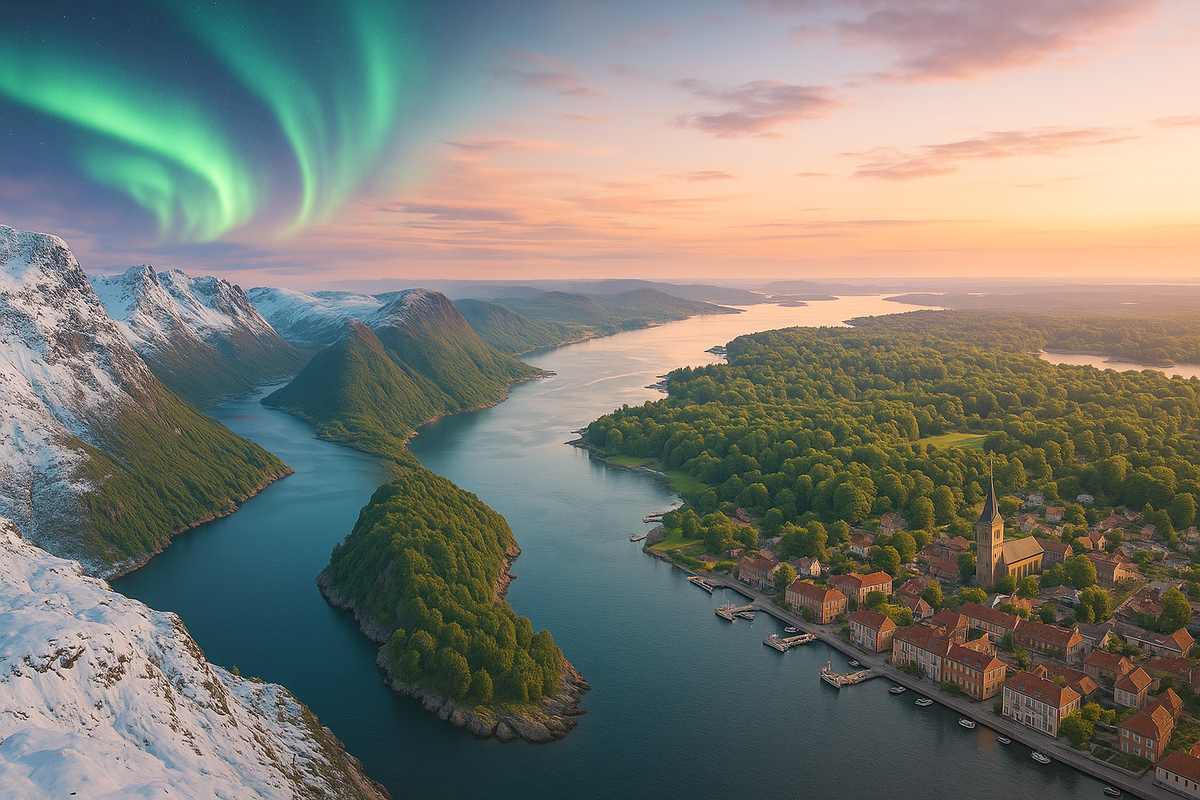
What these countries have in common is a northern climate, clean nature, respect for the environment, and well-organised travel infrastructure. The differences lie in the terrain and seasons:
- Norway has dramatic fjords and mountains;
- Finland has thousands of lakes and forests;
- Denmark has the sea, sandy beaches and windy coasts;
- Sweden combines archipelagos, forests, lakes and modern cities.
Therefore, the answer to the question ‘when is the best time to go to Scandinavia’ always depends on your goal:
- if you want to see the northern lights, you need the dark, snowy season;
- If you dream of fjords and hiking, summer and early autumn are ideal.
- If you are planning a city break, spring and autumn are more comfortable.
- If you are aiming for the sea and beaches, it is worth waiting for July–August.
- If you want to slow down ‘like the locals’, choose summer by the lake or cosy autumn.
This guide will be useful for:
- tourists who are planning their first trip to Scandinavia and don't know which country and season to start with;
- residents of the region who are choosing the ideal time to visit their neighbours — Norway, Denmark or Finland.
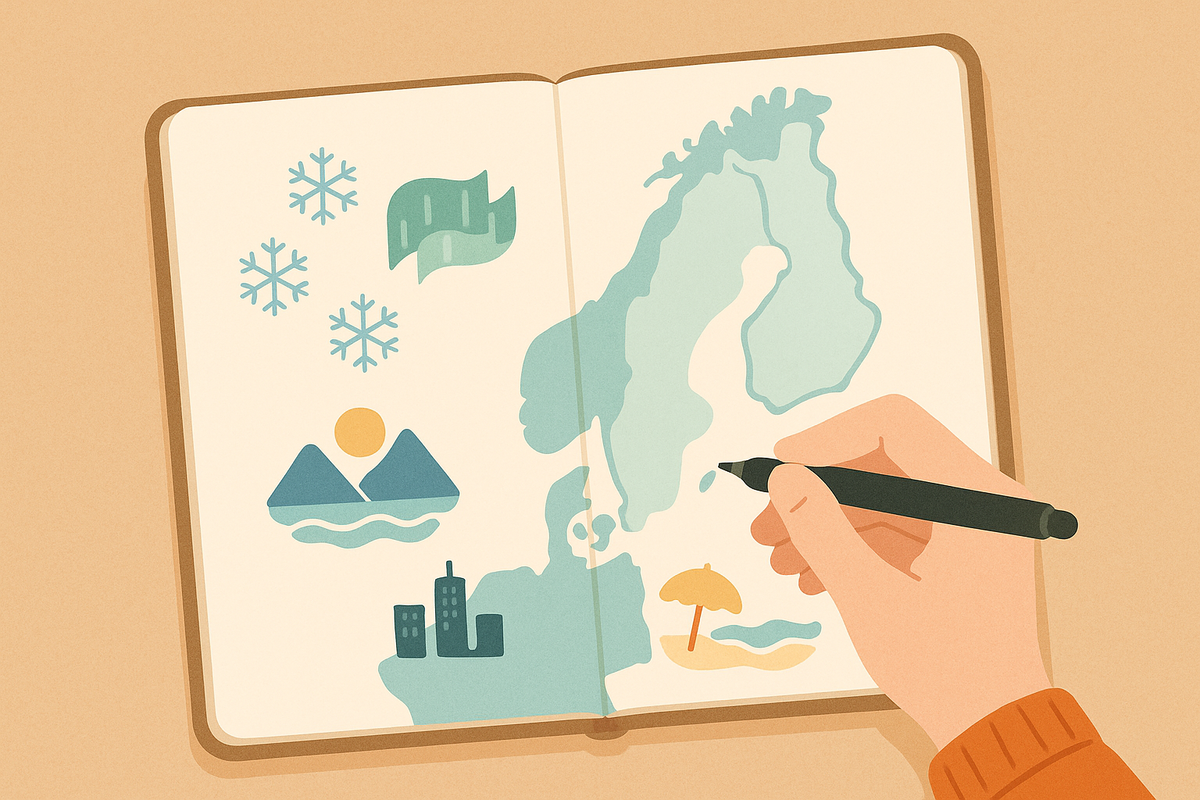
🧭 Quick overview: which season and which country are best for your holiday
| Type of trip | Best time to go | Best places |
|---|---|---|
| Northern lights and winter fairytale | November–March | northern Sweden, northern Norway, Lapland in Finland |
| Fjords and mountain hiking | June–August, early September | Norway, the mountainous north of Sweden |
| City break holidays (city break) | April–May, September–October | Stockholm, Oslo, Helsinki, Copenhagen |
| Sea, beaches, islands | July–August | the Swedish coastline, the islands of Denmark |
| Slow travel and “lake cabin” | June–September | lake regions of Sweden and Finland |
This ‘cheat sheet’ helps you quickly understand which month and which country is best to visit if you already know what is most important to you — the northern lights, fjords, cities or the sea.
❄️ Winter: the Northern Lights and a winter wonderland (December–March)
🌌 Where and when to see the Northern Lights
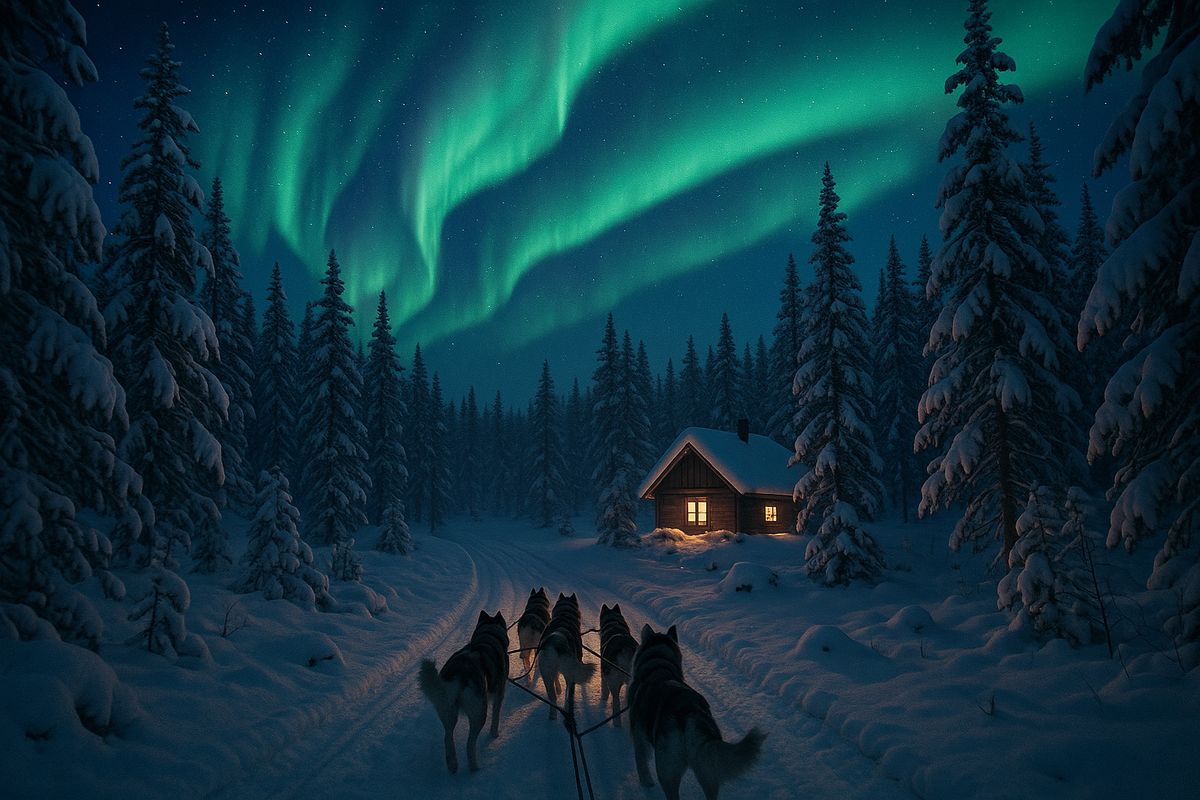
Winter is the best time to visit Scandinavia to see the Northern Lights. The darker the night and the further north you go, the better your chances are.
- Northern Sweden (Lapland, areas such as Abisko and Kiruna) — stable weather, little light pollution, good chances of seeing the aurora in 3–4 nights.
- Northern Norway — Tromsø, the Lofoten Islands and the coast of the northern fjords.
- Finnish Lapland (Rovaniemi and northwards) is famous for its glass igloos and cottages, where you can watch the Northern Lights right from your bed.
☃️ Winter experiences by country
Sweden in winter means snowy Lapland, snowmobiles, dog sledding, ice hotels and an introduction to Sami culture. Stockholm and other cities offer Christmas markets, museums and cosy cafés.
Norway in winter is a combination of fjords, mountain resorts and the northern lights. You can go skiing and go on night tours to see the aurora borealis during the same holiday.
Finland in winter offers family holidays with Santa Claus, reindeer, sleighs, winter safaris and saunas after a frosty day.
Denmark in winter offers a mild climate and atmospheric cities. Copenhagen, with its Tivoli Gardens, lights and hygge-style restaurants, is ideal for a short winter city break.
🎿 For whom is winter the best time
- For those who dream of seeing the Northern Lights and are not afraid of the cold.
- For families with children (especially Finland with ‘Santa Claus's country’).
- For those who want to swap the usual ski resort for a more atmospheric northern setting.
🌱 Spring: quiet off-season and city breaks (April–May)
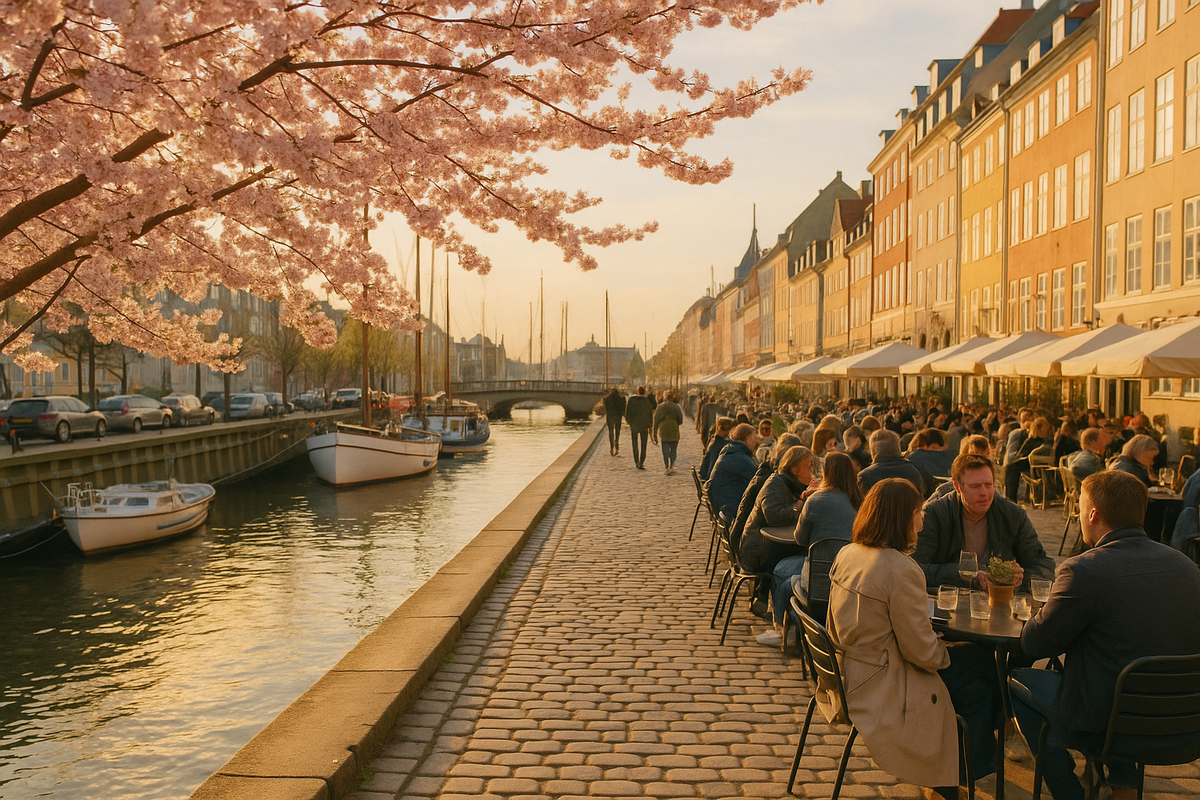
Spring in Scandinavia is a slow transition from winter to light. The snow has already melted in the cities, but there are no summer tourist crowds yet, and prices for flights and hotels are lower than in July and August.
🌸 What's so great about spring
- Fewer people — queues at popular museums and viewing platforms are usually much shorter.
- Comfortable city breaks — you can already take long walks along the embankments, parks and islands, and sometimes even have lunch on a terrace.
- A good balance of price and weather — especially for short trips of 3–4 days.
🧳 Ideal trip formats
- City breaks in capitals.
- Stockholm: the old town, museums, first trips to the archipelago.
- Copenhagen: bicycles, canals, street food.
- Oslo: waterfront, museums, modern architecture — a convenient starting point before travelling to Norway.
- Helsinki: design shops, markets, public saunas, walks on the islands.
- Short trips for locals — residents of northern regions can choose the milder climate of southern Sweden, Denmark or southern Finland to ‘thaw out’ and change scenery after winter.
Spring is ideal for those who dislike heat and crowds, want to combine walks, museums and gastronomy, and are not aiming for the fjords in full summer mode.
🌞 Summer: polar day, fjords and islands (June–August)
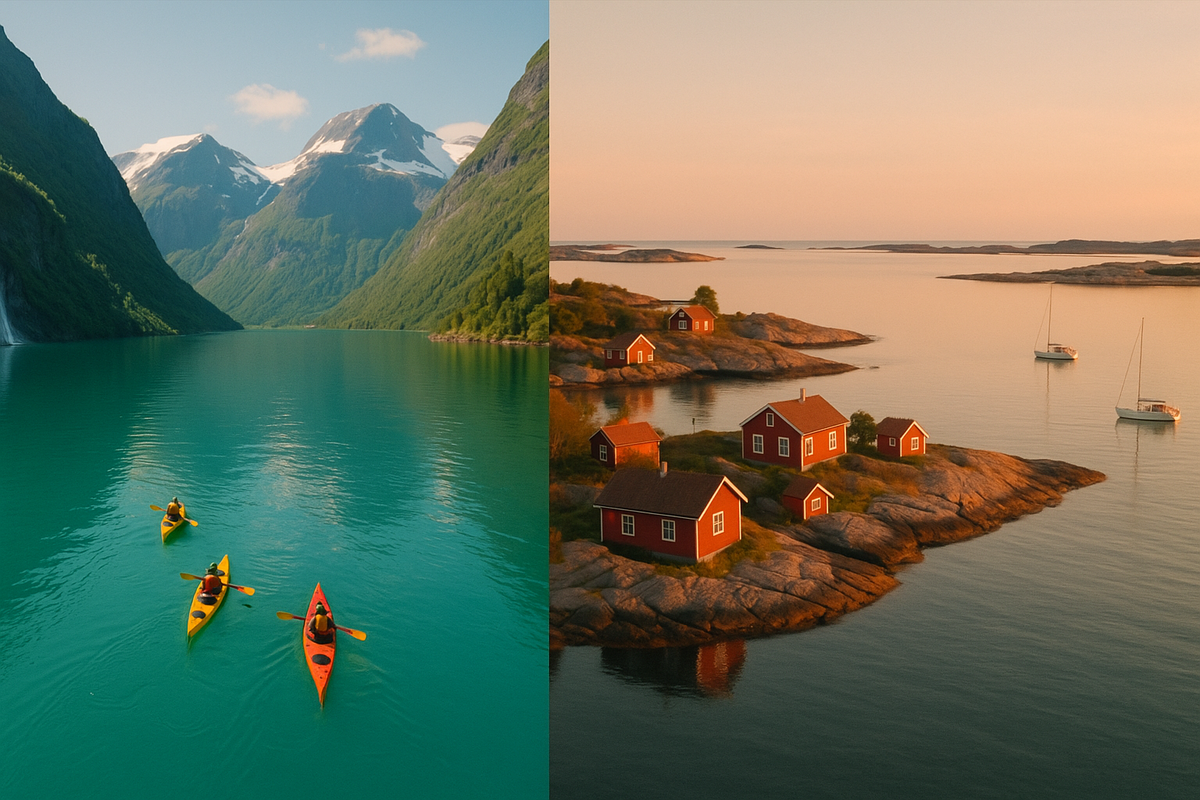
Sweden is especially beautiful in summer for those who love a combination of city and nature:
- The Stockholm Archipelago — dozens of islands with small villages, beaches, trails and kayaking.
- The west coast — rocky shores, fishing villages and excellent seafood.
- Gotland is home to medieval Visby and beaches that are popular with Swedes themselves.
The Midsommar festival at the end of June features wreaths, dancing, picnics and almost white nights, which are especially noticeable in the northern part of the country.
🏝️ Summer in Sweden: archipelagos and Midsummer
Sweden is especially beautiful in summer for those who love a combination of city and nature:
- The Stockholm Archipelago — dozens of islands with small villages, beaches, trails and kayaking.
- The west coast — rocky shores, fishing villages and excellent seafood.
- Gotland is home to medieval Visby and beaches that are popular with Swedes themselves.
The Midsommar festival at the end of June features wreaths, dancing, picnics and almost white nights, which are especially noticeable in the northern part of the country.
⛰️ Norway: fjords and hiking in summer
If your dream is to visit Norway's fjords, the best time to go is summer and early autumn.
- Panoramic roads and trails to viewing platforms are open.
- The weather is comfortable for hiking and cruises along the fjords.
- In the northern part, it is almost polar day, when it is light almost 24 hours a day.
🧖♀️ Finland: lakes, mökki and saunas
Summer in Finland means slow travel and life by the water:
- mökki — a summer cottage by the lake, where Finns go for weeks;
- swimming, boating, fishing, berries and endless forests;
- the obligatory Finnish sauna and evenings by the water.
🚲 Denmark: sea, wind and bicycles
The best time to visit Denmark is June–August, when the sea and coastline are at their most pleasant:
- the sandy beaches of Jutland;
- Skagen with its dunes and the place where two seas meet;
- Copenhagen with its harbours, where locals swim right in the city centre.
👥 Who will enjoy summer
- families with children;
- active holiday enthusiasts — hiking, kayaking, cycling tours;
- those who are not ready for the polar night but want to see northern landscapes in the mildest possible format.
🍂 Autumn: colourful forests, the start of the northern lights season and cosy hygge (September–November)
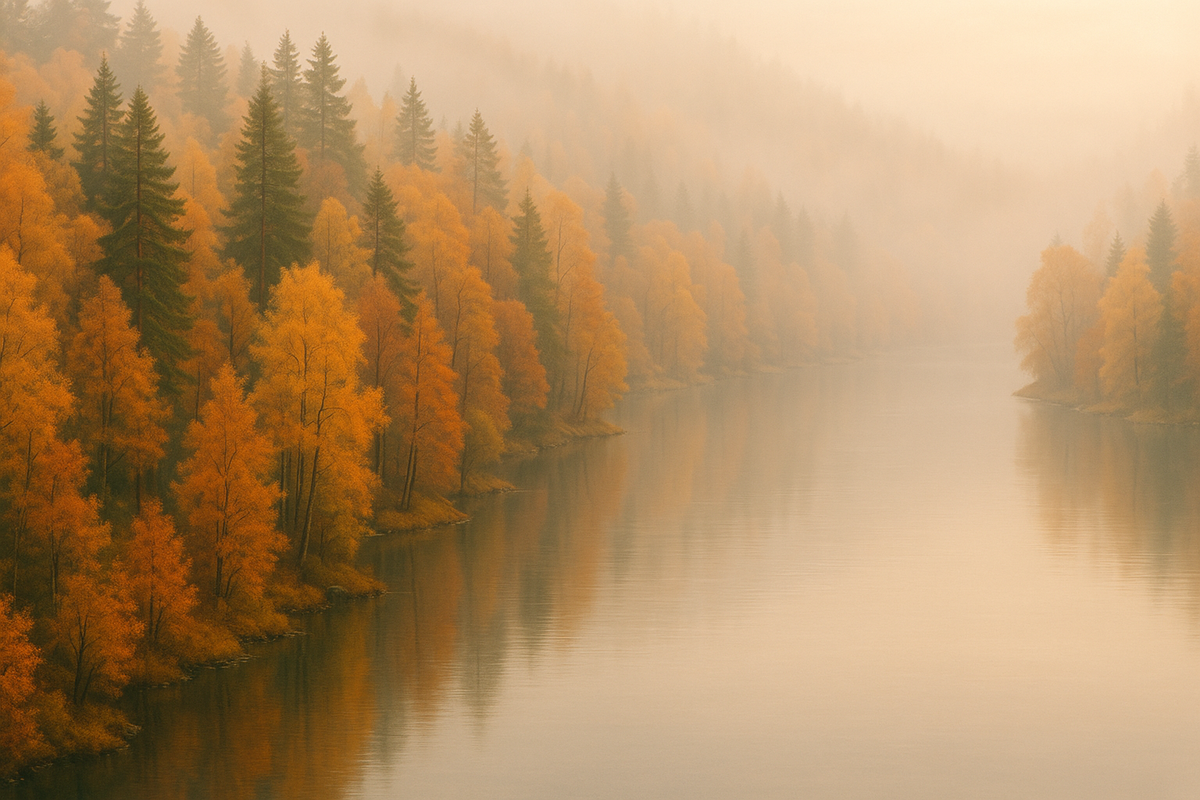
Autumn in Scandinavia is often underrated, but for many it is the best time to visit: vibrant forests, mild weather in September–October, fewer tourists and dark nights again for the Northern Lights in the north.
🍁 September–October: golden autumn and the start of the northern lights
Sweden and Finland: the perfect time for walks in the woods, along lakeside trails and staying in a cottage by the water. The forests turn red and gold, and the air remains quite mild.
Norway: the fjords are no longer as crowded, the trails are still open, and the landscapes sometimes look even more dramatic thanks to low clouds and autumn light.
Northern Lights: in the northern regions of Sweden, Norway and Finland, they begin to appear actively in autumn, when the nights become dark enough.
🕯️ November: the most hygge time of year
November is rarely chosen for postcards, but it is perfect for those who want maximum comfort and minimum tourists.
In Denmark and southern Sweden, there are cafes, candles, hygge-style kitchens, museums and spas.
- In the north, it's the start of real winter and more affordable prices for Northern Lights tours, if you're ready for shorter days and harsher weather.
Autumn is perfect for those who love nature without the crowds, enjoy photographing autumn landscapes and appreciate cosiness after a walk.
🎯 How to choose a country and season for your type of holiday
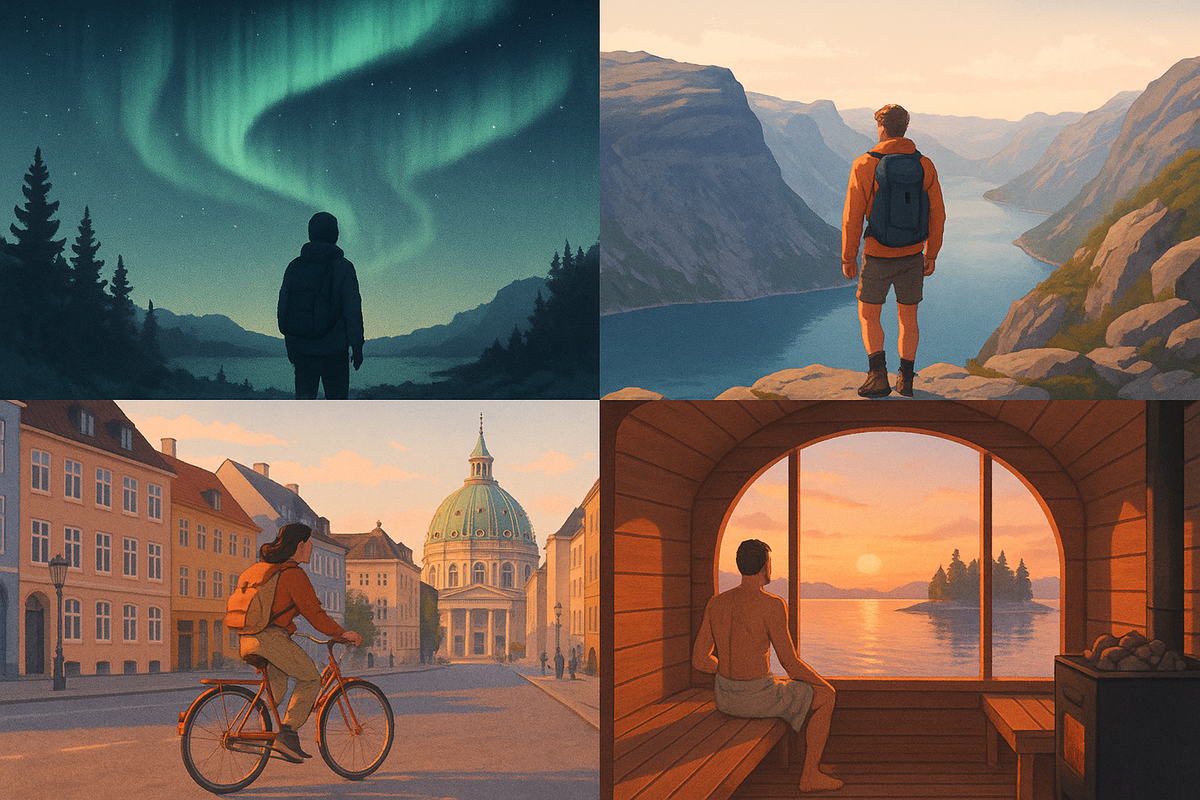
To avoid confusion, start by answering a simple question: ‘What is most important to me on this trip?’
- ‘I want the northern lights and winter’ — then you need the dark season (November–March) and northern Sweden, northern Norway or Lapland in Finland
- ‘I want fjords and mountains’ — plan for summer and early autumn, primarily Norway, and partly northern Sweden.
- ‘I want a comfortable city break’ — choose the capitals (Stockholm, Oslo, Helsinki, Copenhagen) in spring or autumn, when the weather, prices and tourist flows are in balance.
- ‘I want the sea and beaches’ — the best time to go to Denmark and the Swedish coast is July–August.
- ‘I want to live like a local and slow down’ — a summer cottage by a lake in Sweden or Finland (June–September): sauna, forest, berries, boat and a minimum of mandatory activities.
If you only have 5-7 days, it is better to focus on one country and one or two regions. For 10-14 days, you can combine, for example, Sweden + Norway or Sweden + Denmark/Finland.
🧩 Practical tips: how to plan a trip to Scandinavia
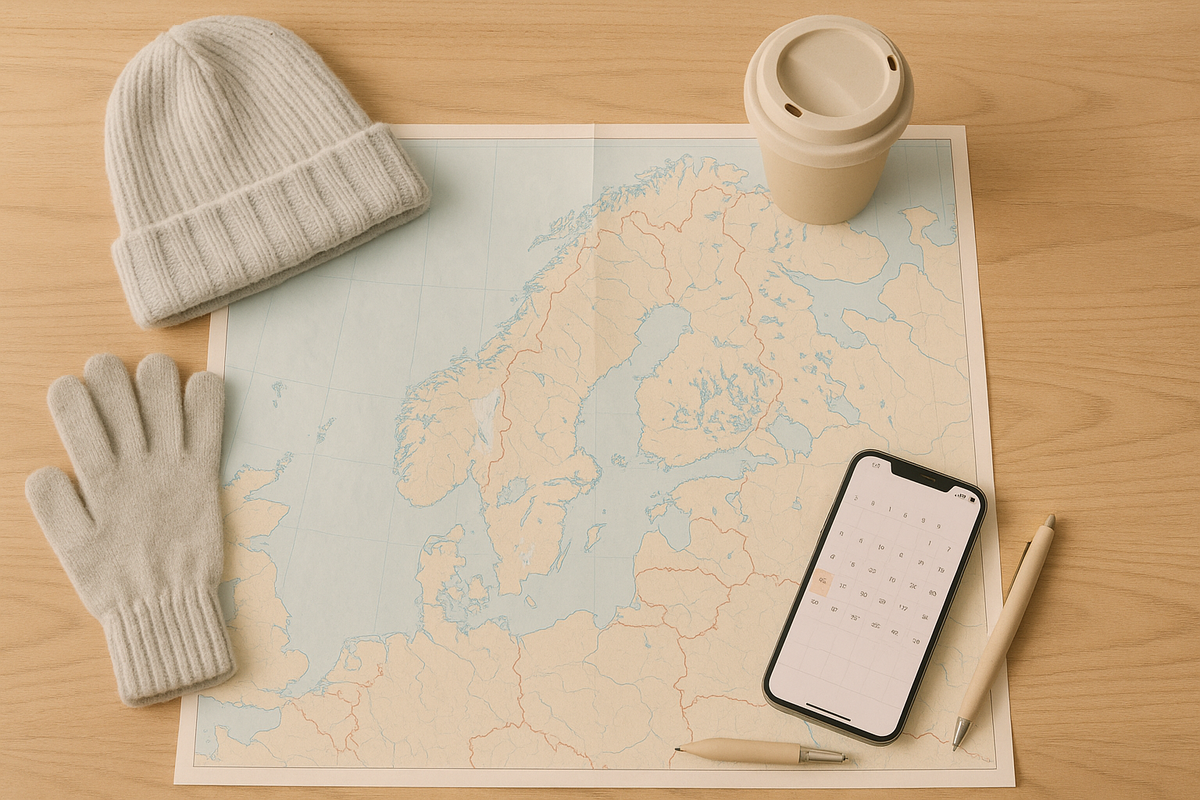
📅 When to book
- High season — Christmas and New Year holidays, February holidays, July–August. During this time, demand for flights and hotels is high, especially in popular regions (Lapland, Tromsø, Lofoten, Danish resorts). It is best to plan your trip 3–6 months in advance.
- The off-season (spring and autumn) is more flexible: often 1–2 months is enough to find good prices for tickets and accommodation in cities.
🧥 Clothing and daylight hours
- Wear layered clothing: thermal underwear, wool/fleece, wind and rain protection. Even in summer, evenings by the sea and in the mountains can be cool.
- In winter, daylight hours are very short in northern regions — plan your main activities for the middle of the day.
- In summer, it hardly gets dark in the north: bring a sleep mask if complete darkness is important to you.
🌿 Sustainable tourism
Scandinavia takes ecology seriously, and tourists feel it. To ensure your holiday is environmentally friendly:
- choose local tours and small providers;
- follow the rules of conduct in national parks and forests, take all your rubbish with you;
- respect local traditions, especially in regions with Sami culture;
- where possible, use trains and ferries instead of unnecessary domestic flights.
🚀 Where to start your acquaintance with Scandinavia
The best time to visit Scandinavia always depends on the purpose of your trip. In winter, you will enjoy snow and the northern lights; in summer, fjords, islands and life by the water; in spring and autumn, quiet cities and mild transitional seasons.
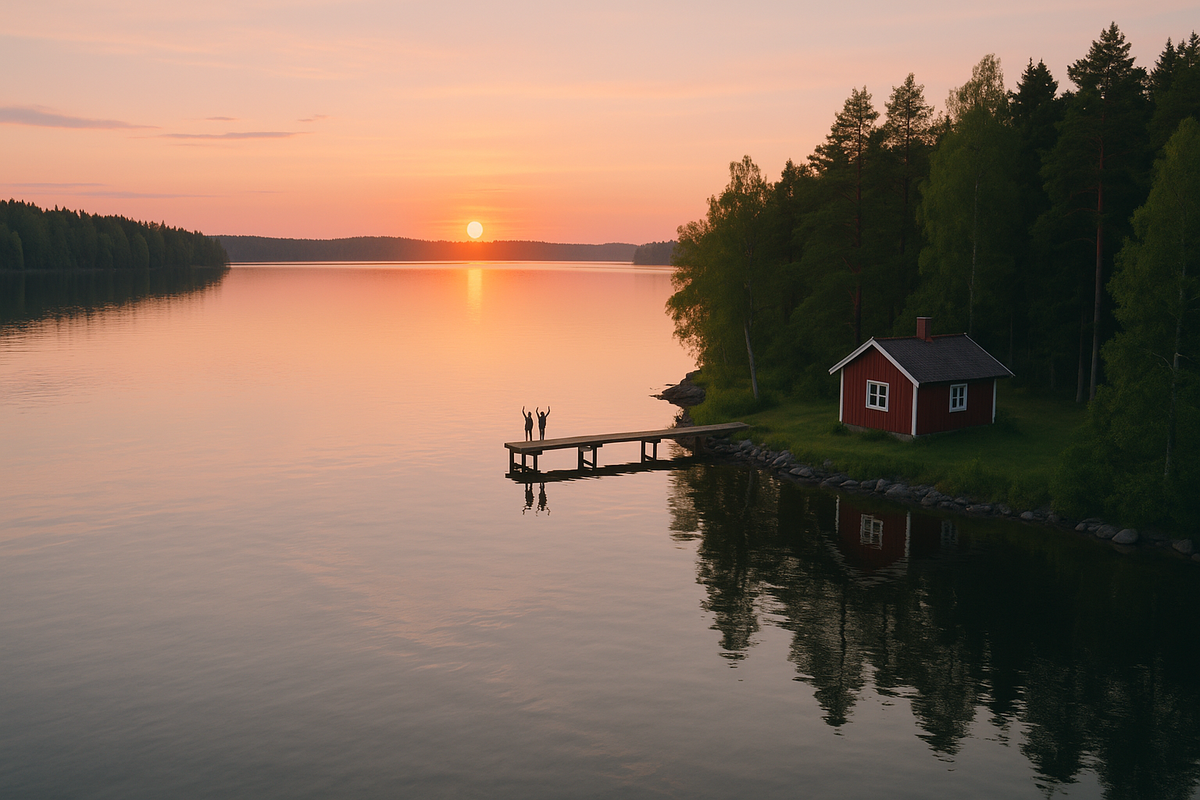
If this is your first trip, a good place to start is summer or early autumn in Sweden, with the option of adding a short trip to neighbouring countries:
- for fjords and mountains, head to Norway
- for the sea and Danish hygge, head to Denmark
- for lakes, saunas and mökki, head to Finland
Choose one main priority — sunshine, fjords, cities, the sea or forests — and use it as a starting point when choosing the season. Scandinavia is beautiful all year round, but each period offers its own version of the perfect northern journey.

0 comments
Log in to leave a comment