


🚆 Scandinavia without a car: how to travel through Sweden, Norway, Denmark and Finland by train and ferry
🚆 Why Scandinavia is ideal for travelling without a car
Scandinavia without a car is not a compromise, but one of the most convenient ways to see the region. An extensive railway network and well-planned ferry routes connect capitals and small towns, allowing you to enjoy a full Scandinavian journey by train and ferry with minimal logistical concerns.
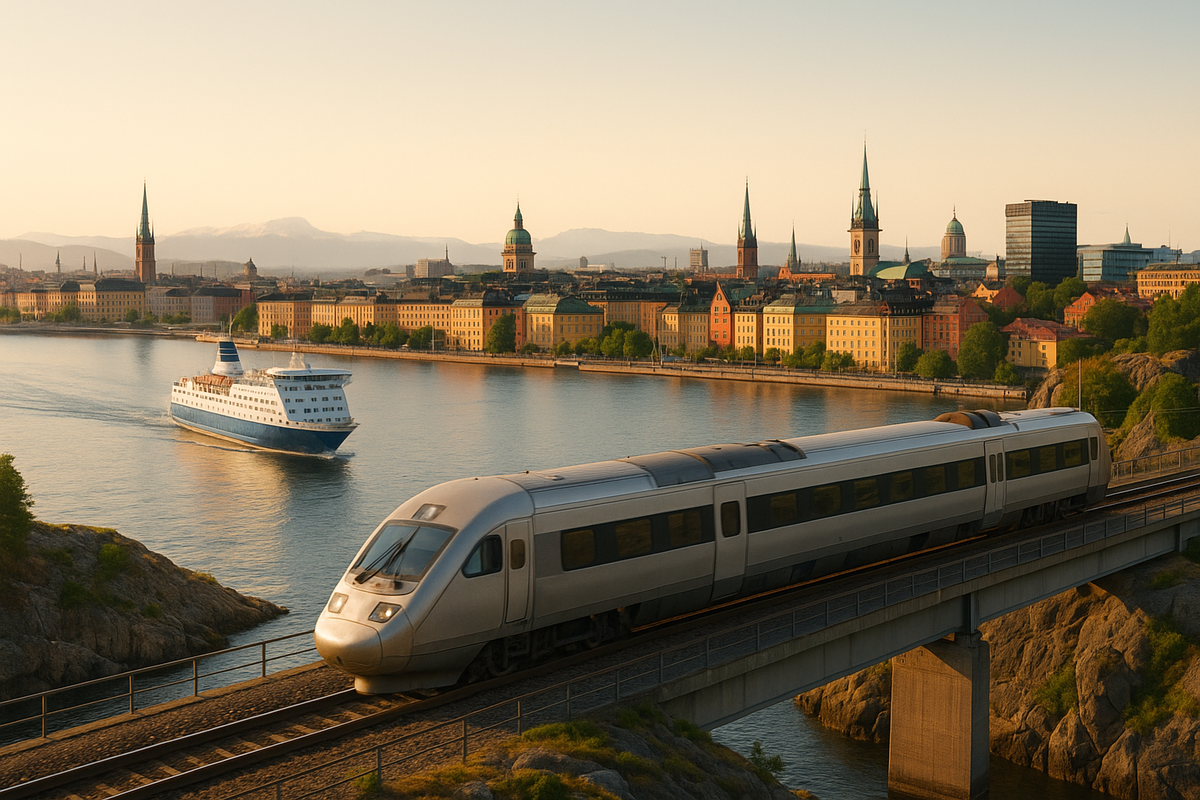
Instead of looking for parking, paying for toll roads and stressing behind the wheel, you simply hop on a train in the city centre and get off in the heart of your next destination. Trains and ferries run on clear schedules, connect easily with each other, and night services save you time and money by combining travel and accommodation.
⏱️ Save time and stress: trains and ferries instead of car hire
If you are wondering how to travel around Sweden without a car and see as much as possible, the answer is simple: trains and ferries in Scandinavia have long been the main mode of transport for locals and tourists alike. Railways and sea routes allow you to plan your trips in advance without worrying about unfamiliar traffic rules, complex junctions and parking in large cities.
Below is a visual comparison of car rental and travelling by public transport.
| Car rental | Trains and ferries in Scandinavia | |
|---|---|---|
| Planning | You need to consider routes, parking, toll roads, and fines. | Fixed timetables, convenient connections, travel from city center to city center. |
| Stress level | Unfamiliar traffic rules, complex interchanges, traffic jams in major cities. | You can read, work, look out the window, and relax while on the road. |
| Budget | Rental, fuel, parking, possible damage, and insurance. | Transparent fares, travel passes, ticket deals, and ferry cruise offers. |
| Ecology | A higher carbon footprint and more pressure on cities. | Trains and large ferries are a more eco-friendly way to travel. |
This is largely why many tour operators in the region already offer trips where the entire itinerary is built around railways and cruises. This format makes travelling around Scandinavia by train and ferry predictable, comfortable and much more relaxed than driving.
🎯 Who would benefit from travelling around Scandinavia without a car?
Scandinavia without a car is suitable for many more people than it might seem at first glance. It is a convenient option both for those visiting for the first time and for residents of the region who are accustomed to combining trains, ferries and city electric trains in their daily and weekend trips.
This ‘Scandinavia without a car’ format helps different types of travellers — from novices to experienced residents of the region — plan trips more easily, ecologically and enjoyably, using trains and ferries as the basis for their itinerary.
🚆 How trains and ferries work in Sweden, Norway, Denmark and Finland
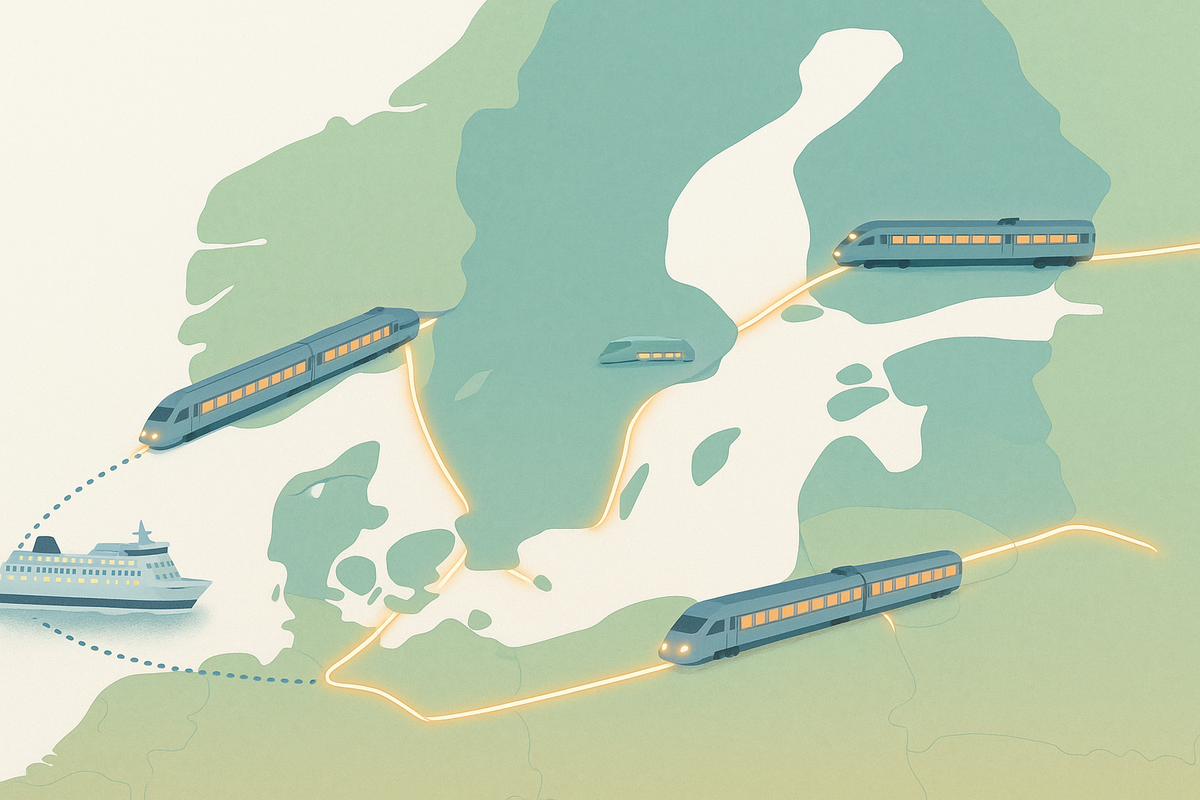
The railways of Scandinavia and the well-developed ferry network effectively form a single transport system. Trains in Sweden, Norway, Denmark and Finland connect large cities and small stations, while modern ferries operate between countries, often functioning as ‘overnight sea trains’. This means that travellers only need to understand the basic principles to confidently use Scandinavian railways, night trains and ferries between Stockholm and Helsinki or Copenhagen and Oslo.
🚄 Scandinavian railways: SJ, Vy, DSB, VR
Each country in the region has its own national operator, but for travellers, it all looks like one big, logical route: you plan your route through the cities and simply combine different companies. Below is a brief overview of the main operators that tourists most often encounter.
If you plan to travel extensively, it makes sense to consider passes such as Eurail or Interrail Scandinavia Pass: they cover Denmark, Sweden, Norway and Finland and allow you to flexibly combine Scandinavian railways in one itinerary without having to buy each ticket separately.
⛴️ Ferries between capitals and countries
In addition to railways, Scandinavia is easy to cross by water. Routes such as the Stockholm–Helsinki or Turku–Stockholm ferries operate like maritime ‘night trains’: you check into your cabin in the evening, spend the night travelling, and wake up in a new city in the morning. The Copenhagen–Oslo ferry is often chosen instead of a night train or flight — it is both a means of transport and a short trip.
| Route | Operator | Format | Highlights |
|---|---|---|---|
| Stockholm – Helsinki | Tallink Silja, Viking Line | Overnight ferry / mini-cruise | A classic route: the Stockholm–Helsinki ferry sails through the archipelago, with restaurants, bars, and cabins in different categories. |
| Turku – Stockholm | Tallink Silja, Viking Line | Overnight or evening ferry | Convenient if you start from southwestern Finland. Easy to combine with VR trains on the Helsinki–Turku route. |
| Copenhagen – Oslo | DFDS | Overnight ferry / “floating hotel” | The Copenhagen–Oslo ferry lets you switch capitals overnight and enjoy strait views without wasting time at airports. |
These routes fit well into a car-free trip around Scandinavia: you combine trains and ferries, getting both logistics and experiences — from city waterfronts to island landscapes.
🌙 Night trains and ‘floating hotels’
One of the main secrets to comfortable travel in the region is to make good use of night trains in Scandinavia and night ferries. Instead of spending your daytime hours travelling and paying for hotels, you spend the night on the road in your cabin or compartment and wake up in a new city or even a new country.
By combining Scandinavian railways, night trains and major ferry routes, you can plan a journey of almost any complexity — from a short weekend break to a grand circular tour without a single day behind the wheel.
🗺️ Basic 7–10-day circular route through Scandinavia (trains + ferries)
This 7–10-day route through Scandinavia conveniently begins and ends in Stockholm and takes you through the capitals of Scandinavia by train and ferry. In one trip, you can experience the atmosphere of Stockholm, Copenhagen, Oslo and Helsinki without renting a car or flying.

The Stockholm–Copenhagen–Oslo–Helsinki route forms a logical circle: some of the transfers can be made during the day, admiring the views, and some at night, saving time and money on hotels. Below is a basic itinerary that can be easily adapted for a week or a slightly longer holiday.
Set aside 1–2 days for walks through the Old Town, the museums on Djurgården, and along the waterfronts, and if you like, add a short trip around the Stockholm archipelago. Even here you can feel that Scandinavia’s capitals are linked so tightly by trains and ferries that you truly don’t need to rent a car.
Copenhagen deserves 1–2 days: canals, Nyhavn, a modern food scene, and cozy neighborhoods for strolling. Detailed ideas can be found in the section on Denmark routes and what to see in Copenhagen, and then woven into your Stockholm–Copenhagen–Oslo–Helsinki itinerary.
Plan 1–2 days for Oslo: the waterfront, museums, modern architecture, and easy access to nature. If you have time, add the Oslo–Bergen railway and the Flåmsbana line — one of the most scenic stretches in the region. You can read more about this in the section on Norway’s fjords by train and the Oslo–Bergen train and, if you wish, extend the route by a few more days.
In the evening, you board an overnight ferry from Stockholm to Helsinki. This leg feels like a mini-cruise: the archipelago outside, restaurants and cabins onboard. This format is especially popular in combined “Scandinavian capitals by train” and sea tours. Additional ideas for Finland can be found in the section on Finland routes, Helsinki, and Lapland.
To return to Sweden, you can take the same Helsinki–Stockholm ferry or choose the Turku–Stockholm option, combining a VR train from Helsinki with an overnight ferry. This closes the train-and-ferry Scandinavia loop back in Stockholm, where it is convenient to fly home or continue on to Europe.
🔁 How to extend the route to 2–3 weeks
If you have more time, the basic route can easily be extended into a full-fledged 2–3 week trip. Just add a few regions where trains and ferries take you to completely different landscapes — from fjords and the Lofoten Islands to northern Finland and Lapland.
🧩 Practical tips: tickets, seasonality and budget
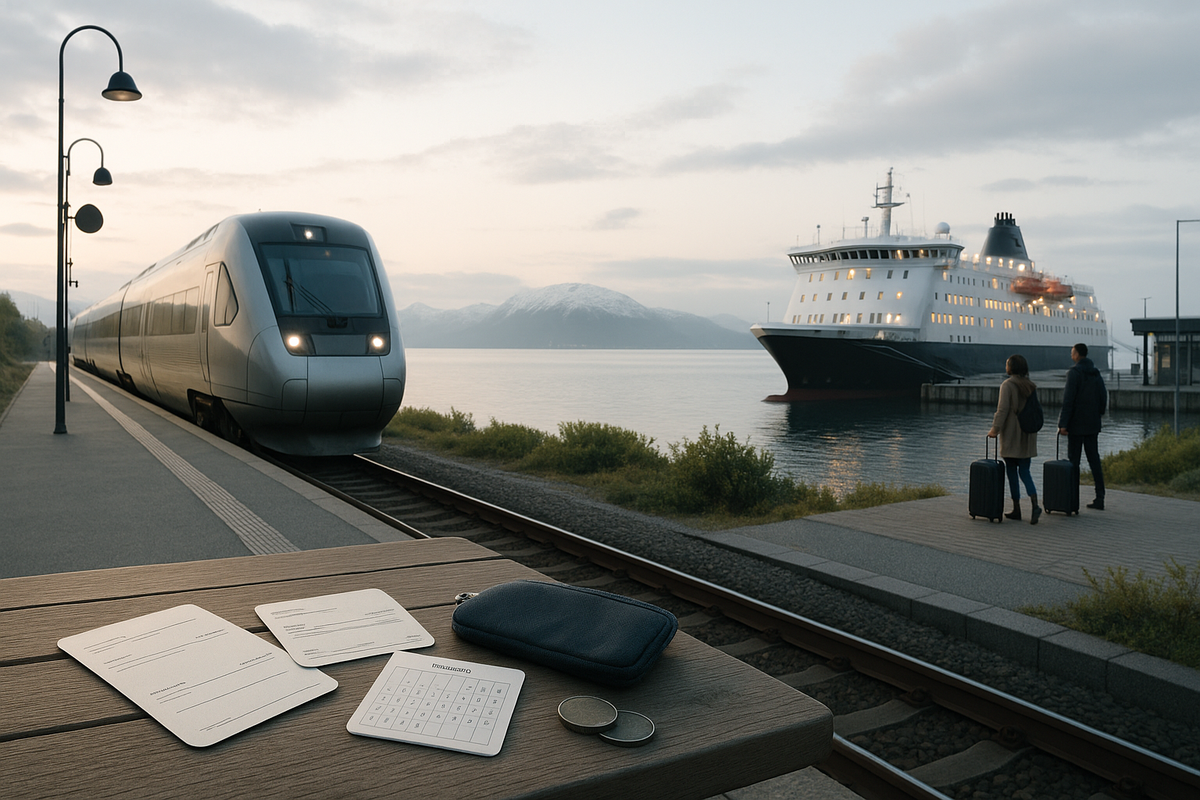
When planning a trip around Scandinavia without a car, it is important to consider not only the route, but also the season, the type of train and ferry tickets, and your budget. When you travel, which train tickets you choose in Scandinavia, and whether you will use night ferries and trains will directly determine how comfortable and affordable your trip will be.
🌤️ When to go: winter, summer and ‘mid-season’
Scandinavia is beautiful all year round, but the experience of travelling there varies greatly depending on the season. For some, the ideal picture is summer fjords and white nights, for others it is Christmas lights and the northern lights, and for others it is the quiet off-season without crowds of tourists.
🎫 Travel passes and tickets: which is more cost-effective
For a trip lasting several days within a single country, it is often more convenient to buy single train tickets in Scandinavia. But as soon as the route becomes multi-country and busy, it makes sense to consider the Eurail Scandinavia Pass and Interrail passes in Scandinavia: they give you the freedom to choose your travel days and allow you to avoid buying each ticket separately.
| Ticket type | Who it suits | Pros | What to keep in mind |
|---|---|---|---|
| Single tickets | Short trips, 1–2 transfers, an itinerary within one country. | Easy to buy and understand the cost of each journey; convenient if you already know exact dates and times. | With many transfers, the total cost can come close to the price of a pass; for popular routes, it’s best to book tickets in advance. |
| Eurail Scandinavia Pass | Travelers from countries outside Europe planning a multi-country trip in the region. | One pass covers Denmark, Sweden, Norway, and Finland; flexible choice of travel days; convenient for loop routes. | The pass pays off if you take several long-distance journeys; some trains may require seat reservations for an extra fee. |
| Interrail in Scandinavia | European residents planning to travel across multiple Scandinavian countries. | Similar to Eurail but designed for Europeans: gives you freedom to adjust plans on the go and choose trains and dates. | Check carefully which trains require mandatory reservations and factor this into your budget and route plan. |
The general rule is simple: if you are making 1–3 trips within one country, single tickets are usually more cost-effective. However, if you have a busy itinerary covering several countries, with trips almost every other day, a Eurail Scandinavia Pass or Interrail in Scandinavia can greatly simplify your planning and reduce the overall cost of your trip.
💡 How to save money: night trains and ferries instead of hotels
One of the most effective ways to save money when travelling in Scandinavia is to use night ferries and trains. Instead of paying for a hotel and spending daylight hours travelling, you spend the night in your cabin or compartment and wake up in a new city in the morning.
👨👩👧👦 Travelling with children and local residents
The Scandinavian model of ‘trains + ferries’ is ideal for both family trips and residents of the region. Parents do not need to worry about long hours of driving and winter roads, while locals are happy to combine trains and ferries for short weekends in neighbouring countries.
🏡 Ideas for Scandinavian residents: mini-trips without a car
Even if you live in the region, trains and ferries open up a wealth of ideas for short weekend trips around Scandinavia. From Stockholm, in just a couple of hours you can find yourself in another major city, on the coast or on board a ferry that will take you to a neighbouring country overnight. Trips of this kind for Swedish residents do not require long preparation or car rental — all you need is a small backpack and a route.
🚆 Weekend trips from Stockholm by train
The Stockholm–Gothenburg train, high-speed services south via Malmö and Copenhagen, short trips to lakes and national parks – all of these are ideal for a Friday–Sunday getaway or a long weekend. Below are a few ideas for mini-trips that are easy to fit into your usual routine.
⛴️ Weekend trips on ferries
Ferry cruises from Stockholm are another popular way to travel around Scandinavia on weekends. They combine transport with a mini-holiday: there are restaurants, saunas and decks for walking on board, and in the morning you wake up in a different country. Below are a few basic destinations that can be conveniently combined with a train journey or used as a standalone weekend trip.
💻 Travel and work: Scandinavian-style digital nomads
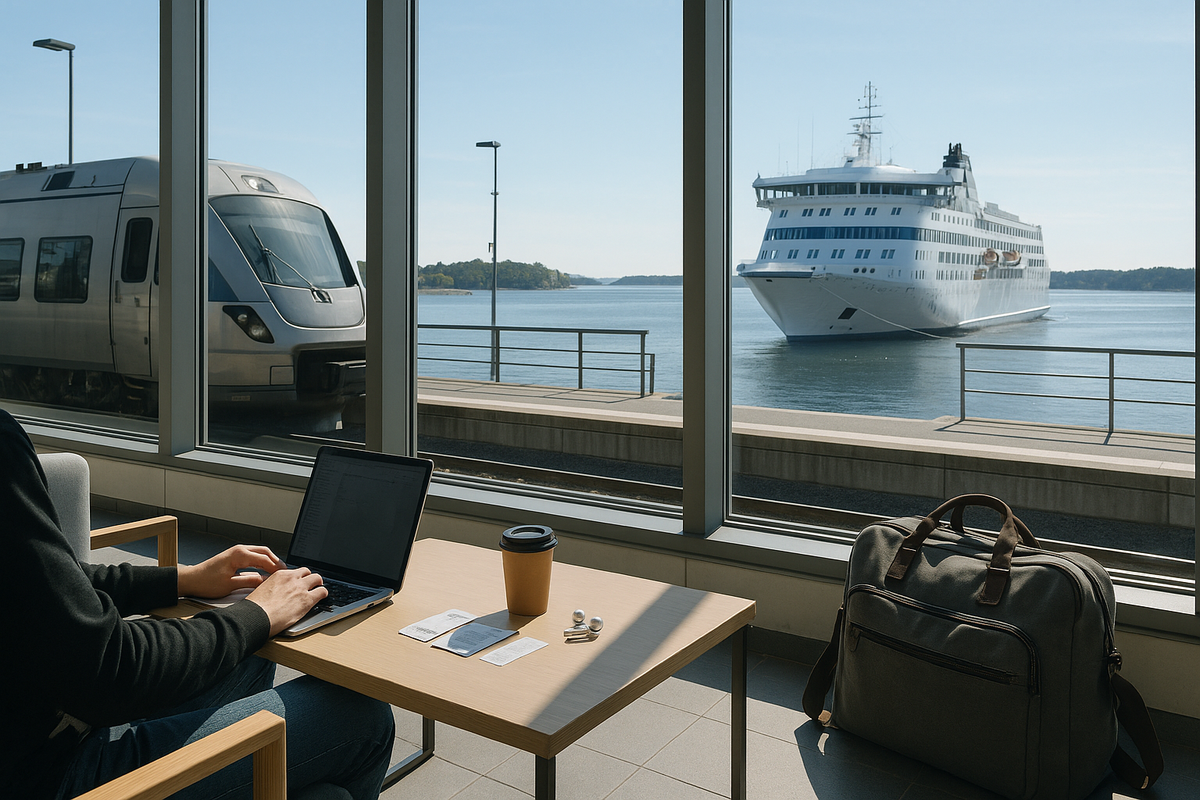
For those who work remotely, trains and ferry cruises from Stockholm can be not only a way to spend the weekend, but also part of the work schedule. Most long-distance trains and large ferries have Wi-Fi and power sockets, so the trip easily turns into an ‘office with a view of the sea or forest.’
- Choose trains with designated work areas or a comfort class where it’s easier to find power outlets and a calm atmosphere.
- Plan key calls for when the train or ferry is already underway, so you can take advantage of a more stable connection.
- Mix daytime journeys with scenic views and overnight services to save time and keep your usual work rhythm.
- Keep offline versions of documents and maps on hand in case the Wi-Fi temporarily drops during the trip.
🚆 Scandinavia without a car: just pick up and go
Ready to hit the road without a steering wheel or traffic jams? Scandinavia without a car is a well-thought-out network of trains and ferries that already connects capitals, fjords, archipelagos and small towns. All you have to do is choose the season, sketch out your route through Scandinavia and combine daytime travel with beautiful views and night-time journeys that will replace hotels.
Start with Stockholm and a circular route through the capitals, then check out our sections on Norway, Denmark and Finland to add fjords, islands or Lapland to your plan. Whether you are visiting for the first time or already live in the region, trains and ferries will make your journey through the North easier, more relaxed and more enjoyable.

0 comments
Log in to leave a comment