



🏙 Scandinavian capitals: Stockholm – Oslo – Copenhagen – Helsinki route for 7–10 days
🏙️ Why travel along the Scandinavian capitals route
Imagine a trip where, in just one week, you can hop from cosy Stockholm to fjord-filled Oslo, then to bike-friendly Copenhagen, and finally to minimalist Helsinki. The route through the Scandinavian capitals of Stockholm, Oslo, Copenhagen and Helsinki is one of the most convenient ways to experience the character of four countries at once in 7–10 days: Sweden, Norway, Denmark and Finland. It is no coincidence that tour operators in Northern Europe have been building package and independent tours around it for decades, using trains and ferries.
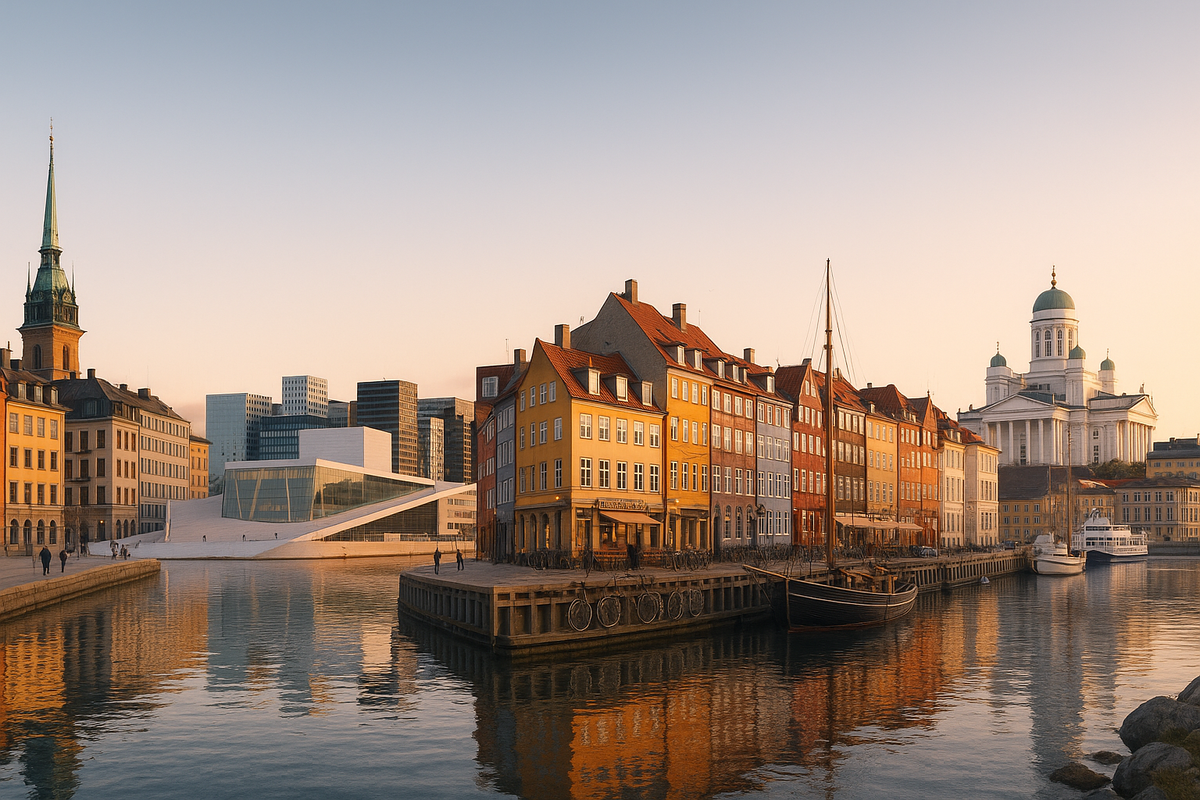
These cities have a lot in common: maritime history, a love of design and architecture, green embankments and a light but well-thought-out urban environment. At the same time, each capital has its own unique feel and evokes completely different emotions — from the bright facades of old neighbourhoods to the strict lines of modern ‘glass’ architecture.
In this article, we will look at how to plan a 7–10-day itinerary through the Scandinavian capitals, with examples of ready-made itineraries, transport tips and little life hacks that are usually only known to those who live here. And if you want to delve deeper into each country, you can separately refer to our travel guides for Norway, Denmark and Finland.
✨ What makes Stockholm, Oslo, Copenhagen and Helsinki unique
Stockholm is a city on islands, where medieval Gamla Stan with its narrow streets and royal palace literally neighbours modern districts, trendy restaurants and world-class museums.
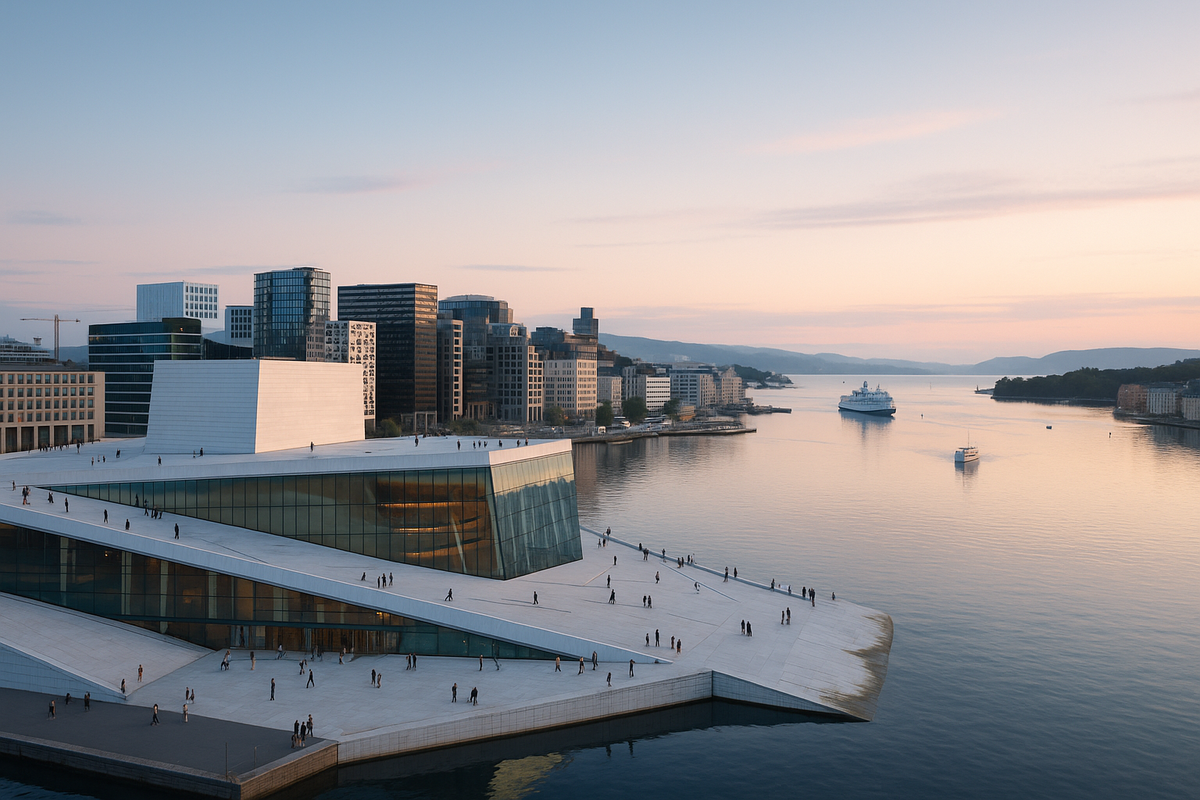
Oslo welcomes you with a fjord, the snow-white Opera House, which you will want to ‘enter’ via the roof, and the new Barcode skyscraper district. This is perhaps the most ‘natural’ metropolis on the route: in just half an hour, you can get from the centre to a forest trail above the water.
Copenhagen is the capital of hygge and bicycles. Colourful Nyhavn, cosy cafes with candles, designer spaces and a people-friendly urban environment have long made it the benchmark for a ‘smart’ European city.
Helsinki is a little more calm and collected: a white cathedral overlooking the square, granite rocks by the sea, thoughtful Finnish design and a cult of public saunas. From here, it is very easy to continue your journey through Finland or combine the capitals with a trip to Lapland.
👥 Who this route is suitable for: first-time visitors to Scandinavia, those combining a business trip with a visit to friends
The Stockholm–Oslo–Copenhagen–Helsinki route is ideal for a first introduction to Scandinavia. In 7–10 days, you will see four different cities and get a feel for the general ‘northern’ style, but you won't get tired of travelling: the distances here are short, and trains, ferries and domestic flights run frequently and on time.
It is suitable for those who:
- are visiting Europe/Scandinavia for the first time and want to ‘check’ how comfortable they are in the North;
- are combining a business trip or assignment with a short holiday;
- are flying to visit friends or relatives in one of the capitals and want to ‘catch’ another one or two;
- travel independently: the region is very safe, English is understood almost everywhere, and the transport system is simple and transparent.
A big plus of this route is its flexibility: many organised and independent tours start in Copenhagen, Helsinki or Stockholm, so you can adjust to a convenient flight and your plans.
🧳 How this article will be useful to residents of the region
If you already live in one of the Scandinavian capitals, this route can easily be broken down into short 3–4 day segments. For example:
- Copenhagen + overnight ferry to Oslo — ideal for a long weekend;
- Stockholm + overnight cruise to Helsinki — a popular mini-trip among locals;
- Oslo + train to Stockholm or Copenhagen — a comfortable ‘city weekend’ without flights.
In this article, you will find:
- ready-made itineraries for 7- and 10-day trips to Scandinavian capitals;
- ideas on how to ‘cut’ the route to 3–4 days if you are starting from your own city;
- tips on transport, approximate budget and seasonality to make it easier to plan both a spontaneous weekend and a long holiday.
Next, we will take a closer look at each capital city and show you how to put together your ideal northern trip.
🗺️ How to plan a 7–10-day route from Stockholm to Oslo to Copenhagen to Helsinki
To ensure a comfortable trip around the Scandinavian capitals, it is important to decide on three things right away:
- the order in which to visit the cities;
- how many days to allow for the trip (7 or 10);
- what time of year to go and where it is most convenient to start from.
🔁 The optimal order of cities and sample itineraries
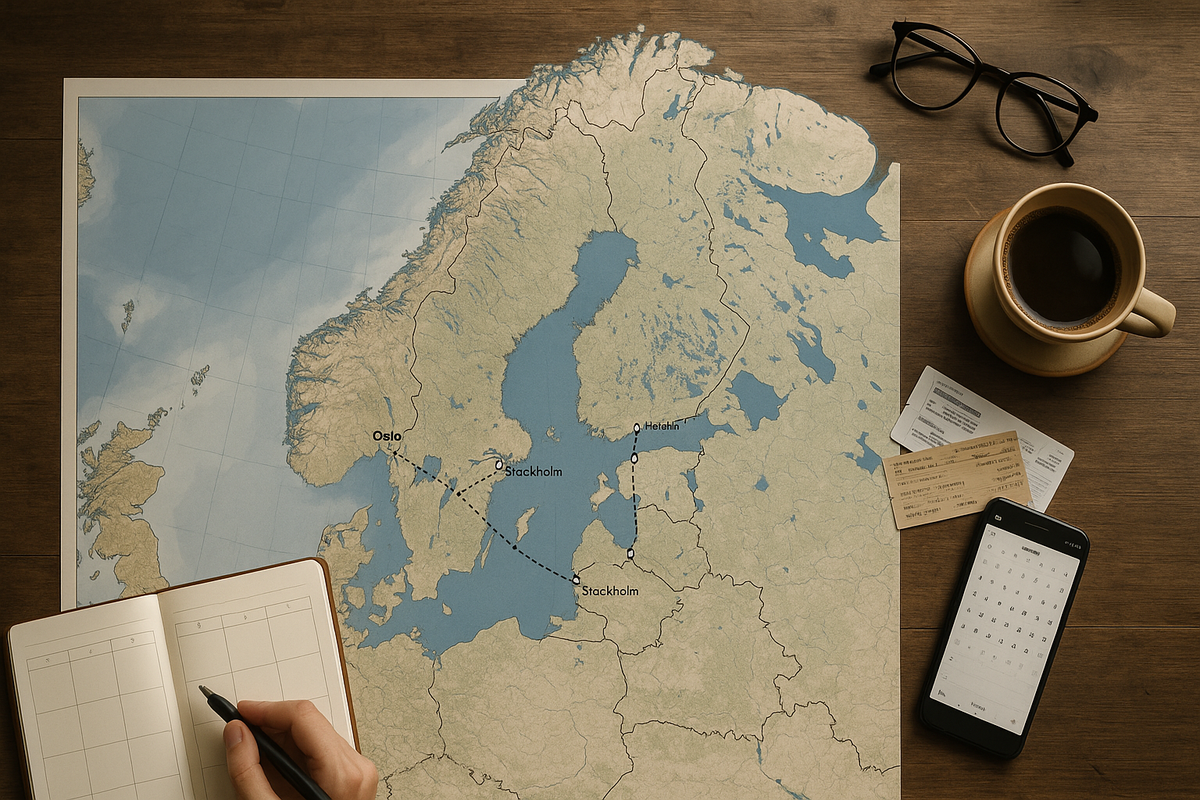
The classic tour of Scandinavian capitals looks like this: Stockholm → Oslo → Copenhagen → Helsinki.
It is convenient to travel by train, ferry and short flights, and if you wish, you can ‘turn’ the route in the opposite direction.
Below are ready-made itineraries for 7 and 10 days. This is a basic framework that you can adapt to your interests: add more museums, leave time for shopping, or focus on walks by the water.
| Day | City | Main focus |
|---|---|---|
| 1–2 | Stockholm | Gamla Stan, the Vasa Museum, walks along the waterfront and islands |
| 3 | Oslo | The waterfront, the Opera, the Barcode district, a stroll along the fjord |
| 4–5 | Copenhagen | Nyhavn, Tivoli, a bike ride through the center and trendy neighborhoods |
| 6–7 | Helsinki | Senate Square, Suomenlinna, a seaside sauna, the design district |
| Day | City | Main focus |
|---|---|---|
| 1–3 | Stockholm | Museums, an archipelago outing, modern areas like Södermalm and Vasastan |
| 4–5 | Oslo | City center, the Bygdøy museum peninsula, a short nature escape |
| 6–8 | Copenhagen | Hygge cafés, Nørrebro and Vesterbro, canals, possibly a day trip outside the city |
| 9–10 | Helsinki | The design district, islands, public saunas, relaxed waterfront walks |
You can tweak these itineraries to suit your flights: for example, start in Copenhagen or Helsinki, but keep the overall loop. It's important that days with active travel don't come one after another — this way you'll be less tired and have more time to see things.
🌤️ The best time to travel
Scandinavian capitals are beautiful all year round, but the format of the trip varies depending on the season. Below is a quick guide on when it is best to plan your Stockholm – Oslo – Copenhagen – Helsinki itinerary.
If you are visiting Scandinavia for the first time and want to do more walking, choose the period from late May to early September. If you want to see Christmas markets and experience a ‘real’ winter, plan your trip for late November to December, and then continue your journey deeper into Norway or Finland for snow and the Northern Lights.
📍 Where to start your route
The Scandinavian capital route has a big advantage: it is easy to tailor to the city that is most convenient and cost-effective to fly to. The options will differ for travellers from outside the region and those who already live there.
The result is a flexible itinerary through the Scandinavian capitals that can be easily adapted to your dates, budget and personal travel style: from a quick 7-day ‘Scandinavian Express’ to a more leisurely 10-day voyage with museums, gastronomy and walks along the waterfront.
🏝️ Stockholm (2–3 days): a historic city on islands
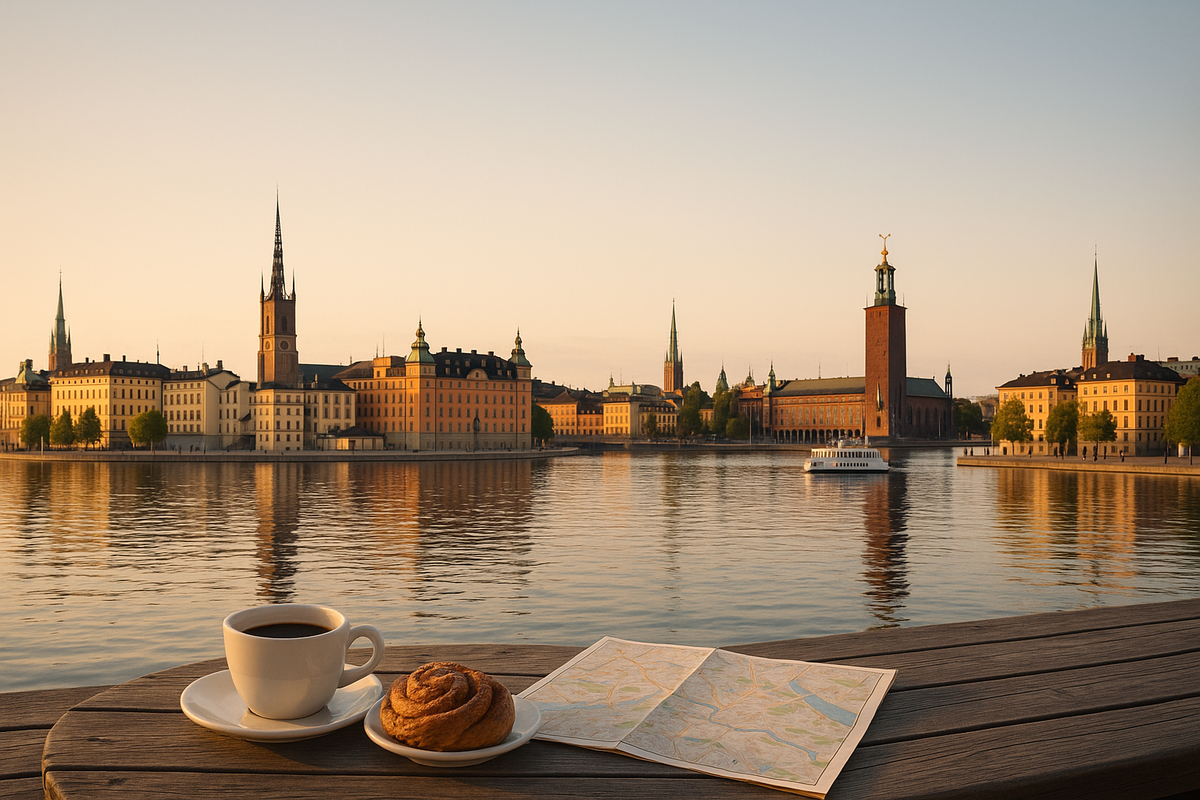
Stockholm is the ideal starting point for a tour of Scandinavian capitals. The city stands on dozens of islands, so almost every day you will see water, bridges and pleasure boats. In two to three days, you can easily see all the classic sights and catch that Stockholm vibe: fika in a coffee shop, a walk around Södermalm and an evening by the water.
👀 What to see on your first visit
If this is your first time in Stockholm, start with the classics: Gamla Stan, the Old Town, the Royal Palace, the City Hall, one or two museums, and a walk around the archipelago. This way, you will see history, the sea, and the modern city.
Gamla Stan is the heart of Stockholm: narrow lanes, historic facades, small squares and souvenir shops. It’s an easy place to spend your first half-day simply wandering without a strict plan.
The Royal Palace and the changing of the guard add a sense of royal history, while Stockholm City Hall, with its tower and inner courtyard, is perfect for an evening walk and city views.
The Vasa Museum is one of the world’s most impressive maritime museums: an almost fully intact 17th-century warship raised from the seabed. Plan about 1.5–2 hours for your visit.
If music and pop culture are more your thing, add the ABBA Museum: interactive exhibits, costumes and plenty of familiar songs. Ideally, set aside a full day for museums so you don’t have to rush.
The Stockholm archipelago is hundreds of islands, waterside cottages and pine forests. Even a short ferry ride or a 2–3 hour mini-cruise can completely change your sense of the city.
In summer and during the warmer shoulder seasons, try planning this for the evening: soft light, sunsets and island views often become one of the best memories of Sweden’s capital.
🧑🤝🧑 Stockholm through the eyes of locals
To experience the city beyond just being a tourist, it is worth setting aside time for fika and walks around the areas where Stockholmers themselves live and relax.
Fika is more than a coffee break — it’s a key part of Swedish culture: a mindful pause with coffee and something sweet, a moment to breathe and reset.
Plan at least one or two fikas a day: in the Old Town, on Södermalm, or around Vasastan. Try cafés with their own roastery and обязательно grab a cinnamon or cardamom bun.
Södermalm is a creative, slightly bohemian district with bars, vintage shops and waterfront views. It’s perfect for an evening walk paired with dinner.
Vasastan offers a different mood: calm streets, local restaurants, parks and tidy residential quarters. This is the Stockholm where it’s easy to imagine yourself living like a local.
🧭 Practical information
The simpler the logistics, the more energy you will have left for sightseeing. Below is a brief practical guide: how to get from Stockholm Airport, how to navigate the transport system, and which option to choose for travelling to Oslo.
✈️ How to get from Stockholm Airport to the city center
The main airport is Arlanda. You can reach the city center in several ways:
- Arlanda Express — the fastest option, about 20 minutes to Stockholm Central Station. Great if your schedule is tight.
- Commuter train (pendeltåg) — usually cheaper than the express, slightly longer travel time, but also goes to Central Station.
- Airport shuttles — serve different parts of the city and can be convenient if you’re not staying near the central area.
Bromma and Skavsta are also used (often for budget flights). Buses connect them to the city, but the travel time is longer than from Arlanda. It’s best to check current schedules and prices before you travel.
🚇 Public transport and travel cards
Stockholm has an excellent public transport system: metro, commuter trains, trams, buses, and some ferries are all part of the unified SL network.
- Day or multi-day passes are convenient for visitors and cover most city routes.
- You can pay with a contactless card, the mobile app, or a prepaid travel card.
- The metro itself is a landmark: many stations feel like art spaces, so you can plan a little “underground gallery” walk.
Download the official transport app and save offline maps — it will make routes from your hotel to any part of the city easy to plan.
🧳 The easiest way to get from Stockholm to Oslo
You can travel from Stockholm to Oslo by train, bus, or plane. Each option has its own advantages:
- Train — comfortable, no airport-style security hassles, and scenic views. A good balance of time and convenience, especially if you’re staying near Central Station.
- Bus — usually cheaper but longer. Ideal if you want to save money and don’t mind extra travel time.
- Plane — the fastest flight time, but add the journey to the airport and security checks. Often worth it if you find a good deal or are connecting to further flights.
Consider departure and arrival times: a night journey can save a day in your schedule and a hotel night, but it’s more tiring. For a comfortable Scandinavian capitals route, daytime trains or early evening flights are often the best choice.
🏔️ Oslo (1–2 days): fjords, art and modern architecture
Oslo is a compact capital city right by the water: in a single day, you can stroll along the waterfront, climb to the roof of the Opera House, see the modern Barcode district and already feel that you are in the land of fjords. Oslo is easy to combine with museums and easy access to nature in 1–2 days as part of a route between Stockholm and Copenhagen.
📍 Central locations
Begin your exploration of Oslo with the waterfront, the modern business district, and the Opera House. All of these locations can be easily connected by a single walk from the central station.
Aker Brygge is a long pedestrian waterfront with cafés, restaurants, and views of the Oslofjord. It’s a pleasant walk in any season: in summer you can sit on the terraces, and in winter enjoy the lights and ships arriving in the harbor.
Nearby is Tjuvholmen with modern residential buildings, art spaces, and a small beach — a great spot to feel how the city quite literally “steps out” toward the water.
Barcode is a row of narrow buildings of varying heights near Central Station. It has become one of the symbols of Oslo’s new architecture and looks impressive from different points along the waterfront.
A walk from the station through Barcode toward the water gives a clear sense of how the historic city connects with the modern business hub and new residential quarters.
Oslo’s Opera House is one of the most unusual buildings in Europe: you can freely walk on its roof like on a gentle slope. From here you get panoramic views of the center and the fjord.
It’s worth stopping by both during the day and closer to sunset, when soft light reflects in the glass and on the water. A perfect place for photos and a short pause mid-walk.
🖼️ Museum day on the Bygdøy peninsula
The Bygdøy Peninsula is the perfect place for a museum day in Oslo. It is easily accessible by ferry from the city centre or by bus, and most of the museums are within walking distance of each other. Set aside half a day or even a whole day if you love history and travel.
The Viking Ship Museum (currently being renovated, so it’s best to check its status before your trip) explores the history of ships and burials from the Viking Age. The exhibition helps you feel the scale of seafaring voyages and everyday life of that era.
This is especially interesting for travelers who love Northern history and ancient cultures.
The Fram Museum is dedicated to Norwegian polar expeditions. Inside, you’ll find a real polar ship you can walk through, peek into the cabins, and imagine how the expedition teams lived.
Great for both adults and kids: plenty of details, stories, and hands-on exhibits linked to the Arctic and Antarctica.
The Kon-Tiki Museum tells the story of Thor Heyerdahl’s journeys. Here you can see rafts and exhibits related to his ocean-crossing expeditions.
A strong choice for anyone inspired by bold travel stories and unconventional scientific ideas.
🌊 Oslo and the fjords in 1 day extra
If you have an extra day in your itinerary, use it to get closer to the fjords. This could be an organised tour, a combined train and boat trip, or an independent trip along a beautiful railway line.
Formats like combined fjord day trips (Norway in a Nutshell-style) let you fit a scenic railway, a cruise through a narrow fjord, and a couple of viewpoints into one day. It’s a great way to “feel Norway” even within a capitals-focused itinerary.
You can stay overnight in Oslo, leave early for a guided tour or a self-planned route, and return to the city by evening — then continue your Scandinavian journey.
Want more nature and route ideas around fjords and mountains? Check our article on traveling in Norway .
🕯️ Copenhagen (2–3 days): hygge, bicycles and canals
Copenhagen is often called the cosiest capital in Northern Europe: it's easy to mix walks along the canals, hygge-style cafés, the old town and a very modern city with a developed cycling culture. In two to three days, you will have time to see the classic sights, get a feel for the local rhythm and calmly continue your journey through Scandinavia.
🏛️ Copenhagen classics
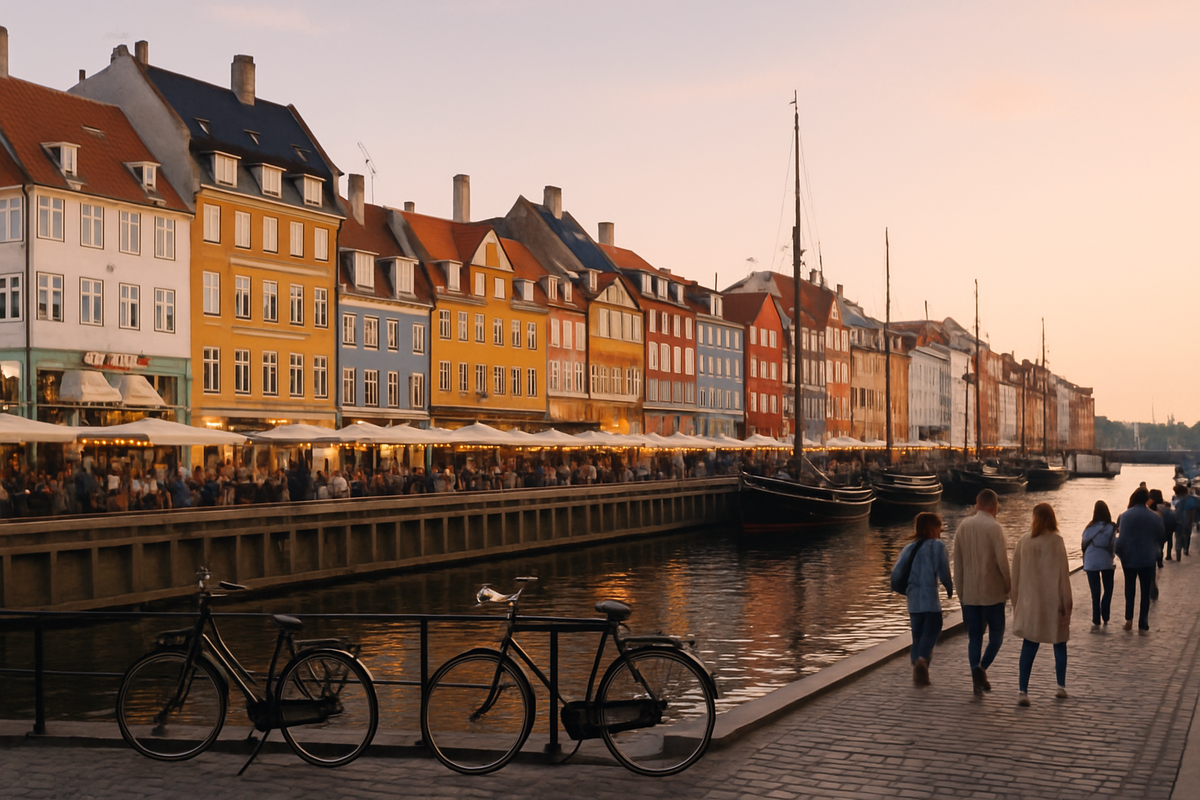
Start with what many people fall in love with Copenhagen for: Nyhavn, the Little Mermaid, Strøget pedestrian street and the royal palaces. If time allows, add an evening at Tivoli Gardens — especially in winter, when the park turns into a real Christmas fairy tale.
Nyhavn is Copenhagen’s postcard moment: colorful canal houses, wooden boats, and cafés with outdoor tables. It’s the perfect starting point for your first walk through the city.
From here it’s easy to step onto Strøget, the main pedestrian street running through the center toward the royal and historic palaces. In just a few hours you can cover the city’s key historic highlights without thinking about transport.
The Little Mermaid statue is small and often feels more modest than people expect, but the walk along the waterfront — with views of the harbor, the Kastellet fortress, and nearby parks — is calm, scenic, and easy.
Come early in the morning or closer to evening when the crowds are thinner and the light is softer — better for both photos and the overall vibe.
Tivoli is one of Europe’s oldest amusement parks, but its real magic isn’t just the rides — it’s the atmosphere: lights, decorative pavilions, concerts, restaurants, and cozy corners for strolling.
In summer you’ll find greenery and open-air events, while in winter Tivoli shines with festive lights and Christmas décor. Plan an evening visit to experience the park in both daylight and after dark.
🍽️ Modern city and gastronomy
In addition to its classic attractions, Copenhagen is a lively city with street life, gastronomy and new neighbourhoods by the water. If you have two or three days in the city, be sure to set aside at least one day for such walks.
Nørrebro and Vesterbro are neighborhoods with lively street culture, a mix of communities, small bars, cafés, and street food hubs. It’s easy to spend an entire evening here, hopping from one cozy spot to the next.
Food markets and compact гастро spaces let you try many things at once — from classic Danish favorites to modern Nordic cuisine in a more relaxed format than fine dining restaurants.
In recent years Copenhagen has been активно transforming former port and industrial areas. Around the canals, modern жилые quarters, offices, public spaces, and urban beaches are appearing and expanding.
In summer people come here to swim and sunbathe right in the city, and the rest of the year — to stroll by the water, sit in cafés on the waterfront, and see how Copenhagen turns water into a ключевой element of urban life.
🧭 Practice
To get the most out of Copenhagen, it is worth learning in advance how to use bicycles and city maps, and how to get further along your route.
🚴 Bike rental and cycling infrastructure
Copenhagen is one of the most bike-friendly cities in the world: dedicated lanes, clear navigation, and a respectful road culture. Even if you rarely cycle at home, it’s worth trying here.
- Use the city bike-sharing system or a rental near your hotel — most options can be arranged via an app.
- Start with easy routes: from the center to Nyhavn, along the canals or the waterfront, and avoid the busiest intersections during rush hour.
- Follow the basics: stay in bike lanes, signal turns with your hands, and be mindful of pedestrians and other cyclists.
One day on a bike gives you a completely different feel of the city and lets you cover more neighborhoods in the same amount of time.
🎫 Copenhagen Card and other city passes
Copenhagen Card is a tourist pass that usually includes unlimited public transport and entry to a range of museums and attractions.
- It makes sense if you plan to visit museums and palaces активно and use transport several times a day.
- If your plan is more about walking and атмосфера, compare it with single tickets: sometimes standard travel passes and selective entries are better value.
- Check current terms and the list of included places on official sources before your trip.
Either way, a thoughtful ticket strategy can noticeably reduce your budget for 2–3 days in Copenhagen.
🧳 How to continue your route from here
From Copenhagen it’s easy to продолжить a Scandinavian capitals itinerary:
- Train — a comfortable option for travel toward Sweden (via Malmö) or further along the route. It saves airport time and adds scenic views.
- Ferries — a great choice if you want a sea crossing or plan to expand the trip deeper into Denmark and Norway.
- Plane — the fastest way to reach the next capital or fly home, especially if you find a good direct fare.
When choosing, consider your overall schedule: a daytime train or an evening ferry can be less tiring than very early or late flights.
If you feel like staying in the country a bit longer, add other cities and islands to Copenhagen — from historic ports to quiet beaches and picturesque villages.
More ideas across the country — a selection of Denmark itineraries is available via the link: view Denmark itineraries.
🎨 Helsinki (1–2 days): Nordic design and saunas by the sea
Helsinki is a compact and peaceful capital city where austere architecture coexists with modern Nordic design, and the city literally ‘comes out’ to the sea. In 1–2 days, you will have time to walk through the historic centre, sail to Suomenlinna, visit the design district and, of course, try the ‘sauna by the sea’ format, which is almost a way of life for Finns.

📍 The main attractions in the city centre
The centre of Helsinki is easy to explore on foot: all the key spots – Senate Square, the cathedral, Kauppatori Market Square and the ferry terminals – are close to each other. This is the perfect route for your first day in the city.
Senate Square with the white Helsinki Cathedral is one of the city’s most iconic sights. Broad steps, pale stone and clean lines create a distinctly “northern” sense of space.
Stop by in the morning for soft light, or in the evening when the illumination comes on and you can enjoy views over the surrounding rooftops and streets.
Kauppatori Market sits right by the water, close to the docks. You’ll find fish, berries, local products and souvenirs here, and in summer the outdoor cafés come to life.
It’s a great spot to feel Helsinki’s port vibe, try something local, and watch ferries and small boats moving through the harbour.
Suomenlinna is a historic sea fortress spread across several islands and listed as a UNESCO World Heritage Site. It’s only about 15–20 minutes by ferry from the city centre.
The fortress is rewarding in any season: old ramparts, waterside paths, small cafés and beautiful bay views. Plan at least half a day so you can explore without rushing.
🧑🤝🧑 Helsinki as seen by the locals
To see Helsinki through the eyes of the locals, it is worth venturing beyond the square and market: stroll through the design district, pop into a coffee shop and try out the public saunas by the sea.
Helsinki is known for its Design District — areas filled with interior studios, flagship spaces of Finnish brands, small galleries and beautifully curated storefronts.
Between shops you’ll find plenty of cafés. Finns appreciate a good filter coffee, quality espresso and simple pastries. Plan at least one slower day to stroll, browse the windows and make unhurried coffee stops.
“Sauna + sea” is an essential part of local life. In Helsinki you’ll find public waterside saunas and outdoor bathing areas where you can warm up in the steam room and then dip into the sea or a pool.
The concept is simple: bring a swimsuit and a towel (often available to rent on site). Showers and sauna access are usually included in the entrance fee. It’s especially lovely in the evening, when you can combine the heat of the sauna, crisp air, and city lights over the water.
🚢 Where to go for a day trip
From Helsinki, it is easy to take a day trip to a small historic town or even another country — a logical continuation of a tour of Scandinavian capitals.
Porvoo is a small town about 1–1.5 hours from Helsinki, known for its wooden houses, cobbled streets and the riverside with iconic red warehouses.
A relaxed one-day destination: stroll the old town, enjoy cozy cafés and small boutiques, and catch a glimpse of a more “wooden” old-school Finland than the capital.
The ferry from Helsinki to Tallinn takes a couple of hours, making it easy to visit another capital in a single day with a distinctly medieval old town.
A great option if you want to expand your Baltic route and add one more historic city with fortifications and the Town Hall Square to your Scandinavian capitals itinerary.
Northern Finland and Lapland are a natural next step for your route if you want to experience real winter, snowy landscapes and, possibly, the Northern Lights.
Planning winter and the Northern Lights? Explore our Finland travel ideas: learn more about traveling in Finland .
🚆 Transport between capitals: trains, ferries, flights
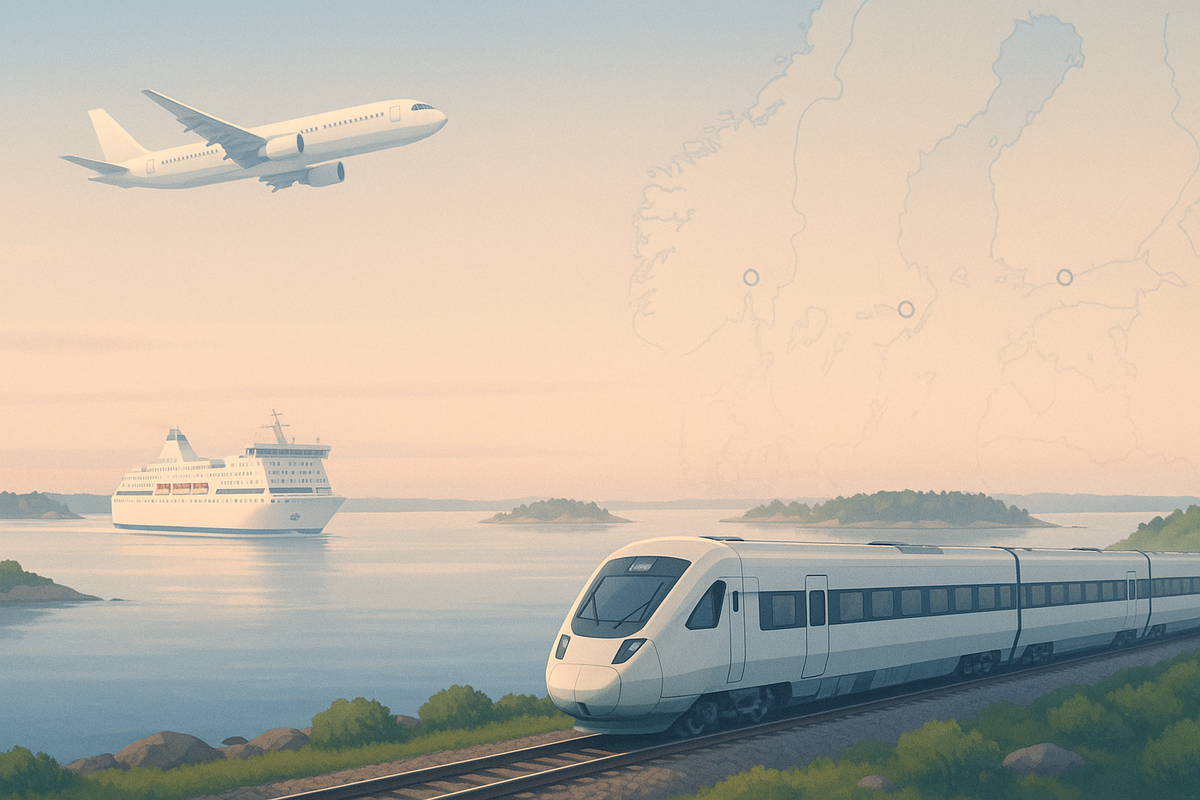
It is convenient to travel between Stockholm, Oslo, Copenhagen and Helsinki by train, bus, night ferry and short flights. Each option has its own advantages: trains and ferries offer a more enjoyable travel experience, while planes save time on long journeys or when connecting with international flights. Below is a compact ‘cheat sheet’ to help you plan convenient logistics for your route.
🚌 Trains and buses
The most common land routes are between Stockholm, Oslo and Copenhagen. Trains are usually more comfortable and predictable in terms of timing, while buses are more economical but can take longer.
| Route | Train | Bus | Notes |
|---|---|---|---|
| Stockholm — Oslo | Comfortable, predictable travel time, arrival right in the city center. | Usually cheaper, but longer and less comfortable over a long distance. | A great choice is a daytime train: easy to fit into the route and no airport hassle. |
| Stockholm — Copenhagen | A popular route with several departures per day and pleasant views along the way. | You can find budget options, but travel time is usually noticeably longer. | The train is ideal if you want to connect the capitals without flying and see a bit of Sweden en route. |
| Oslo — Copenhagen | Often with transfers; the journey can take most of the day. | Typically the most budget-friendly option, but requires extra time and patience. | Many travelers choose the overnight ferry here as a more atmospheric alternative. |
| Copenhagen — Helsinki | Via transfers and with quite a long total travel time. | Not the most popular option due to length and logistics. | Often a flight is better, or a train + ferry combo via Stockholm. |
When is the train more convenient than the plane?
- When you live or are already close to the central station.
- If you don't want to waste time travelling to the airport, going through security checks and waiting for boarding.
- if you value the ‘view from the window’ and a more relaxed format than flying;
- when you need a stable schedule that is not dependent on weather conditions and possible flight delays.
⛴️ Night ferries and mini-cruises
Night ferries between Scandinavian capitals are not only a means of transport, but also a mini cruise, with cabins, restaurants and views of the islands. They are often a pleasant alternative to night trains or early flights.
The overnight ferry between Stockholm and Helsinki is a classic of Scandinavian routes. You leave one city in the evening, sleep in a cabin, and wake up in the other in the morning.
Along the way you get views of the archipelago plus sunset and sunrise over the water, and onboard there are usually restaurants, cafés, and small shops. This format lets you save one hotel night and turn the transfer into a separate experience.
The Copenhagen–Oslo ferry combines an overnight crossing with a mini-cruise through straits and fjords. You depart Copenhagen in the evening and arrive in Oslo in the morning with beautiful coastal views.
It’s one of the most atmospheric ways to reach Norway: you can have dinner onboard, relax in a bar, and enjoy your morning coffee as you approach the Oslofjord.
The region also has other lines between Scandinavian and Baltic ports. They’re handy if you want to add, for example, Tallinn or other Baltic Sea cities to your route.
When planning, pay attention to schedules, cabin types, and whether meals and extra services are included. Sometimes it’s best value to book packages that bundle a cabin with dinner and breakfast.
✈️ Budget airlines
Korta flygningar mellan skandinaviska huvudstäder kan spara mycket tid, särskilt om du har ett fullspäckat schema eller ska fortsätta resan till andra europeiska länder. Det viktigaste är att ta hänsyn till lågprisflygbolagens särdrag och planera dina anslutningar korrekt.
✈️ When a flight truly saves time
A flight makes sense if:
- your schedule is very tight and every hour counts;
- overland travel takes almost a full day, while the flight is just a couple of hours;
- you’re continuing your trip elsewhere in Europe or heading home and want to minimize connections;
- there is a direct flight or a convenient connection between the cities you need.
Still, factor in the time needed to get to the airport, check in, and pass security — sometimes a train can be comparable or even faster door to door.
💸 Low-cost airlines and choosing the right flight
Budget airlines often offer very attractive base fares, but:
- they don’t always use the main airports — getting there may take longer;
- their slots can be inconvenient (very early morning or late at night);
- many services that are standard on full-service airlines cost extra: seat selection, meals, priority boarding.
Compare the final price including add-ons and the total “door-to-door” time, not just the headline fare you see in search results.
🧳 Tips for luggage and connections
To keep flights between capitals smooth, pay attention to:
- Carry-on and checked baggage rules — low-cost carriers are stricter, and extra-weight fees can be steep;
- Connection times — if you book separate segments, allow a buffer in case of delays;
- Insurance and ticket flexibility — even basic coverage can help if plans change;
- Packing smart — a compact suitcase or backpack makes boarding, airport transfers, and switching to trains or buses much easier.
The best strategy is often a mix: use trains and ferries where comfort and the travel experience matter, and flights when you need to move quickly between capitals or get home efficiently.
💶 Budget and useful life hacks for travelling in Scandinavia
Scandinavia is indeed considered an expensive destination, but the route through the capitals can be adapted to suit different budgets. The most significant expenses are accommodation, food and transport. If you understand the price range in advance and use simple life hacks, you can save significantly without sacrificing your experience.
📊 How much to budget per day: accommodation, food, transport
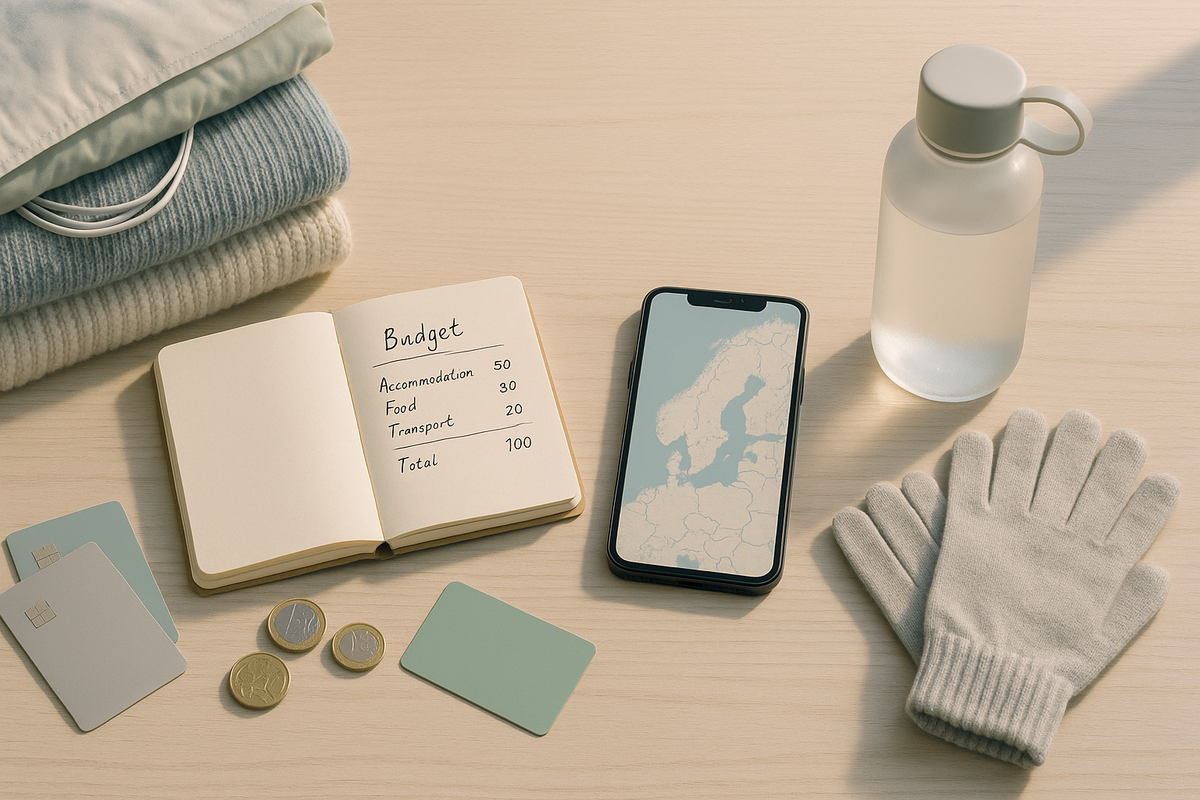
Below are approximate daily budgets per person for travelling around Scandinavian capitals (excluding international return flights). The amounts are given in euros and provide a general idea of the ranges: the final figure depends on the season, exchange rates and your habits.
| Level | Accommodation (per night) |
Food (per day) |
Transport & activities (per day) |
Total per day (approx.) |
|---|---|---|---|---|
| Budget hostels, simple apartments |
≈ 40–70 € | ≈ 20–35 € supermarkets, street food |
≈ 15–30 € public transport, 1–2 affordable activities |
≈ 80–130 € |
| Comfort 3–4★ hotels, good apartments |
≈ 90–150 € | ≈ 35–60 € cafés + occasional restaurants |
≈ 20–40 € travel passes, museums, viewpoints |
≈ 140–220 € |
| Higher-end 4★+, restaurants, taxis |
≈ 150–250+ € | ≈ 60–90 € restaurants, bars, tastings |
≈ 40–70 € frequent tours, taxis, extra activities |
≈ 230–350+ € |
When planning, it is convenient to calculate your daily budget and then multiply it by 7–10 days of your itinerary, adding the cost of flights and major activities (such as comprehensive tours of the fjords or Lapland) on top.
💡 How to save money without losing out on experiences
Saving money in Scandinavia does not necessarily mean imposing strict restrictions. Often, it is enough to make small changes to your habits: walk more, shop at supermarkets more often, and plan ahead which museums and attractions are really important to you.
Restaurants in Scandinavia can quickly eat up your budget, but that doesn’t mean you have to skip local flavors.
- Focus on breakfasts and snacks from supermarkets: yogurts, pastries, ready salads and hot-to-go meals.
- Choose street food or cafés with lunch sets for daytime meals — it’s usually much cheaper than dinner in a restaurant.
- Save 1–2 dinners for a really good place during the trip to get the “fine” experience without constant overspending.
Every Scandinavian capital has waterfronts, parks and districts with great views that cost nothing.
- Plan at least one “walking day” in each city without expensive activities.
- Use city waterfronts, bridges and hills as natural viewpoints.
- Many neighborhoods (Södermalm, Nørrebro, newer waterfront areas) are essentially free open-air museums.
If you plan to use public transport a lot and visit several museums, consider city passes and combo tickets.
- A City Pass often includes unlimited transport and entry to key attractions.
- If you love museums, do the math: a 1–2 day pass can sometimes cost less than several single tickets.
- Check the current terms in advance — the included museums and transport zones may vary.
🧭 Practical tips for every day
Even before departure, there are many small steps you can take that will save you money, time, and stress: pack your suitcase correctly, prepare your maps, check your bank settings, and install the necessary apps.
🧥 Layering clothes year-round
Weather in Scandinavia can change several times a day, even in summer. The best solution is layering.
- Base layer: a light T-shirt or thermal underwear in the cooler season.
- Mid layer: a sweater or fleece you can easily remove and pack in your backpack.
- Outer layer: a wind- and water-resistant jacket that saves you from wind and rain.
- Footwear: comfortable water-resistant sneakers or boots you can walk in all day.
This approach keeps you comfortable in +10°C with wind and in +20°C in the sun — without overpacking.
💳 Bank cards and cashless payments
Scandinavian countries are almost fully cashless — cards and phones are accepted nearly everywhere.
- Bring 1–2 bank cards from different payment systems and check limits and foreign transaction fees.
- Add your cards to your phone and watch (Apple Pay, Google Pay, etc.) for convenience.
- You can carry only a small amount of cash for minor expenses — in many places cash isn’t accepted at all.
- Let your bank know about your trip to reduce the risk of “suspicious activity” blocks.
This way you avoid extra fees and can comfortably pay for transport, cafés and tickets straight from your phone.
📱 Connectivity, eSIM and useful apps
Reliable internet and the right apps make traveling around Scandinavia much easier.
- eSIM or a local SIM is a good option if you stay in the region for more than a few days and use navigation a lot.
- Offline maps — download your cities in advance (Maps.me, Google Maps, etc.) so you’re not fully dependent on signal.
- Transport apps — official city transport apps help you plan routes and buy tickets.
- Booking apps — it’s convenient to keep hotels, apartments, train/ferry tickets and tours in one or two services.
Setting up your digital toolkit at home saves time on the spot and helps you navigate a new city faster.
When you put it all together, real savings come from lots of little things: slightly cheaper accommodation, one or two restaurant dinners instead of daily ones, tickets bought in advance and a city map on your phone. At the same time, your impressions of the Scandinavian capitals will remain rich and comfortable.
🧩 What to add to the itinerary: fjords, Lapland, the Baltic Sea
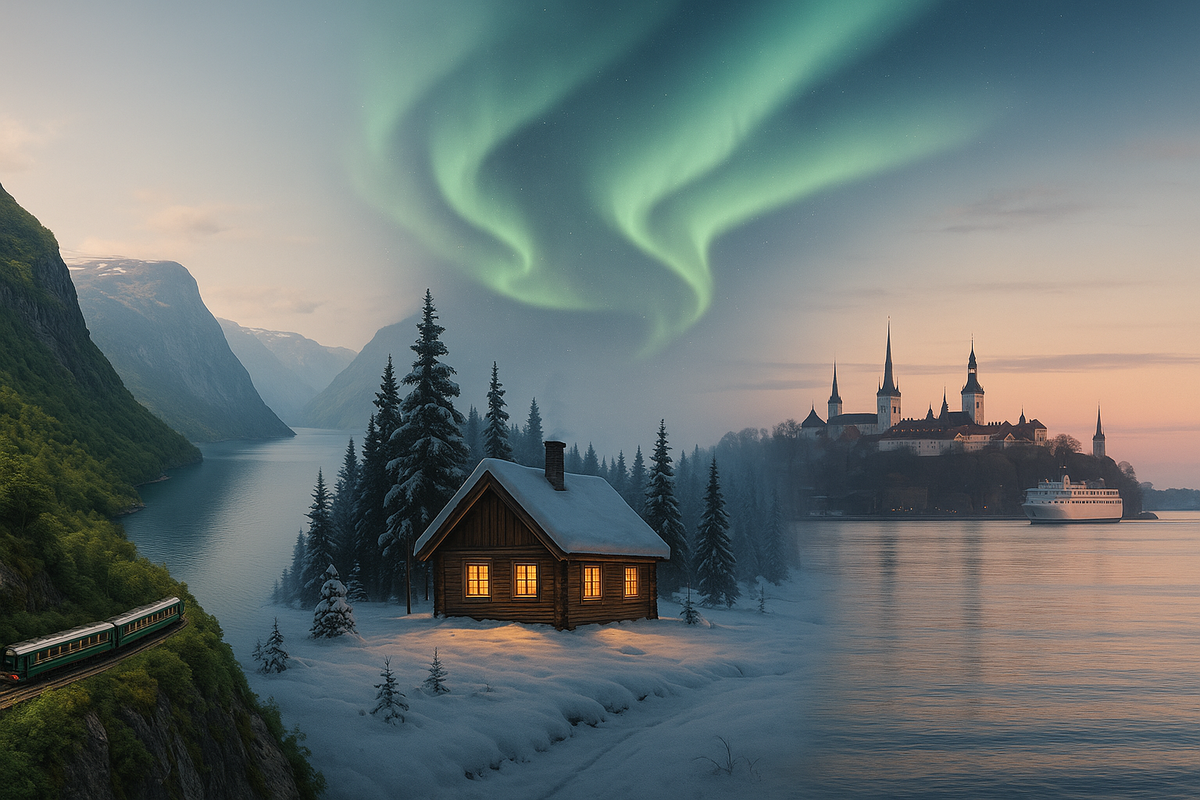
The route through the Scandinavian capitals is already quite full, but if you have a few extra days, it is easy to extend it. Most often, people add the fjords of Norway, winter Lapland with the northern lights, or a bit of the Baltic — for example, Tallinn and other cities by the sea.
🌊 Norwegian fjords and the Flåm Railway: how to add another 2–3 days to your capital city itinerary
The most logical way to add fjords to your capital cities itinerary is to do so from Oslo. From here, it is convenient to take the picturesque railway towards Flåm and/or Bergen and spend 2–3 days among the mountains, water and small villages.
| Day | Route | What you can fit in |
|---|---|---|
| 1 | Oslo → scenic mountain railway → fjord area | Morning departure from Oslo by train, then a transfer to a scenic leg toward the fjord (through mountains and valleys). Check-in at a hotel or guesthouse, evening walk by the water. |
| 2 | Fjord: cruise and viewpoints | A cruise through a narrow fjord, panoramic views, short trails and lookout points. Optionally, a second night in the fjords or a move to a larger town (e.g., closer to the coast). |
| 3 | Back to Oslo or continue your itinerary | Return by train to Oslo and continue the capitals route, or take a flight/train to the next point of your trip (including home). |
Even such a short trip gives you completely different impressions: after cities, you get mountains, waterfalls, narrow fjords and small villages by the water.
Below is a little tip on when it is best to plan a trip to the fjords and what to keep in mind when booking.
The best time to plan fjords is during the warm season and the shoulder months:
- late spring to early autumn: the most comfortable weather and more cruise options;
- in winter, the landscapes can be stunning, but some routes and businesses run on reduced schedules.
Book train and cruise tickets in advance, especially in high season: this helps you secure convenient seats and connections. It’s worth setting aside a dedicated fjord segment in your route so you don’t have to rush and turn the trip into a relay of transfers.
🌌 Lapland and the Northern Lights: which season makes the most sense
Lapland is a logical continuation of the route for those who dream of a winter wonderland, knee-deep snow and the northern lights. It is most often added to Helsinki (flight or train to northern Finland), but the key question is when to go.
If you add Lapland to your capital cities itinerary, it is most convenient to plan a separate 3–5-day block: travel north, stay 2–3 nights, and then return or fly further along your route.
🌊 Baltic Ring: Tallinn, possibly Riga, as a continuation of the journey
The Baltic capitals and coastal cities connect well with Scandinavia: the easiest way is to add Tallinn to your itinerary from Helsinki, and then, if you wish, you can complete the entire Baltic Ring.
The ferry between Helsinki and Tallinn takes just a few hours and lets you add another capital to your route in a single day.
Tallinn has a beautifully preserved medieval Old Town with city walls, Town Hall Square and narrow lanes. You can arrive in the morning, stroll the historic center, have lunch and return on an evening ferry.
If you feel you’ve already collected enough impressions, you don’t have to squeeze everything into one vacation. The Baltics can be saved for a separate trip.
A future idea is to build a route like “Helsinki — Tallinn — onwards through the Baltics”, adding, for example, Riga and other cities along the coast. This format works well as a standalone journey or as a natural extension of Scandinavia you already know.
It is not necessary to implement all ideas in one trip. For the first time, a route through the capitals and one bonus — be it fjords, Lapland or a short trip to the Baltic Sea — is sufficient. The rest can always be left for the next trip to Northern Europe.
🗂️ Use our catalogues to prepare for your trip
If you enjoyed the route through the Scandinavian capitals, you can then explore each country separately: add fjords, islands, Lapland and small towns. Save the selections below — they are a convenient starting point for your next trip.
- 🇳🇴
- 🇩🇰
- 🇫🇮

0 comments
Log in to leave a comment