


☀️ Summer in Scandinavia: Norway's fjords, Sweden's archipelago, Finland's lakes and Denmark's beaches in one itinerary
🌞 Why summer in Scandinavia is the perfect time for your first (and not only) visit
Summer in Scandinavia is the best season to explore the region without extreme heat or winter frosts. In June, July and August, there are long daylight hours, a mild climate and a huge number of outdoor activities: from sea cruises along the fjords to walks on the islands and beaches of the Baltic Sea. A trip to Scandinavia in the summer allows you to enjoy both excursions and outdoor recreation in a single day.
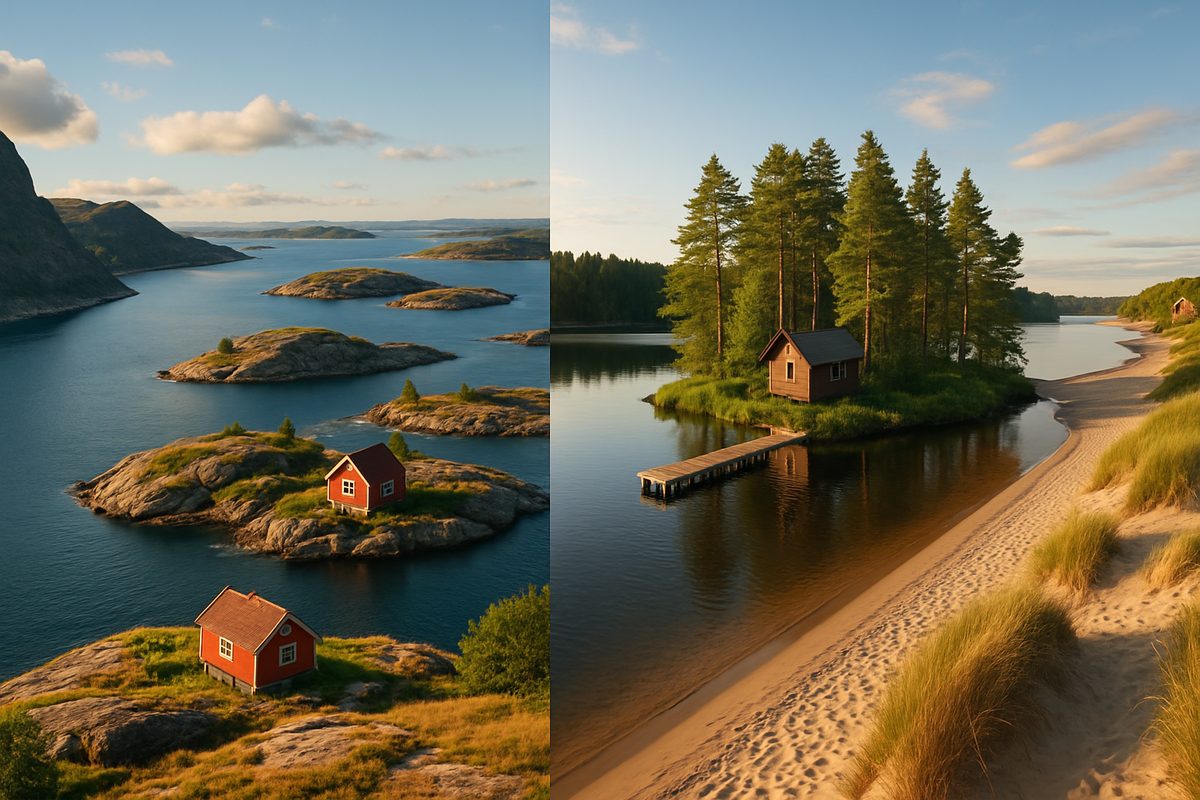
This is the easiest time to plan a route through Scandinavia that includes visits to four countries: Norway, Sweden, Finland, and Denmark. In one trip, you will see fjords, archipelagos, lakes and beaches — a true snapshot of what summer looks like in Northern Europe — and you will enjoy the journey more than dealing with complicated logistics.
🌤️ Long daylight hours and mild climate: when is the best time to go (June–August)
The best time for your first trip to Scandinavia is from mid-June to the end of August. At this time, the weather is consistently warm, summer ferry routes and excursion cruises are operating, and nature is in full bloom. Unlike southern Europe, it rarely gets unbearably hot here: during the day, the temperature is a comfortable +15...+23 °C depending on the region, and in the evening it is pleasant to walk by the water or sit on a terrace.
June is the month of the longest days and white nights, when the sun hardly sets in northern Norway, Sweden and Finland. July is the warmest and most popular month for relaxing on the beaches and in the Swedish archipelago. August is often a little quieter in terms of tourist traffic, but still warm, with a gentle start to autumn in the forests and by the lakes.
| Month | Daylight hours | Daytime temperature, °C (average) | Highlights for travelers |
|---|---|---|---|
| June | Very long, white nights | Around +12…+20 | Lush green nature, start of the season, fewer tourists in the first half of the month. |
| July | Long daylight hours | Around +15…+23 | The warmest month, comfortable water temperatures, many festivals and summer events. |
| August | Still bright and warm | Around +14…+21 | A bit less crowded, mild evenings, the first hints of early autumn colors in the forests. |
🧭 How this route is useful for beginners and interesting for Scandinavians themselves
This summer itinerary through Scandinavia is well suited for those visiting the region for the first time: it gives you a general overview of the four countries without overwhelming you with flights and complicated logistics. At the same time, it remains interesting for those who already live in Norway, Sweden, Finland or Denmark and want to see their neighbours in a series of short trips.
If this is your first time in Scandinavia:
– you will see different types of nature in one trip: fjords, island archipelagos, forest lakes and sea beaches;
– you will be able to experience the atmosphere of several capitals at once — Oslo, Stockholm, Helsinki and Copenhagen;
– you will be able to rely on understandable and predictable logistics: trains, ferries and short flights within the route;
– if you wish, you can choose the format — a completely independent trip or a ready-made tour of Scandinavia for 10–15 days.
If you live in one of the countries of Northern Europe:
– the route can be easily broken down into mini-trips: a weekend in a neighbouring capital, a week in the Norwegian fjords or a few days on the Danish beaches;
– you will see a familiar region from a different perspective: for example, the Finnish lakes through the eyes of a Stockholm resident or the Norwegian fjords through the eyes of a Dane;
– you can travel sustainably: combine trains, electric trains and ferries instead of flying short distances;
– you get a ready-made route ‘construction set’ that is easy to adapt to school holidays, vacations or a few long weekends.
🗺️ Brief overview of the route: four countries, four “faces” of Scandinavia
If you had to describe this route in one sentence, it would be ‘fjords + archipelago + lakes + beaches’. Norway is responsible for the dramatic mountain landscapes and fjords, Sweden for summer on the islands and walks around Stockholm, Finland for the lake house and sauna, and Denmark for the beaches, cosy seaside towns and relaxed urban atmosphere.
Most often, travellers move in an arc: Norway → Sweden → Finland → Denmark. This results in a logical circular route through Scandinavia, which can be completed in 10–15 days or divided into several separate segments.
🧭 How to plan a circular route through Scandinavia
A circular route through Scandinavia fits nicely into a classic 10–15-day holiday. During this time, you can travel through Norway, Sweden, Finland and Denmark without feeling rushed: spend a few days in the fjords, a little time in the capitals and enjoy peaceful stops at lakes and by the sea. A summer trip around Scandinavia can be done either completely independently (by train, ferry, or car) or as a ready-made tour with well-planned logistics.

It is important to decide on three things: how many days you are willing to spend on the road, which direction to go in, and which mode of transport suits you best. If you already live in the region, the same route can easily be broken down into a series of weekends and short holidays.
⏳ How many days to allow: 10, 12 or 15 — options by time
When planning a circular route through Scandinavia, allow for 10–15 days. A 10-day route through Scandinavia is a compact version where you see the main sights but make almost no detours. A 12-day route through Scandinavia gives you a little more breathing room: you'll have time for additional stops in the fjords or archipelago. And a 15-day trip through Scandinavia allows you not only to ‘check off’ the key points, but also to simply relax: spend an extra day at a lake or by the sea.
- 2–3 days each for Norway and Sweden,
- 1–2 days for Finland and Copenhagen,
- minimal detours from the main route, no long side trips.
- 3–4 days in Norway (fjords + city),
- 3 days in Sweden with a full archipelago trip,
- 2–3 days in Finland and Denmark,
- there’s room for one “extra” day in nature or by the sea.
- extra days in the fjords or on Denmark’s beaches,
- the option to add another city or region,
- fewer evening transfers, more time in each place.
🔁 Which direction to go: an example of logistics
The most logical scenario for a circular route through Scandinavia is to travel in an arc from west to east and then south: Norway → Sweden → Finland → Denmark. This way, you will gradually move from the fjords to the islands, then to the lake district and, finally, to the beaches.
Most often, the journey begins in Oslo or Bergen: it is convenient to fly here on direct flights, and the cities provide quick access to the fjords. Next, you can travel to Stockholm by train or a short flight followed by a cruise. After Stockholm, it makes sense to take the night ferry to Finland — it's both transport and a mini-cruise. The route ends in Copenhagen and the Danish beaches, which are easily accessible by train via the Øresund Bridge or a short flight from Finland.
The route can also be taken in the opposite direction, but the described itinerary is convenient in that you start with the more ‘intense’ Norway with its mountain passes and fjords, and end with the more relaxed Denmark and beach holidays.
🚆 Transport: train, ferry, car or package tour
In Scandinavia, it is easy to combine different modes of transport. Trains and regional electric trains allow you to travel in an environmentally friendly and predictable way, especially if you are planning a trip around Scandinavia by train and want to minimise car travel. Ferries connect capitals and major cities, turning the journey into a short cruise. A car gives you maximum freedom in choosing your stops, but requires careful planning of ferries and parking. A ready-made tour takes the hassle out of logistics and is suitable for those who want to focus on the experience.
- an eco-friendly way to travel between cities and countries;
- many scenic railway routes through the mountains and along the coast;
- convenient for traveling with children and large luggage;
- part of the route can easily be planned as a train journey across Scandinavia.
- overnight ferries between Sweden and Finland save one hotel night;
- on board there are cabins, restaurants, and panoramic decks;
- convenient if you travel with a car — you can take it on the ferry.
- easy to detour to small villages, viewpoints, and hidden beaches;
- requires checking roads, parking, and ferry timetables in advance;
- best for travelers who are already familiar with the region.
- the route, hotels, and transfers are planned and booked in advance;
- support from local specialists and guides;
- suitable for a first introduction to Scandinavia and for those who value predictability.
🏡 Where to break up the route into weekends if you already live in the region
If you live in one of the Scandinavian countries, you can turn a circular route into a series of short trips. Instead of one long holiday, you can have several eventful weekends: for example, a trip to the Norwegian fjords, a long weekend in Stockholm and the archipelago, a mini-break on a Finnish lake or a couple of days in Copenhagen with its beaches.
This approach is convenient because you don't have to set aside two weeks at once: you can gradually ‘put together’ your route through Scandinavia using existing flights, trains and ferries between countries.
- a long weekend in Copenhagen with one day on nearby beaches;
- a mini-vacation in Denmark with a bike rental and a visit to the Jutland coast;
- if you wish — add a short stop in southern Sweden along the way.
- a weekend on the archipelago islands with an overnight stay in a cabin by the water;
- 3–4 days in the Norwegian fjords via Oslo or Bergen;
- an overnight ferry to Finland and a couple of days in Helsinki or the lake district.
- an overnight ferry to Stockholm and 2–3 days in the archipelago;
- a flight or a trip via Sweden to Copenhagen and Denmark’s beaches;
- a couple of days in the Norwegian fjords as a separate vacation.
- a weekend in Stockholm with one day in the archipelago;
- a few days in Oslo with a trip to the nearest fjords;
- a summer vacation on a Finnish lake with a cabin rental and a sauna.
🎭 Four countries — four faces of the Scandinavian summer
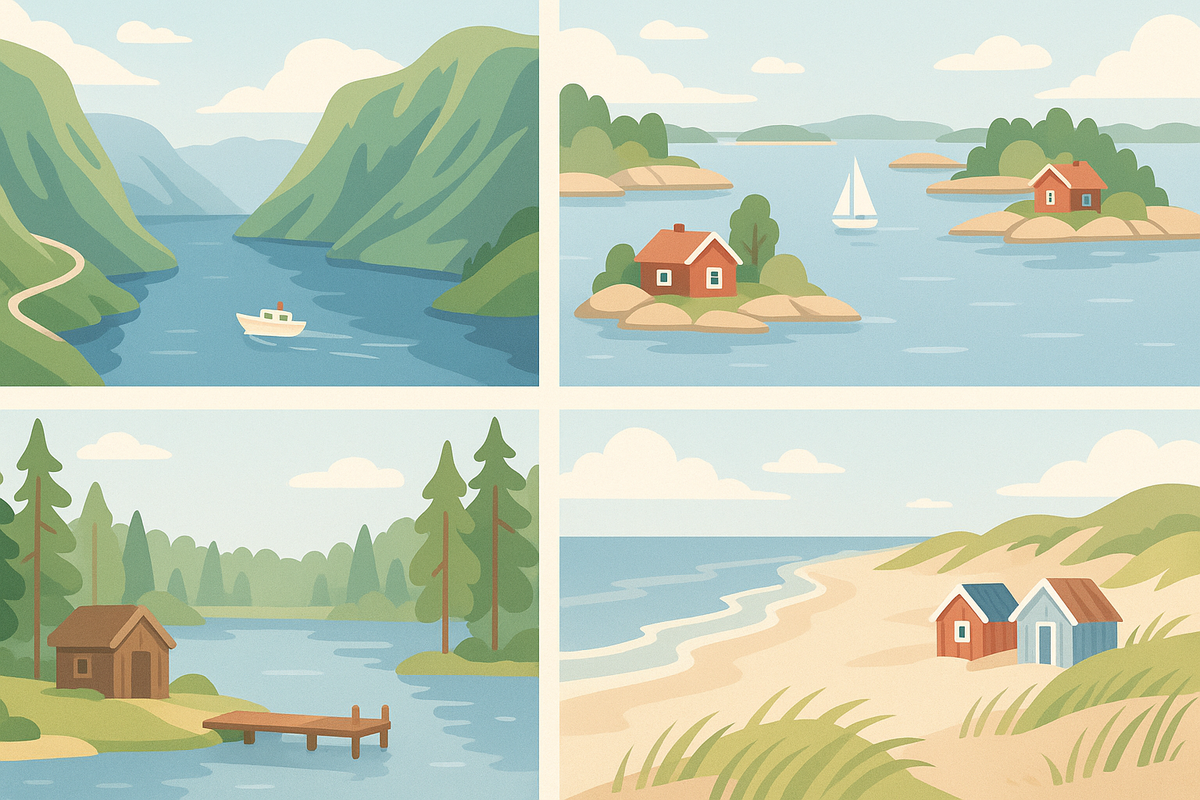
- a fjord cruise — Geirangerfjord, Nærøyfjord and other signature routes;
- viewpoints and short marked trails that don’t require serious preparation;
- kayaking or SUP for those who want to see the fjords “from water level”.
- a walk through the Old Town, the Vasa or ABBA museum and “meatballs with a view”;
- a day cruise in the Stockholm archipelago with stops on islands;
- island options: popular choices for a first visit and quieter spots — like locals prefer;
- if you have +2–3 days, you can add Gothenburg or southern Sweden.
- renting a summer cabin (mökki) right by the water;
- a sauna, a swim in the lake, and an evening by the fire or on the terrace;
- kayaks, SUP, easy hikes, berries and fishing practically “from your doorstep”;
- for Finns and neighbors alike — a perfect format for short weekend escapes.
- summer Copenhagen: Nyhavn, cycling, gastronomy and hygge;
- beaches close to the city, such as Amager Strandpark and others;
- an option with Bornholm or the Jutland coast if you’re up for a detour;
- styles of отдых: families with kids, surfing, quiet “beach villages”.
🧩 Practical tips: budget, bookings and sustainable travel in Scandinavia
Scandinavia is considered an expensive destination, but with careful planning, you can make your budget for a trip to Norway, Sweden, Finland, and Denmark predictable. It is important to understand the price range in each country, book transport and accommodation in advance, and consider the sustainability of your trip: choose trains and ferries, respect the fragile northern nature, and support local businesses.
💰 Approximate budget per day and per country
The budget for travelling in Scandinavia depends on the season, accommodation type and holiday style, but it is convenient to use approximate ranges for planning purposes. Below are the average daily expenses per person (excluding international flights) if you are travelling in the summer, staying in mid-range hotels or cosy apartments, and combining paid activities with nature walks.
| Country | Estimated daily budget per person | Comment |
|---|---|---|
| Norway | about 140–220 € | One of the most expensive countries on the route: higher prices for accommodation and food. You can save by booking hotels and mountain routes in advance, and by combining trains and ferries. |
| Sweden | about 120–190 € | Slightly more affordable, especially outside Stockholm. A good balance: you can combine city time with budget-friendly trips to the archipelago. |
| Finland | about 110–180 € | The cost depends on the travel style. Renting a lakeside cottage is a great deal for families or groups: a shared kitchen, your own grill, and fewer restaurant expenses. |
| Denmark | about 130–200 € | Copenhagen is comparable to Norway in price level, but along the coast and in smaller towns you can find more affordable accommodation and cafés. |
💡 How to save money without sacrificing comfort
Even in an expensive region, you can keep your Scandinavian travel budget within reasonable limits if you adjust your travel style a little. It is important to book key sections of your itinerary in advance, combine different types of accommodation and make the most of what is free by default in Scandinavia — access to nature.
- keep an eye on deals on railway websites and from ferry operators;
- plan overnight journeys: this saves time and one hotel night;
- if you’re travelling with a car, it’s best to book car spaces on the ferry in advance.
- choose a cabin with a kitchen so you can cook some meals yourself;
- look for campsites by the sea and lakes: comfortable, but cheaper than hotels;
- if you’re travelling with a group or family, a cabin is often better value than two rooms.
- calculate whether a city pass will pay off for your plans;
- include free parks, viewpoints and beaches in your itinerary;
- focus on walks, hiking and picnics instead of extra paid tours.
- avoid major national holidays and peak festivals;
- track accommodation and transport prices a few months before the trip;
- consider splitting your route into two shorter getaways.
🌿 Eco-friendly habits when travelling: how to ‘stay out of the way’ of northern nature
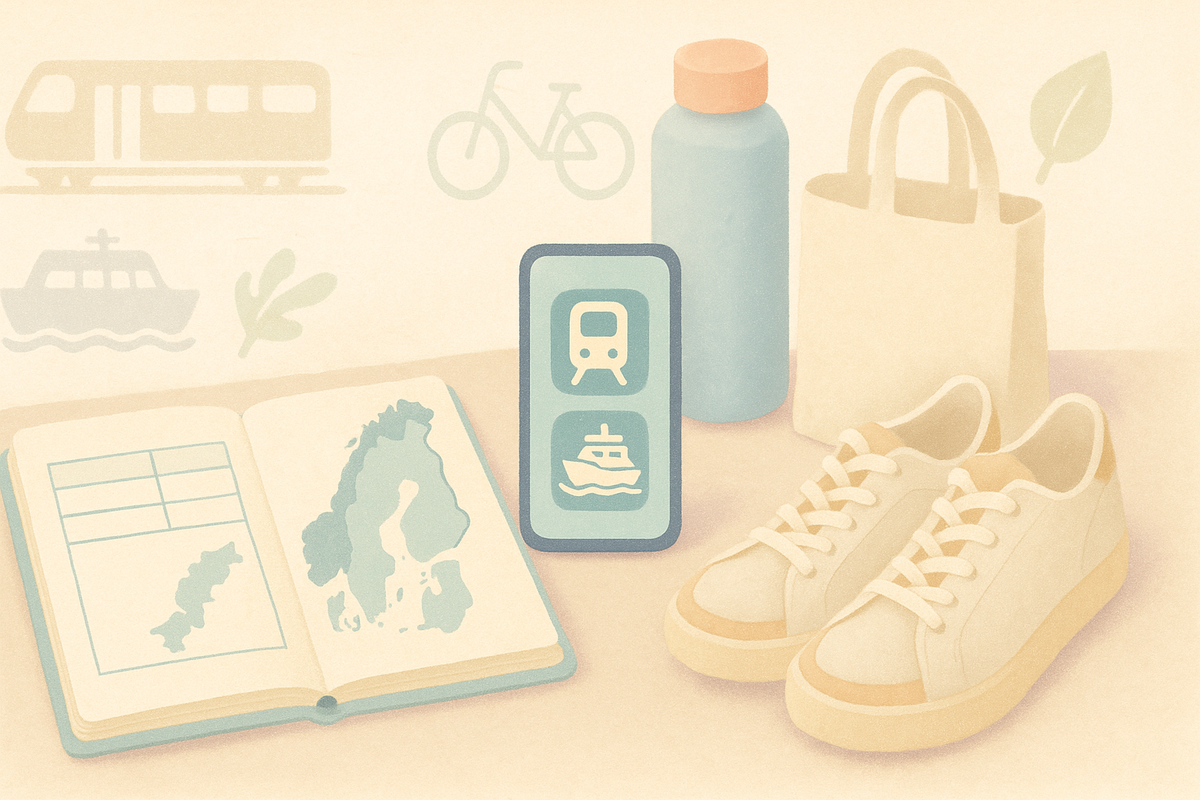
Sustainable travel in Scandinavia is not just about choosing the train over a short flight. Small habits also matter: how you walk on trails, handle rubbish, and treat small villages and natural areas that welcome tourists for just a couple of summer months.
- Whenever possible, choose a train or ferry instead of a short flight between cities.
- Follow the Leave No Trace principle: don’t leave litter and stay on marked trails.
- Use a reusable water bottle and a thermos mug instead of disposable cups.
- Respect private property: do not enter closed areas and private piers.
- Keep noise down: especially in small fishing villages, on islands and by lakes.
- Support local businesses — choose small cafés, farmers’ markets and family-run hotels.
✅ Checklist for summer in Scandinavia
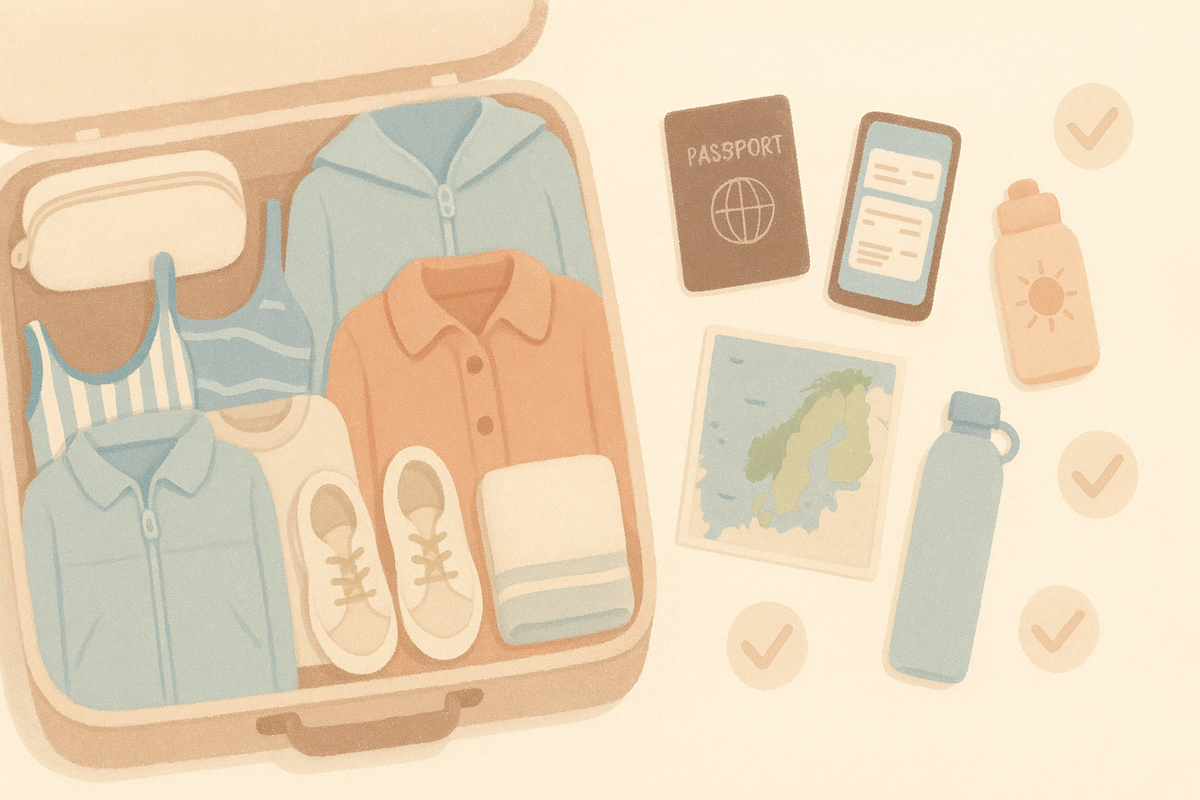
Before your flight or boarding a ferry, run through this list: it covers the basics for summer in Scandinavia — from layered clothing and documents to apps and trip pace. You can save it as a note on your phone and tick items off as you prepare.
- base layers: a few T-shirts/long-sleeves, a comfortable sweater or fleece;
- a light windbreaker and a proper rain jacket (or a membrane shell);
- comfortable sneakers or trekking shoes + light spare footwear;
- a thin beanie/buff and light gloves — cool winds happen even in summer;
- a swimsuit/trunks for lakes, fjords and Denmark’s beaches;
- sunscreen, sunglasses, SPF lip balm;
- a compact daypack, a rain cover or dry bag for your gear;
- a universal plug adapter, cables and a power bank.
- passport and, if needed, a visa; a printed or digital insurance policy;
- driver’s license if you plan to rent a car;
- bank cards, a bit of cash in euros/local currency for small expenses;
- all bookings in one place: flights, trains, ferries, hotels, cabins;
- screenshots of tickets and QR codes — in case you lose connection or your data runs out;
- offline maps (for example, saved areas in your favorite navigation app);
- local transport and ferry operator apps, your banking app;
- a simple organizer app or a note where your day-by-day route is collected.
- plan no more than 2–3 key activities a day (for example, a cruise + a city walk);
- separate “travel days” and “experience days,” don’t try to combine everything at once;
- in each country, leave at least one free evening or half-day without a strict plan;
- create “islands of quiet”: an hour at the pier, coffee with a fjord view, a walk without a navigator;
- be ready to cross something off the list if you’re tired — Scandinavia isn’t going anywhere.
🗺️ Your first (or next) Scandinavian route
The ‘fjords + archipelago + lakes + beaches’ route gives you a very complete picture of summer in Scandinavia. In one trip, you will travel through Norway, Sweden, Finland and Denmark, trying out different types of holidays — from a cruise through the fjords and islands of the Stockholm archipelago to the tranquillity of Finnish lakes and Baltic beaches. This route through Scandinavia in the summer can easily be adapted to 7–10 days, two weeks or a series of short trips if you already live in the region.

The “fjords + archipelago + lakes + beaches” itinerary is perfect for those who want to see different sides of Scandinavian summer in a single trip. This can be your first Scandinavia itinerary, or a continuation of the story if you’re already in love with the North and want to add islands, lakes, and seas to the fjords.
This circular route is flexible: it can work as a “first introduction”, or as a deeper journey through Norway, Sweden, Finland, and Denmark. It’s a great fit if you want to combine cities and nature, comfort and a sense of a small adventure.
- 3–4 days in Norway: fjords + Oslo or Bergen;
- 2–3 days in Stockholm and the Stockholm archipelago;
- the remaining days — Finland or Denmark, depending on what suits you best.
- 3–4 days in Norway, including panoramic roads and a fjord cruise;
- 3 days in Stockholm and the archipelago;
- 3–4 days in Finland: Helsinki + the lake region;
- 3–4 days in Denmark: Copenhagen and nearby Baltic or North Sea beaches.
- 1 weekend or a long break in the Norwegian fjords;
- a separate trip to Stockholm and the archipelago;
- 3–4 days by a Finnish lake with a cabin and a sauna;
- a couple of days in Copenhagen and on Danish beaches.
If you’ve read this far, you already have the skeleton of a summer Scandinavia itinerary. From here it’s simple: choose which “chapter” to start with — the fjords of Norway, the lakes of Finland, or the beaches of Denmark — and dive into the detailed country guides. There you’ll find ready-to-use route ideas, curated places, and practical tips for each country.

0 comments
Log in to leave a comment