


🌍 Stockholm, Oslo, Copenhagen, or Helsinki: which city to choose for a trip to Scandinavia
🌍 Stockholm, Oslo, Copenhagen, or Helsinki: which city to choose for a trip to Scandinavia
If you’re planning your first trip to Scandinavia, choosing where to start can sometimes be confusing. On the map, Stockholm, Oslo, Copenhagen, and Helsinki are close to each other — yet each city has its own atmosphere, pace of life, and even its own idea of what an “ideal northern city” should be.

This article will help you quickly understand how the Scandinavian capitals differ: where you’ll find more history and museums, where gastronomy and nightlife take center stage, and where nature feels almost “right outside the door.” We’ll look at the scale of the cities, their character, and how suitable they are for a first trip to Scandinavia or a short weekend getaway if you already live in the region.
Whether you’re flying to Stockholm for a few days, considering a calm and relaxed break in Helsinki, planning an active weekend in Oslo, or wanting to experience true “hygge” in Copenhagen, this short guide will help you choose the capital that best fits your travel style.
Stockholm, Oslo, Copenhagen, or Helsinki: where should you start?
A short guide to the atmosphere and pace of life in four Scandinavian capitals.
Stockholm
A large yet very cozy capital built on islands: museums, design, an archipelago, and plenty of open space.
Ideal for a first trip to Scandinavia.
Oslo
A calm city by the fjord: modern districts, waterfronts, and nature literally just beyond the city center.
A balance of city life and outdoor activities.
Copenhagen
A city of hygge, bicycles, and gastronomy: a compact center and a lively everyday atmosphere.
Lifestyle weekend, coffee, and restaurants.
Helsinki
A minimalist seaside capital with strong architecture, design, and urban saunas.
Relaxed travel and Nordic design.
🌍 Scandinavian Capitals in a Nutshell: Size, Climate, and Prices
A Quick Comparison Before Choosing Your City
If you’re planning your first trip to Scandinavia, it’s useful to quickly compare four capitals — Stockholm, Oslo, Copenhagen, and Helsinki — using three simple criteria: city size, climate, and expected travel budget.
📏 City Size, Climate, and Budget: A Brief Orientation
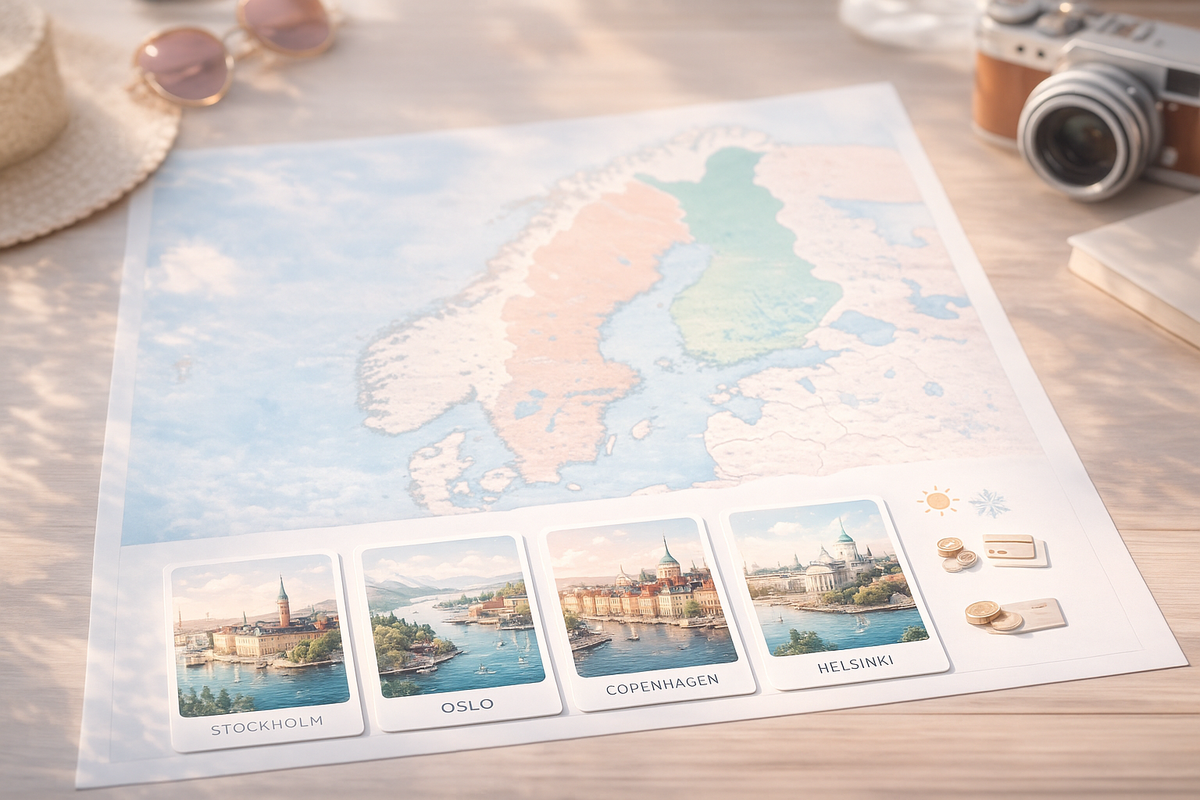
By European standards, all four capitals are not giant megacities but comfortably sized cities. Stockholm is the largest, followed by Copenhagen, Oslo, and Helsinki. This means that the main areas are easy to explore on foot or by public transport within 2–3 days, and the cities are easy to combine into one itinerary — with trains, ferries, and short flights connecting them.
The climate in the capitals is quite similar: cool but very bright summers and snowy, cozy winters. In summer (roughly June to August), daytime temperatures are around +18…+22 °C, with lots of greenery and long daylight hours — making it the most popular season for city walks and cruises between capitals. In winter, temperatures drop to around freezing or below, daylight is limited, but the cities gain their own kind of magic: festive lights, Christmas markets, saunas, and softly lit cafés.
Scandinavia is rightfully considered one of the most expensive regions in Europe: hotels and restaurants can be noticeably pricey, especially in Norway and Denmark. Sweden and Finland are usually slightly more moderate in terms of costs, but still above the EU average. At the same time, public transport is convenient and relatively affordable, and for most travelers the overall daily budget in the capitals ends up comparable to other expensive European cities — around €140–180 per person per day when staying in a hotel and eating out.
Scandinavian Capitals in a Nutshell: Size, Climate, and Prices
A quick practical checklist for Stockholm, Oslo, Copenhagen, and Helsinki: what to expect in terms of city size, weather, and prices.
City Scale and Distances
All four capitals are compact enough to experience their atmosphere in just a couple of days, without the feeling of a megacity or endless traffic.
- Stockholm and Copenhagen feel larger and more dynamic.
- Oslo and Helsinki are slightly calmer and easier to navigate.
- The cities are easy to combine into one route using trains, ferries, or short flights.
Weather and Seasons
Summers are mild and bright, while winters are cool and atmospheric. Every season has its own advantages for travel.
- Summer offers long daylight hours, perfect for waterfront walks and ferry trips.
- Autumn and spring are quieter, with fewer tourists and a pleasant urban vibe.
- Winter brings snow, Christmas lights, saunas, and cozy cafés — but also short days and colder weather.
Prices and Travel Style
Scandinavian capitals are not cheap, but daily expenses depend heavily on your travel style and how you plan accommodation and meals.
- Hotels and restaurant dinners in city centers are the biggest expenses.
- Apartments, supermarkets, and public transport help keep costs down.
- Even with a relaxed travel pace, it’s possible to plan a trip without overspending by booking in advance.
🌊 Stockholm — a Dynamic Archipelago and the Heart of Sweden
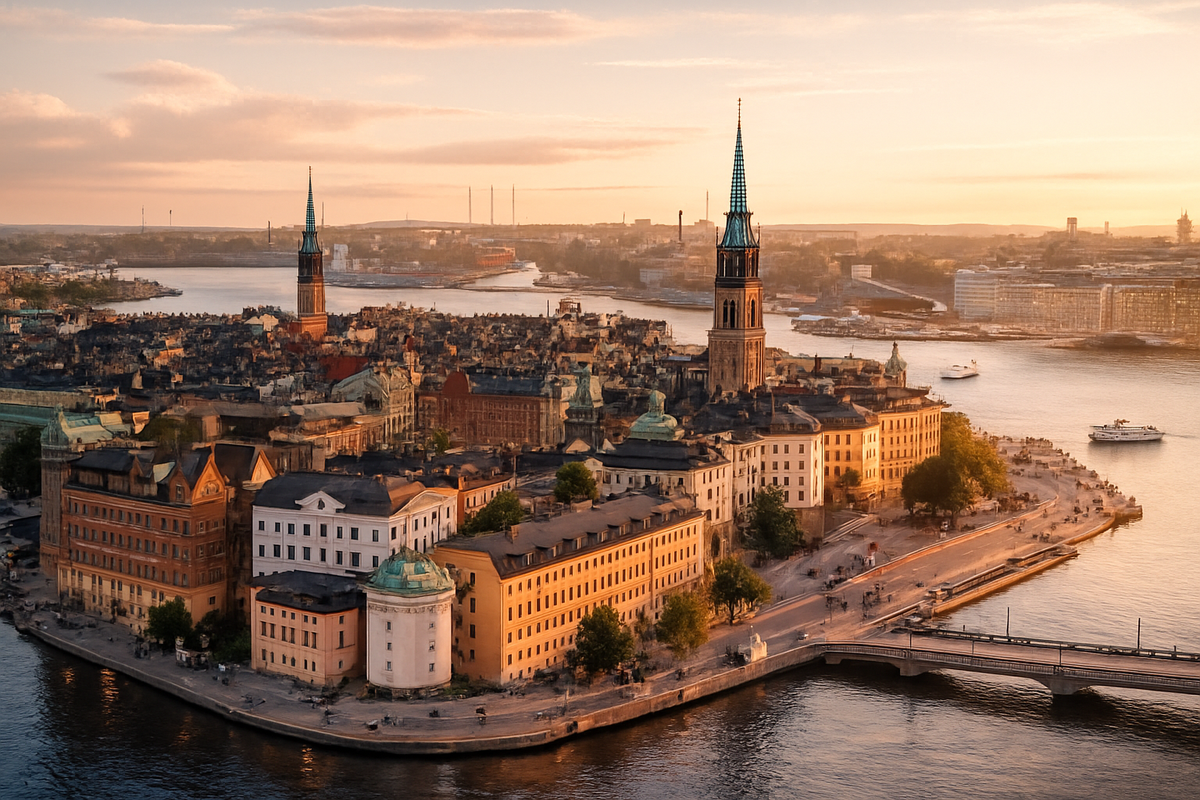
Stockholm is often called “the beauty on the water,” and not without reason: the city is built on 14 islands connected by bridges, with the vast Stockholm archipelago spreading out around it. Clean air, plenty of greenery, and water views from almost every waterfront come together with its role as Sweden’s largest cultural and economic center.
🎭 Atmosphere, pace, and things to do in Stockholm
The historic district of Gamla Stan is one of the most atmospheric parts of the city: narrow cobblestone streets, bright yellow-orange façades, small squares, and ancient churches. It’s an ideal place to experience postcard-perfect Stockholm, enjoy a fika (coffee with something sweet), and simply wander without a set route.
Beyond the Old Town, a different Stockholm begins — modern and dynamic, with design shops, cafés, street art, and museums for every taste. At the same time, the city remains very comfortable: clean, well-organized, safe, and easy to navigate even for first-time visitors.
⭐ What you should definitely try in Stockholm:
- A walk on the water: a cruise along the waterfronts or a trip to the archipelago islands is the easiest way to see how closely the city is connected to the sea.
- A visit to the museums on Djurgården: the Vasa Museum and ABBA The Museum for lovers of history and pop culture.
- A slow day in Gamla Stan: wandering through the alleys, cafés overlooking historic squares, small museums, and palaces in historic buildings.
🎯 Who Stockholm is especially well suited for:
- Those traveling to Scandinavia for the first time and wanting to experience the “classic” mix — water, an old town, modern design, and gastronomy in one city.
- Travelers who enjoy combining city life with nature: forest parks and thousands of islands begin literally at the city’s edge.
- Those planning a “capital tour” of Scandinavia and looking to conveniently combine several capitals in a single route.
For a first introduction to Stockholm, 3–4 days are usually enough: time to see the old town, visit several museums, walk along the waterfronts, and take at least one trip into the archipelago. Adding an extra day or two turns Stockholm into a convenient base for exploring more of Sweden or flying to other cities in the region.
🌟 Why Stockholm Is a Convenient First Capital in Scandinavia
A city on 14 islands, where the historic Gamla Stan sits next to modern districts and world-class museums. It’s easy to combine boat rides, exploring Sweden’s history, and relaxed fika in cozy cafés.
Stockholm feels dynamic but not hectic: convenient public transport, green parks, and proximity to the archipelago allow you to quickly switch between types of activities — from city strolls to trips to small islands in the Baltic Sea.
3–4 days in the city + 1 day in the archipelago (boat ride or island tour).
Balance of historic center, water, and modern city. Lots of light, waterfront views, and green islands.
Those visiting Scandinavia for the first time, who enjoy museums, design, gastronomy, and want to experience a “northern” city without stress.
Easy to combine with neighboring capitals: popular combinations are Stockholm–Copenhagen, Stockholm–Oslo, Stockholm–Helsinki (by train, plane, or ferry).
🌲 Oslo — the city where nature begins at the tram stop
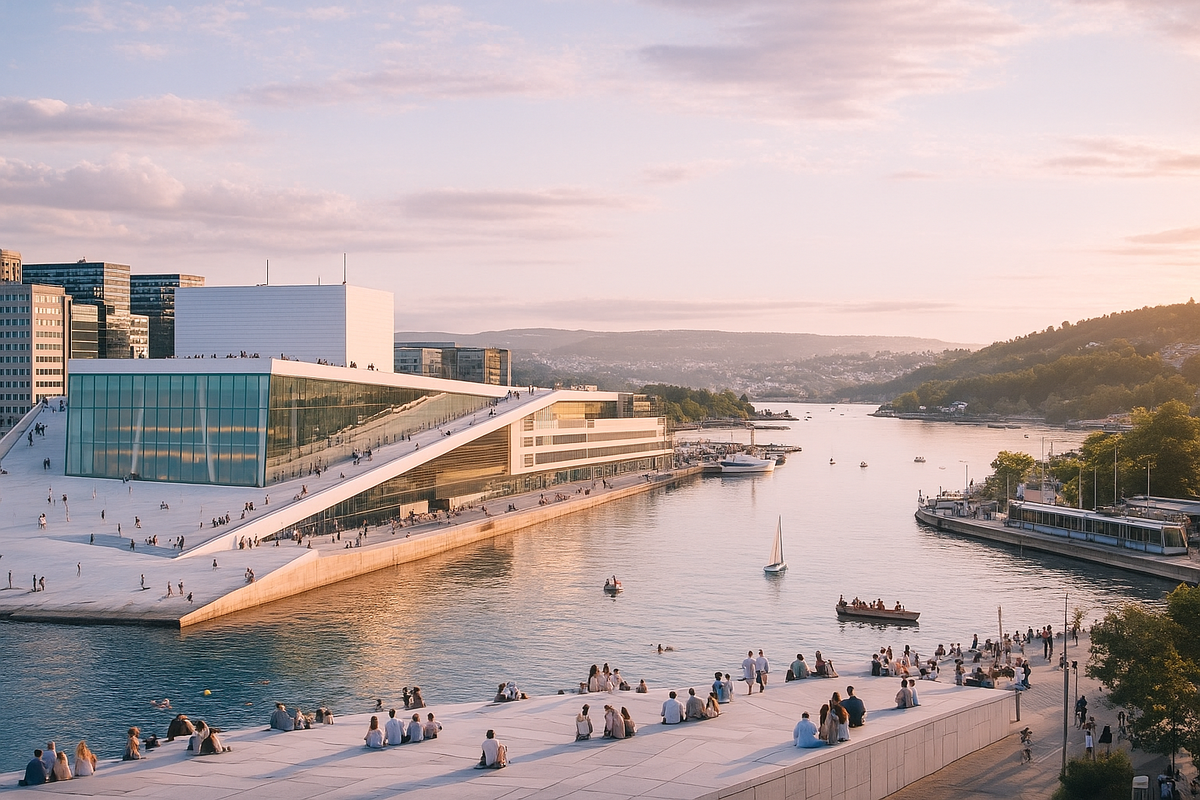
Oslo is one of the calmest capitals in Northern Europe. The fjord, hills, and forests literally embrace the city, while modern waterfront districts sit next to green parks that are easy to escape into after walking through the center. This is a capital where you can start your morning with coffee at the Opera House and end it with a forest hike or a swim in the fjord.
🌿 Atmosphere and rhythm of Oslo
Oslo does not try to be dazzlingly “metropolitan” — its strength lies in harmony. The center is compact: from the station to the waterfront and main streets, you can walk, stopping at cafés or small museums along the way. On the Bjørvika waterfront, the white Opera House seems to grow out of the water, and people stroll on its roof, sit, and enjoy views of the fjord.
The pace of life here is noticeably calmer than in the more dynamic Stockholm or Copenhagen. Many come to Oslo for this experience: a clean city, simple navigation, good public transport, and instant access to nature. It’s ideal if you dislike crowds and prefer a tidy, friendly city rhythm.
🗺️ What to do in Oslo in 2–3 days
- Walk along the waterfront and visit the Opera House roof for a view of the city and fjord.
- Spend a few hours in Aker Brygge and Tjuvholmen: waterfront restaurants, promenades, modern art, and bay views.
- Visit Vigeland Sculpture Park and the surrounding Frognerpark — perfect for walks, picnics, and relaxing with children.
- Take a trip to the Bygdøy peninsula: several museums (polar expeditions, Viking ships, folk architecture) and scenic beaches.
- Go on a mini-hike: take a tram or train and within 20–30 minutes reach Nordmarka trails with forests, lakes, and café huts.
If you stay 3–4 days, you can add a short fjord cruise or a trip to nearby viewpoints overlooking the city and bay.
👤 Who Oslo is especially suited for
- Nature and active lifestyle lovers: hiking, running, cycling, swimming, skiing in winter.
- Those who prefer a calm, “human-scale” capital rather than crowded metropolises.
- Residents of Scandinavian countries looking for a “city + nature” weekend destination without complex logistics.
- Families traveling with children who want green spaces, fresh air, and walks.
For a first visit, 2–3 days in Oslo is usually enough. Adding an extra day allows you to venture slightly further from the center and see how easily the city blends into forest and fjord.
Oslo — for those who want city life and nature “all in one”
A calm capital by the fjord with forests just beyond the city
In Oslo, the fjord, hills, and forests literally reach right into the city. In the morning, you can walk along the modern waterfront by the Opera House, and within an hour be hiking a forest trail in Nordmarka or relaxing by the water on one of the city beaches.
The pace of life is relaxed, the city center is compact and easy to navigate, and public transport allows you to reach both museums and hiking routes without unnecessary stress. It’s an excellent choice if you dream of a Scandinavian capital without the hustle.
2–3 days for the city and museums, plus optionally 1 day for forest walks or a short fjord cruise.
Calm and open, with a focus on nature and modern waterfront architecture.
The Opera House waterfront, Aker Brygge and Tjuvholmen districts, Vigeland Sculpture Park, the museums of Bygdøy, and forest trails in Nordmarka.
Active travelers, families with children, and anyone who values the combination of city, fjord, and forest in a short weekend trip.
🍴 Copenhagen — Hygge, Bicycles, and Gastronomy
Copenhagen is a capital where city life is felt literally in everyday details: bicycles by the doors, candles in cafes even during the day, soft light in windows, and people calmly drinking coffee by the canal. It’s easy to imagine yourself as a local: hop on a bike, ride along the water, stop for lunch at a small bistro, and end the day in a bar or on a cozy waterfront.

🌆 Atmosphere and Rhythm of Copenhagen
Copenhagen has an amazing balance: it’s lively and dynamic but not noisy. The city center is compact, and many neighborhoods are convenient to explore by bike — it’s no wonder the city is considered one of the most “bike-friendly” in Europe. Waterfronts, green squares, modern public spaces, and a rich café culture create the feeling of a city that lives not only for work but also for the pleasure of everyday life.
Of course, Copenhagen also has a “postcard” side: Nyhavn canal with colorful houses, old royal architecture, castles, and palaces in the city and surrounding areas. But most importantly is the hygge atmosphere: attention to small details, light, textures, warmth, and simply making it pleasant for people to be here.
🚴♂️ What to Do in Copenhagen in 2–3 Days
A short trip to Copenhagen usually includes:
- A walk along Nyhavn and the historic center, with stops at cafes and small Danish design shops.
- A day by bike: a route along the waterfront, through modern neighborhoods with architecture and public spaces, and a trip to one of the city beaches.
- A visit to one or two iconic spots: this could be Tivoli amusement park, royal palaces, or a modern museum in the city center.
- Evenings in restaurants and bars: the city is known for its gastronomic scene — from smørrebrød and street food to fine dining.
If you stay for 3–4 days, you can add trips to the suburbs and castles, visit a few more museums, or simply switch to a more “local” mode: markets, walks through residential areas, parks, and canals without a fixed program.
👥 Who Copenhagen is Especially Suited For
Copenhagen is a great choice if you:
- Love cafes, gastronomy, bars, and a lively urban environment with many people but no aggressive rush.
- Are ready to hop on a bike and explore the city “like a local.”
- Have already visited other European capitals and are looking for a destination with a distinct lifestyle and design.
- Plan a short weekend and want everything “at hand”: from sights to food and walks by the water.
For a first acquaintance with Copenhagen, 2–3 days is usually enough. Adding an extra day, the city fits perfectly into a longer Scandinavian itinerary, especially combined with Stockholm or Oslo.
🌟🚲🍴 Copenhagen — Hygge, Bicycles, and Gastronomy
A city that’s easy to explore over a weekend
The compact center, pleasant waterfronts for walking, and locals’ habit of getting around by bike make Copenhagen perfect for a short trip. In a couple of days, you can see Nyhavn, the historic center, modern waterfront neighborhoods, and try the local cuisine — from street food to cozy bistros.
- 2–3 days is enough for a first acquaintance with the city.
- The best way to explore the center is on foot and by bike.
- Perfect for lovers of cafes, bars, and a lively urban environment.
🏙️ Helsinki — Minimalism, Sea, and Sauna
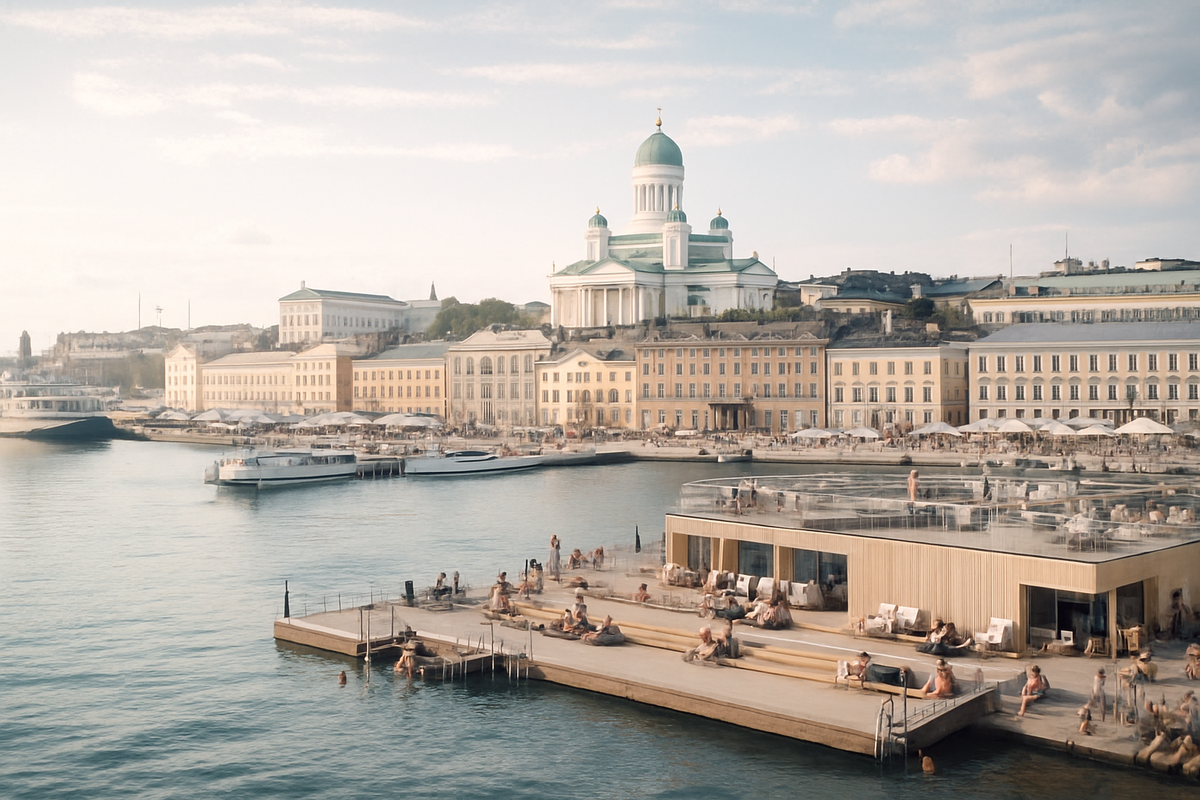
Helsinki feels like a slightly calmer and more “introverted” capital compared to its neighbors. The white cathedral above the square, strict facades, the sea very close by, a clear city center, and neat modern waterfront districts create the impression of a clean, bright, slightly restrained, but cozy city.
⏱️ Atmosphere and rhythm of Helsinki
Here there is no feeling of a big metropolis: the center is compact, streets are not crowded, there is plenty of air and sea views. Helsinki is convenient to explore on foot, complemented by tram rides or short ferry trips to nearby islands.
The city is often associated with Finnish design and architecture: from classical buildings around Senate Square to minimalist modern museums and public spaces. An important part of local culture is the sauna. The capital has both traditional public saunas and stylish modern saunas by the water, where you can alternate the heat of the steam room with the cool Baltic Sea.
The pace of life in Helsinki is measured. It is not a city for endless nightlife, but rather a place for those who enjoy calm walks, cozy cafes, museums, and pleasant rituals like “sauna + evening dinner by the sea.”
📍 What to do in Helsinki for 2–3 days
A short trip can include:
- Walks around the center: Senate Square, Helsinki Cathedral, the bay, and the market square by the water.
- A trip to one of the nearby islands with a fortress and sea views — it adds a sense of scale and nature around the city.
- Exploring Finnish design: shops and showrooms, small galleries, architecture and art museums.
- Visiting a city sauna: a few hours in the steam room with access to the sea or a relaxation area with a water view.
- Walks along the waterfronts and coastal parks, where locals walk dogs, ride bicycles, and simply sit by the sea.
If you stay 3–4 days, you can add a trip to more “natural” Finland (lakes, forests) or combine Helsinki with a ferry trip to Tallinn.
👥 Who Helsinki is especially suitable for Helsinki is a good choice if you:
- Prefer a calm pace and don’t like oversaturated, noisy cities.
- Are interested in architecture, contemporary Scandinavian design, and urban spaces.
- Want to experience Finnish “sauna culture” in a comfortable city setting.
- Plan a combined trip: city + nature, or the Helsinki–Tallinn route, or further travel around Finland.
For a first visit, 2–3 days is usually enough. That’s enough to feel the city’s atmosphere, go to a sauna, walk around the center, and visit one of the nearby islands.
🌊🏙️ Helsinki — Minimalist Capital by the Sea
A calm city center, views of the Baltic Sea, bright architecture, and modern waterfront spaces make Helsinki an ideal city for a relaxed weekend. It’s easy to combine city walks, a sauna visit, and a trip to one of the nearby islands.
This is a city where details matter: light, textures, the view from the window, the sense of air and water around. It suits those who appreciate clean Nordic design and don’t chase an endless must‑see list.
🗓️ Trip format
2–3 days: city center, one island, one or two saunas, and relaxed walks by the sea.
🌿 Atmosphere
Calm, slightly “introverted,” with a focus on minimalism, the sea, and cozy urban rituals.
📌 Highlights
White cathedral and square, islands with fortresses and sea views, city saunas, and a modern design district.
👥 Who it’s for
Those who enjoy calm cities, Nordic design, saunas, and the ability to easily reach the sea or nature.
🗺️ Which City to Choose Based on Your Travel Style
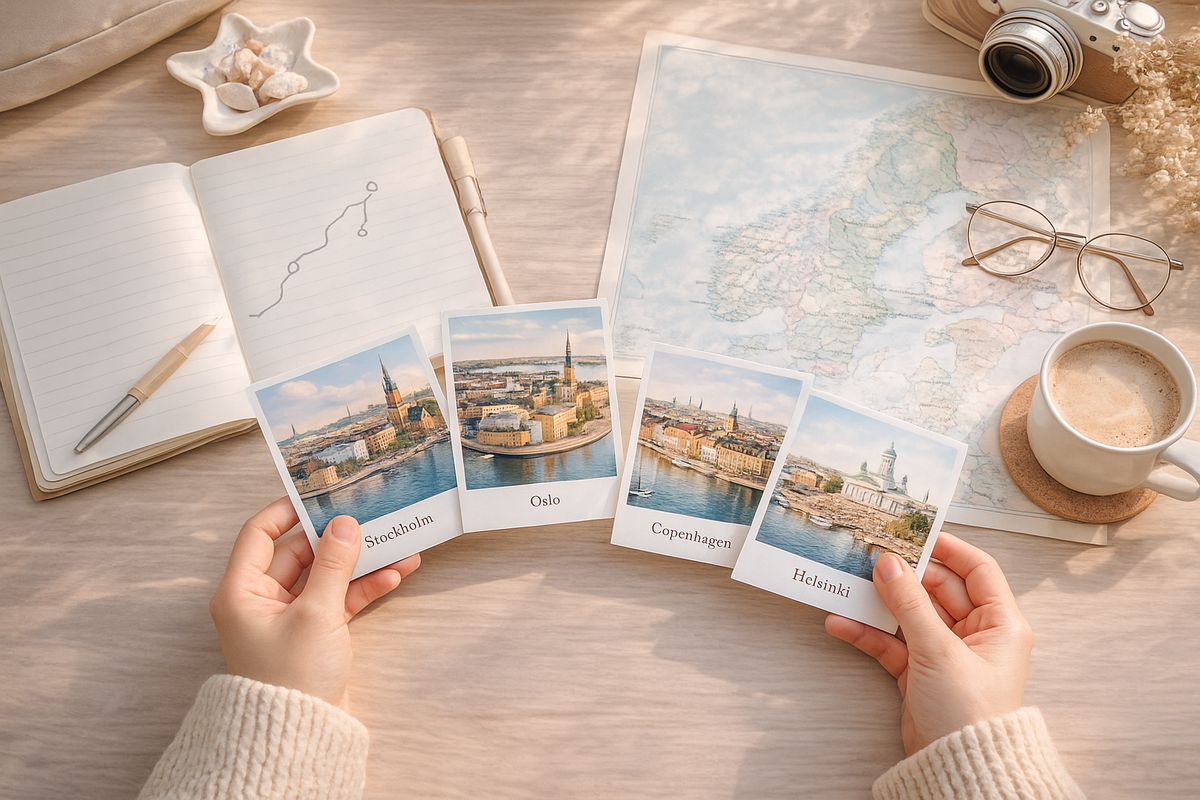
Scandinavian capitals are similar in many ways: safety, water, cleanliness, good infrastructure. But the experience of the trip can be very different depending on what matters most to you — city atmosphere, nature, food, or a relaxed vacation.
🌟 If This Is Your First Trip to Scandinavia
For a first visit, people usually choose Stockholm or Copenhagen.
Stockholm gives a “classic” picture of Scandinavia: an old town, water on all horizons, museums, design, and archipelago islands. Copenhagen is about hygge, bicycles, cafes, and a very lively urban environment where it’s easy to feel like a local.
Both cities work well for 3–4 days, and they can be combined in one itinerary or as part of a longer Scandinavian tour.
🌲 If You Prefer Nature and Active Travel
If your priority is nature and active recreation, the logical choice is Oslo or a “city + nature” combination:
- Oslo — fjord, forests, and hills within walking distance from the center: hiking, cycling, running routes, swimming in summer, skiing in winter.
- Stockholm — can be complemented with trips to the archipelago: islands, forest trails, small fishing villages.
- Helsinki — combines well with trips to lakes and national parks in Finland.
This format suits those who want to combine city infrastructure with the feeling of “northern nature right outside your door.”
🍽️ If Food, Cafes, and City Atmosphere Matter
If the main focus is gastronomy, coffee, bars, and the feeling of a “living” city, the priorities are:
- Copenhagen — strong restaurant scene, from street food to haute cuisine, cafe and bar culture.
- Stockholm — a combination of restaurants, coffee culture, and design districts.
- Helsinki — a calmer but pleasant cafe scene, where the sense of place, light, and sea view are important.
In any of these cities, you can build your itinerary around neighborhoods, markets, cafes, and small restaurants, not just landmarks.
👨👩👧👦 If Traveling with Children
With kids, logistics, green spaces, and clear activities are important:
- Oslo and Helsinki offer plenty of open spaces, parks, and a relatively calm pace.
- Stockholm and Copenhagen offer a few more museums, interactive spaces, and entertainment, while still being walkable.
All capitals have parks, playgrounds, family-friendly cafes, and accommodation options with 2–3 rooms or apartments.
📅 Example Itineraries for 3–7 Days
- Weekend in one capital: 2–3 days in Stockholm, Oslo, Copenhagen, or Helsinki — a “quick introduction” format.
- Two capitals in 4–5 days: for example, Stockholm + Helsinki (ferry or flight), Stockholm + Copenhagen, or Copenhagen + Oslo.
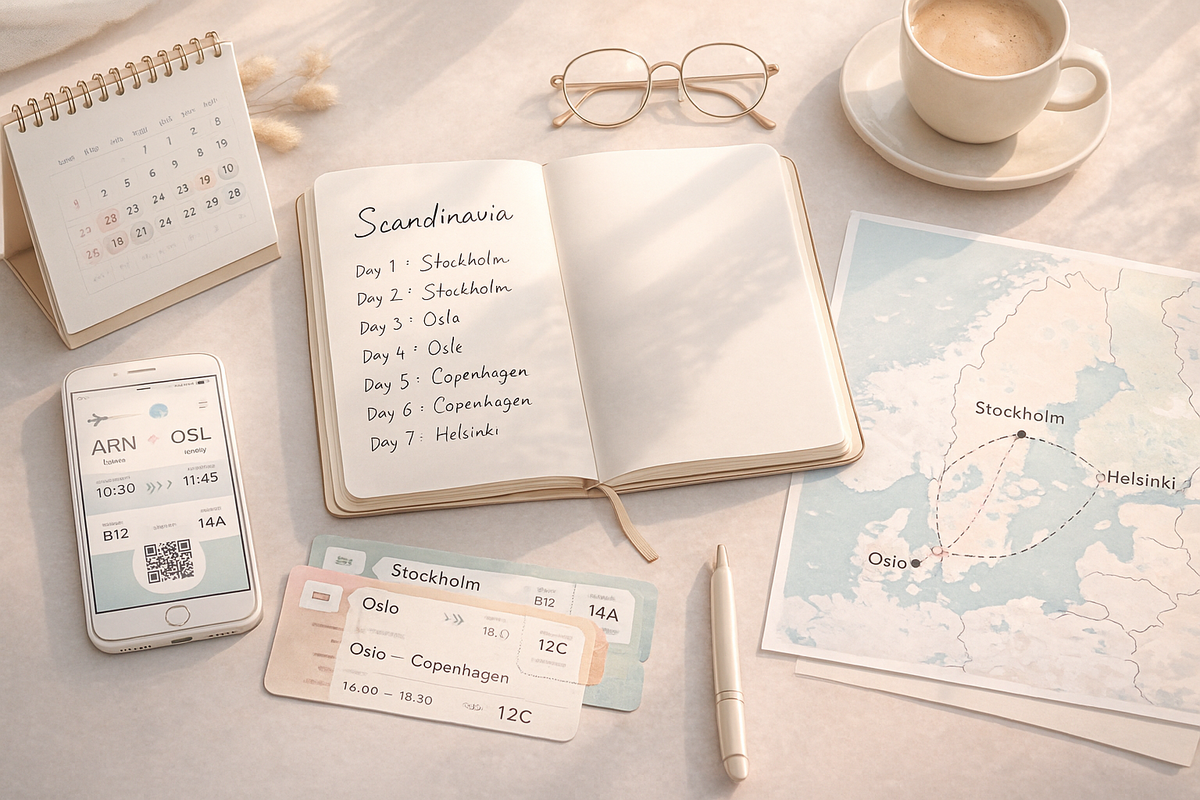
- A week in Scandinavia: “three capitals” (Copenhagen – Stockholm – Oslo) or a version with Helsinki if you want more sea and saunas.
This way, you can adapt the route to your interests without overloading the trip with transfers and still experience the character of each city.
🗺️ Quick Guide: Which Scandinavian Capital Suits You
Want the “classic” Scandinavia with water, old town, and museums? Look towards Stockholm or Copenhagen.
Need fjords, forests, and trails near the city? Oslo is the best start; Stockholm and Helsinki can be complemented with trips to islands and parks.
Love gastronomy and coffee? Copenhagen is the tastiest choice, followed by Stockholm and then Helsinki.
Need more space and a calm pace? Pay attention to Oslo and Helsinki; add Stockholm and Copenhagen for museums and entertainment.
📝 Practical Tips: Season, Budget, Flights, and Transport
Even if you’ve already chosen a city, the season, budget, and logistics strongly affect how comfortable your trip will be. Below is a brief guide to help you plan your journey so it matches your pace and expectations.
☀️ When to Go
Summer (roughly June to August) is the most popular season to visit Scandinavian capitals. Days are long, there’s plenty of light and greenery, temperatures are comfortable for walks, and summer terraces and festivals are open. Downsides include higher prices and more tourists at popular spots.
Spring and autumn are suitable for those who prefer quieter cities. At this time, it’s already (or still) bright enough, but there are fewer tourists, and hotels and flights are often cheaper. Weather can be changeable, but the off-season makes it easier to see cities as locals know them.
Winter gives a completely different impression: low sun, lights, Christmas markets, cozy cafes, and saunas. It’s a good option for those ready for short daylight hours and cooler weather but who want to experience “northern winter” in the city or combine the trip with skiing/northern trips.
💰 How to Plan a Budget
Scandinavian capitals are more expensive than average European cities, so it’s better to plan your budget in advance. Major expenses are flights, accommodation, and dining out.
Several simple strategies can reduce costs: book hotels and tickets early, consider apartments or hotels slightly outside the historic center, mix restaurants with meals in cafes and supermarkets. City passes that combine transport and museum access can also save money and make planning easier.
Decide what you are willing to spend more on (for example, hotel location or gastronomic experiences) and where you can save without losing quality — on accommodation type, transport, or paid activities.
✈️ Flights Between Capitals
There are many direct flights between Stockholm, Oslo, Copenhagen, and Helsinki, usually taking 45 minutes to 1.5 hours. A convenient option is an “open‑jaw” route: fly into one capital and out of another, combining cities along the way.
The earlier you book tickets, the better your chances of finding reasonable fares, especially in high season and on weekends. If you have flexible dates, check a few alternative departure days and different start/end cities.
🚆 Trains, Ferries, and City Transport
Trains between Scandinavian capitals are comfortable and eco-friendly: they allow you to enjoy the scenery along the way and arrive directly in the city center. On popular routes, booking tickets in advance saves money, and night trains can save on accommodation.
Ferries connect Stockholm and Helsinki, as well as other cities in the region. This is not only a means of transport but also a mini-cruise experience with cabins, restaurants, and island views.
Within cities, public transport is convenient: metro, trams, buses, and city trains. Often, there are unified tickets for multiple types of transport and handy apps for payment. In Copenhagen and other capitals, consider renting a bike — it’s fast and typical for the region.
📝 Practical Checklist for a Trip to Scandinavia
Summer — maximum daylight and street life. Spring and autumn — calmer and often cheaper. Winter — lights, markets, and a very “northern” atmosphere.
Book flights and hotels in advance, combine restaurants with supermarkets, and check city passes with transport and museums.
Flights between capitals are short, trains and ferries offer scenic routes, and within cities public transport and bikes are very convenient.
🗺️ Scandinavia Beyond: What to Read and Where to Go Next
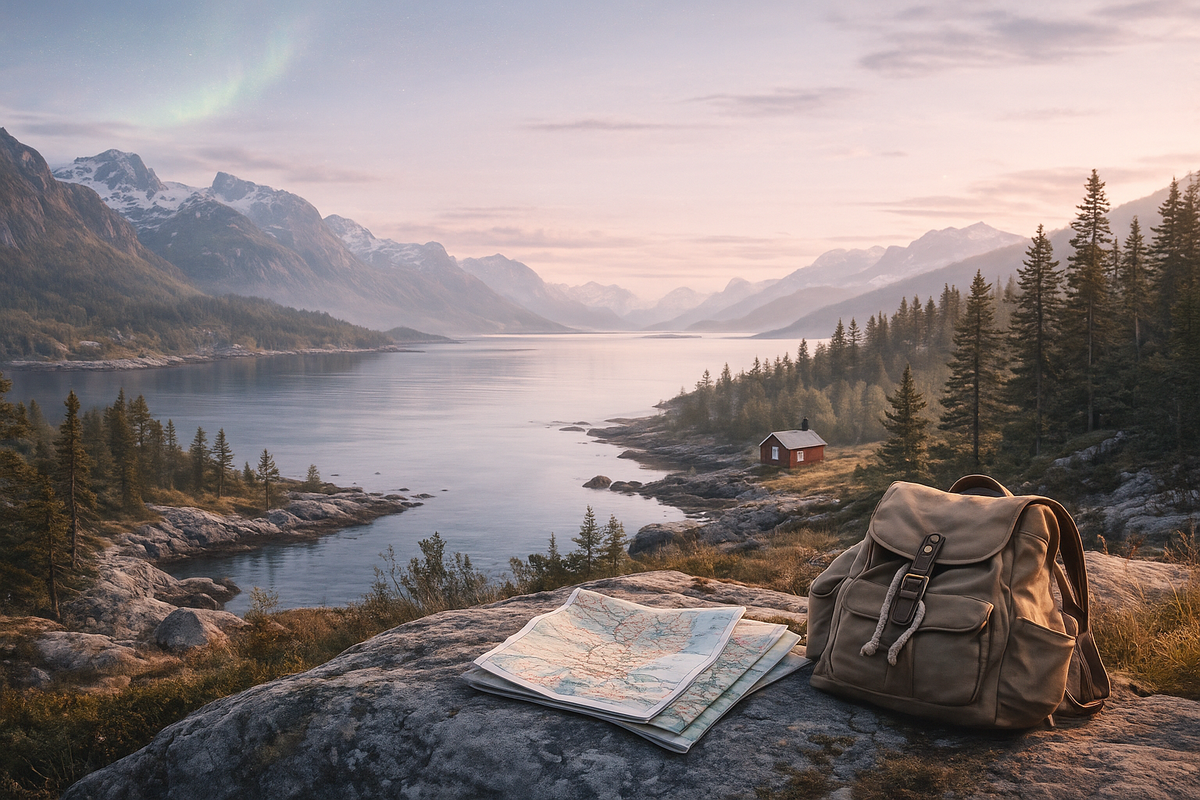
When you’ve visited one of the capitals — Stockholm, Oslo, Copenhagen, or Helsinki — you almost always feel the desire to explore the “real” Scandinavia beyond the city: fjords, forests, islands, small coastal towns, and the Northern Lights. This section is a natural continuation: where to go next and which materials on the site can help plan your route.
🚗 Where to Go After the Capital
- After Stockholm, many head either to the archipelagos and coastal towns on Sweden’s east coast, or further north to national parks and, if desired, Lapland. This is a good option if you liked the “city + nature” balance and want more forests, lakes, and tranquility.
- After Oslo, the logical next step is Norway’s fjords and mountains. You can travel by train, combining rail and fjord cruises, or take a car and explore small towns and viewpoints. This is already a separate trip, but the capital is a convenient starting point.
- Copenhagen is easily continued with a trip around Denmark: castles, small towns, islands, and the North Sea and Baltic coast. If you’ve enjoyed Danish hygge, a journey beyond the capital will enhance that experience.
- From Helsinki, it’s natural to head either to the lakes and forests of southern Finland, or further to Lapland with winter activities, the Northern Lights, and wilder nature. The capital also pairs well with a short visit to Tallinn: the ferry makes two countries in one trip quite feasible.
📚 What to Read Next on the Site
To continue planning, it’s convenient to move from comparing capitals to more detailed country guides. They will help turn your city weekend into a rich itinerary for a week or more.
Three logical steps on the site:
- For those who fell in love with fjords, mountains, and the combination of city and wild nature — a detailed guide to Norway.
- For travelers drawn to hygge, cozy towns, and calm coastlines — material about Denmark.
- For those who want sauna, lakes, Nordic design, and possibly Lapland — a guide to Finland.
This helps readers move from choosing a capital to planning a complete route across a country or even multiple northern countries.

0 comments
Log in to leave a comment