


🌌 Where is the best place to see the Northern Lights: Swedish Lapland, Norway or Finland?
Imagine this: you step outside on a frosty night, somewhere far beyond the Arctic Circle, and suddenly the Northern Lights flash above Norway, Finland or Swedish Lapland — precisely because all three countries lie at the heart of the ‘auroral belt’. The chances of seeing this miracle here are really high, but the format of the holiday, the atmosphere and the impressions of a trip to each of the countries will be completely different: from Norwegian fjords to Finnish igloo hotels and the silence of the Swedish tundra. Whether you are a tourist planning your first winter trip to Scandinavia or a local dreaming of catching the perfect aurora on the weekend, this article will help you understand which country to start with and which style of northern winter is right for you.
✨ Northern Lights in Scandinavia: why here?
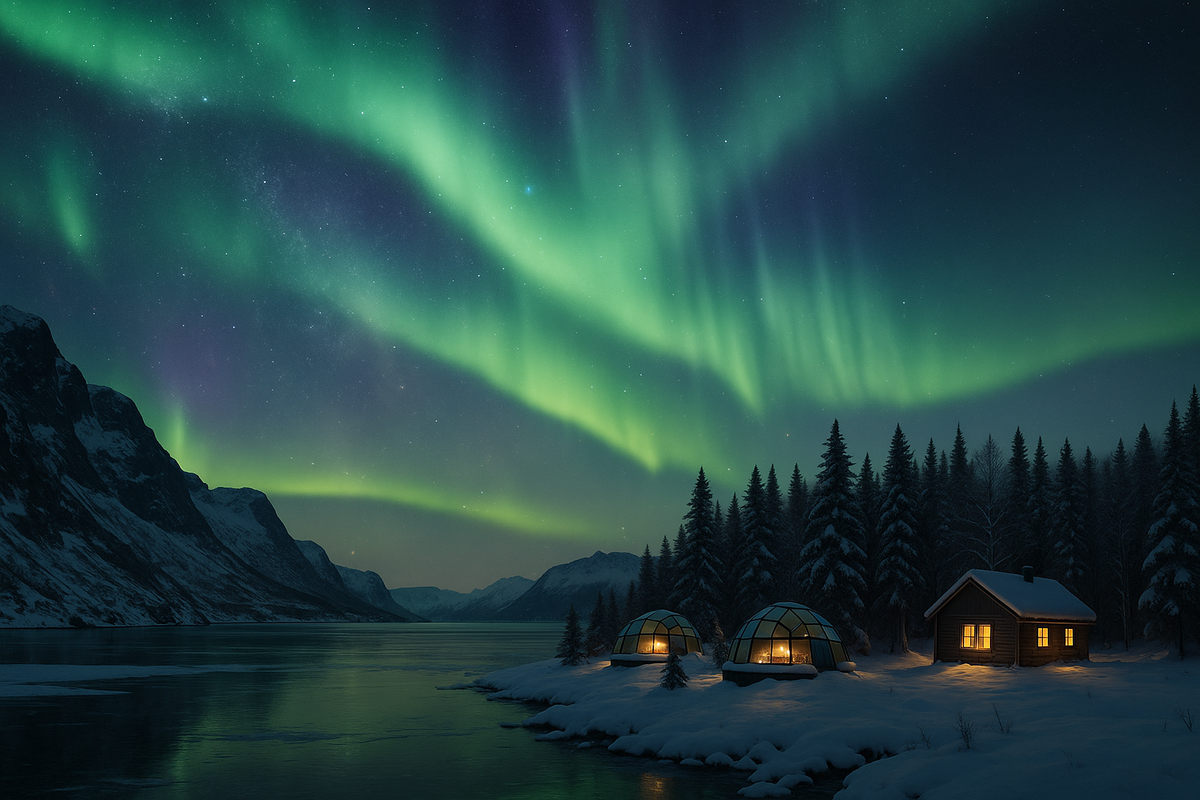
Northern Norway, Sweden and Finland lie directly in the so-called auroral zone — an area between approximately 65° and 72° north latitude, where the Northern Lights appear most frequently. This means that you don't have to travel to the ‘remote tundra without people or roads’: this is where the high probability of seeing the aurora and developed infrastructure — airports, trains, hotels and organised tours — come together.
For those who are just planning their first trip to Scandinavia, and for those who already live in the region and want to ‘escape to the north’ for a couple of days, this is a very convenient starting point: you find yourself right in the heart of the Arctic winter, but at the same time you remain in your comfort zone with normal logistics.
🧲 What is the ‘auroral belt’ and why are Norway, Sweden and Finland the ideal choice?
The auroral belt is a ‘corridor’ around the Earth's magnetic poles where solar wind particles most often collide with the upper layers of the atmosphere and cause the glow we see as the Northern Lights. The northern regions of Norway, Swedish and Finnish Lapland are located within or near this belt, so in winter the chances of seeing the aurora here are objectively higher than in more southern latitudes.
At the same time, this is not an ‘expedition to nowhere’: along the coast and inland, there are already cities, small towns and resorts with hotels, cottages, tours and Arctic activities. You can fly in on a regular flight, transfer to a train or shuttle, and in just a few hours you'll be standing under the dark sky, where the aurora can be seen on almost every other clear night.
What is the “auroral belt”
An area around Earth’s magnetic poles where the northern lights are most often observed due to collisions of solar wind particles with the atmosphere.
65–72° north latitude
In this “corridor” lie northern Norway, Swedish Lapland and Finnish Lapland — that’s where the chance of seeing the aurora is especially high in winter.
Not “wild” tourism
Airports, trains, hotels and organized tours are already located in the zone of frequent aurora activity — you don’t need to go to completely uninhabited places.
One trip — several countries
Routes are easy to combine: in one winter trip you can see Norwegian fjords, Finnish igloos and the quiet of the Swedish tundra.
📅 When to go to see the Northern Lights
In Scandinavia, the northern lights season usually lasts from late September–October to late March–early April. The best months are in the depths of winter: from November to February, when the nights are longest and darkest, and the sun barely rises above the horizon. It is during this period that you have the most ‘dark hours’ when the aurora can appear.
The best time for observation is from around 6 p.m. to 2 a.m.: during these hours, the sky is dark enough and the aurora is often at its most active. It is important to remember that the Northern Lights are a natural phenomenon: you cannot ‘order’ them for a specific day, even if the forecast looks promising. Therefore, it is better to plan at least 3-4 nights in the region to increase your chances and not be disappointed if one of the nights turns out to be cloudy.
Northern Lights season in Scandinavia
Best time of night: roughly from 18:00 to 02:00 during the darkest hours. Plan at least 3–4 nights in the region to improve your chances: the Northern Lights remain an unpredictable natural phenomenon.
🌌 Swedish Lapland: stable skies and Arctic silence
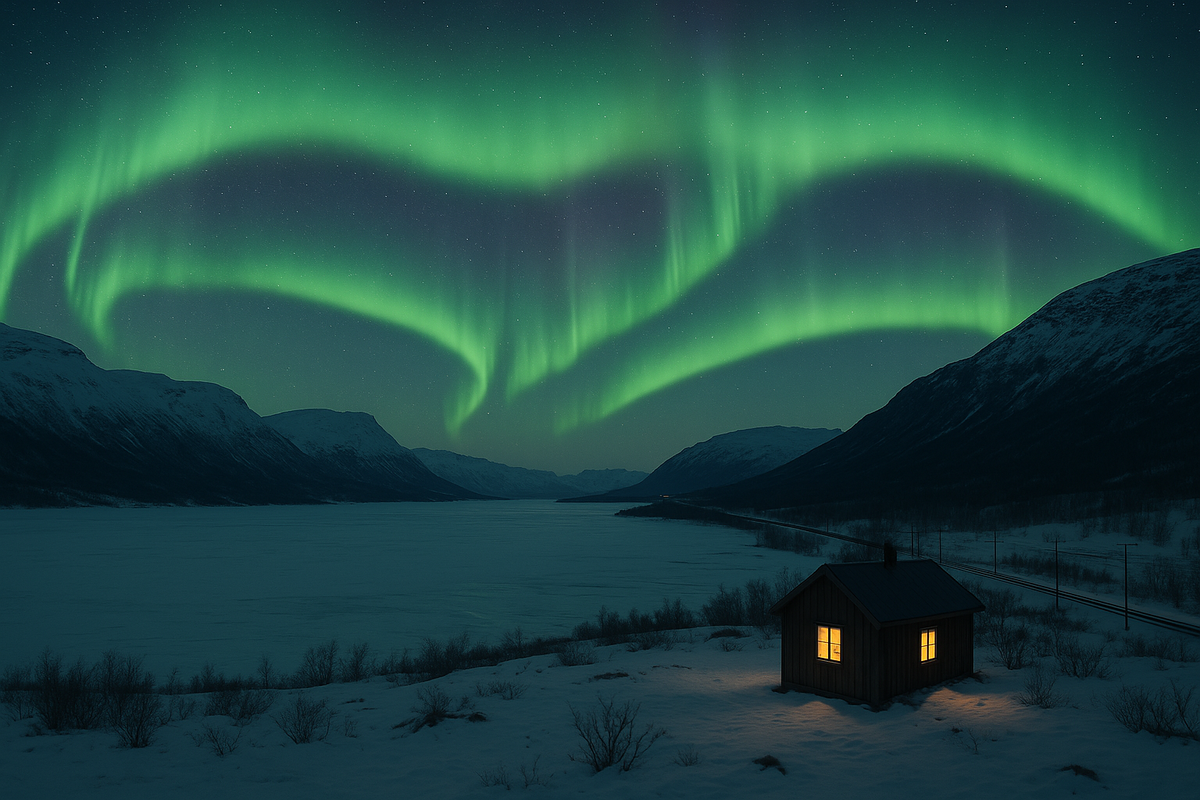
Swedish Lapland is the perfect destination for those who want to see the Northern Lights in Sweden without the hustle and bustle of crowds. There are few city lights here, lots of dark sky, and a feeling of being at the edge of the world when a green arc quietly flashes over the snow-covered hills.
For many travellers, ‘Swedish Lapland northern lights’ sounds like a synonym for a real Arctic night: small villages, cosy houses, night trains and an endless starry sky. At the same time, you are still in Europe — with convenient logistics, understandable services and the opportunity to easily combine this north with a trip to other Scandinavian countries.
🤫 Why Sweden is the choice for ‘quiet hunters’
Swedish Lapland is often considered one of the most reliable regions for winter aurora hunting: the climate here is drier than on the Norwegian coast, and light pollution is minimal — there are few small towns and streetlights, and just a couple of kilometres from the village it becomes truly dark. For those who perceive the northern lights as a meditative, contemplative phenomenon, this combination is a pure gift.
The Abisko area is particularly well known: the local microclimate provides significantly more clear nights than many other places above the Arctic Circle, and the phrase ‘Abisko Northern Lights’ has long been a separate recommendation in travel guides. Add to this the peaceful atmosphere, the absence of large resort crowds and the opportunity to stand for hours under the sky without any extraneous noise, and you have a destination for true ‘quiet hunters’.
Low light pollution
Small towns and villages, plus quick access to real darkness outside built-up areas, create ideal conditions to see the Northern Lights in Sweden.
More stable skies
Inland areas are less affected by ocean-driven storms than the coast: around Abisko there are often more clear nights across the season.
Peace and solitude
Swedish Lapland offers aurora experiences without large crowds and noisy tours: it’s easy to find a spot where you’ll be under the sky almost alone.
Comfort without “luxury”
Cozy cabins, small lodges and family-run hotels — enough comfort without the feel of a big resort.
📍 Main points: Abisko, Kiruna, Jukkasjärvi
Virtually all routes to the Northern Lights in Sweden pass through three places in one way or another: Abisko National Park, the city of Kiruna, and the village of Jukkasjärvi with its legendary Icehotel. Together, they create a convenient combination: it is easy to get here, you can live comfortably here, and it is easy to go on night trips to see the Northern Lights from here.
Abisko
A small village in the heart of Swedish Lapland, surrounded by mountains and lakes. The local microclimate creates a so-called “hole in the clouds,” so clear nights are often more frequent here than in many other places above the Arctic Circle. Abisko National Park is home to the Aurora Sky Station — a viewpoint reached by chairlift for unforgettable night skies.
Kiruna
A small town and the region’s main transport hub: flights arrive here from Stockholm, and the overnight train also stops here. Kiruna is a convenient base for tours to Abisko, frozen lakes and small eco-lodges nearby. It’s often the easiest place to rent a car or join an organized tour.
Jukkasjärvi & the Icehotel
The village of Jukkasjärvi is famous for the Icehotel — a legendary hotel rebuilt each winter from ice and snow. Spending a night in an ice room is that “do it once in your life” experience many travelers combine with aurora hunting: step outside, and a green arc may already be glowing above the river.
👥 Who Swedish Lapland is best suited for
Swedish Lapland is particularly well suited to those who view the Northern Lights as a personal project: photographers and videographers who are prepared to stand with their tripods for hours; introverted travellers who dream of silence and the feeling of ‘their own’ place under the starry sky; those who are not afraid of a long train journey for the sake of the right sky.
If privacy is more important to you than a vibrant nightlife, if you love trains, peaceful landscapes and are ready to spend a few days almost without city noise, Swedish Lapland is very likely to be your ideal choice.
Swedish Lapland isn’t about big resorts — it’s about travelers who want to experience the North in a mindful, calm way. It’s especially comfortable for:
If you don't want to limit yourself to one country, Swedish Lapland can easily be incorporated into a grand tour of Scandinavia: fly to Norway, spend a couple of days in the fjords, and then take a train deep into Sweden; or start in Stockholm and then head north to Kiruna and Abisko. This way, you can combine different types of landscapes and experiences in one trip — from the sea to the silence of the tundra.
Take a look at our general guide to [Norway] and the section on routes through Sweden — there you will find ideas on how to combine Swedish Lapland, the Northern Lights and other countries in the region in one trip.
🌊 Norway: fjords, sea and exciting tours to see the Northern Lights
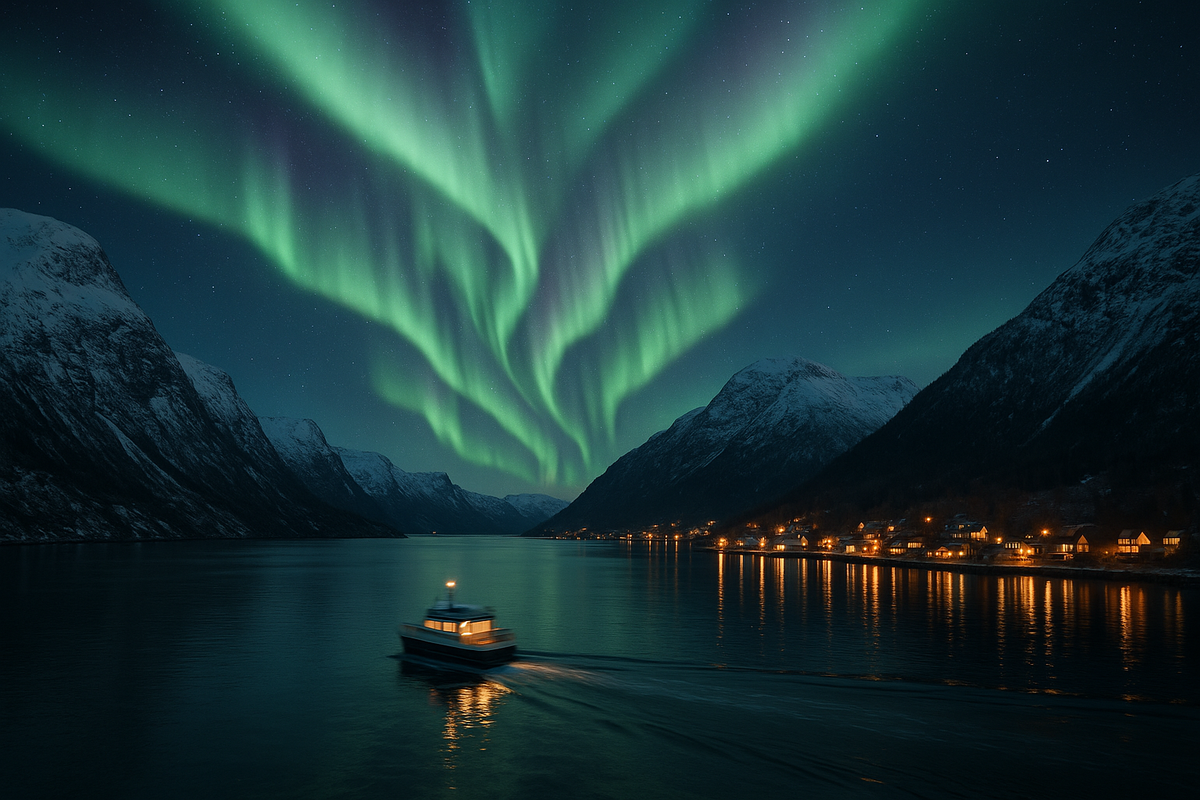
Norway is the northern lights in Norway plus fjords, the sea and a sense of great adventure. Here, you can leave your hotel in Tromsø, hop on an evening tour and, an hour later, stand under green arches above the fjord. A couple of days later, you can travel to Lofoten, where the ‘Lofoten Northern Lights’ offer a spectacular show right above the ocean and sharp peaks. This is the choice for those who want not only to contemplate the sky, but also to spend their time actively: cruises, whale safaris, skiing, hiking — all of this can easily be fit into one itinerary.
📅 Season in Northern Norway
The northern lights season in Norway begins around the end of September and lasts until the end of March or early April, when the nights are still quite dark. In the north of the country, especially in the Tromsø area and further north towards Nordkapp, winter brings very long nights, and in the darkest weeks, even polar night. This is rather an advantage for observing the aurora: the less daylight there is, the more time there is to hunt for green arcs.
The best time of day is from evening until late at night, usually from 6 p.m. to 2 a.m. At this time, the sky is already dark enough, and the aurora is often at its most active. As in other parts of Scandinavia, it is important to remember that the Northern Lights remain a natural phenomenon: plan to spend several nights in the region so that you have a margin for weather and cloud cover.
Northern Lights Season in Northern Norway
Best viewing hours: roughly 18:00 to 02:00. The polar night period (*) applies to the northernmost areas and makes the nights especially long — so plan at least 3–4 nights in the region.
📍 Where to look for the Northern Lights in Norway
The most popular spots where tourists and locals look for the Northern Lights in Norway are in the north of the country. Tromsø is often called the ‘gateway to the Arctic’: it has an airport, hotels for every taste, and dozens of tours that take people to darker skies every night. The Lofoten Islands turn the Northern Lights into a postcard: green arcs glow above the sharp peaks and fishing villages, reflecting in the cold water of the fjords.
Those looking for even more ‘north’ can head towards Alta, Nordkapp and Svalbard: here, the latitude is higher, and the Arctic feels very real. However, it is better to be well prepared for such experiences — with plenty of warm clothing, time and budget.
Tromsø
Tromsø is the main hub for those coming to see the Northern Lights in Norway. It has an airport, a strong choice of hotels and restaurants, and plenty of night tours: you’ll be picked up in the center and taken to areas with fewer clouds and less light pollution. “Northern Lights in Tromsø” is all about a comfortable format — exploring the city by day and chasing green arcs in the evening.
The Lofoten Islands and Senja
Lofoten and the nearby island of Senja are dramatic mountains, fishing villages, and narrow fjords opening straight to the ocean. In Lofoten, the Northern Lights become a visual show: green ribbons hang over sharp peaks, reflect in the water, and create incredible frames for photographers. Senja is a bit quieter and less crowded, yet equally stunning.
Alta, North Cape, Svalbard
Alta, the North Cape, and the Svalbard archipelago are perfect for those who want to feel the true edge of the world. The latitudes are even farther north, winters are harsher, and впечатления stronger. These destinations combine auroras with Arctic landscapes, snowy plateaus, and seas of ice — and are best for travelers who already have some winter experience.
⚖️ Pros and cons of the ‘Norwegian format’
Norway is all about the Northern Lights, along with fjords, mountains, the sea, and cool activities. The coastal climate here is usually milder than inland: in winter, it doesn't get as cold by the sea as it does in mainland Lapland. Add to this a wide range of tours — from fjord cruises and whale safaris to skiing and snowmobiling — and you have a destination where you will definitely not be bored during the day.
On the other hand, all these advantages come at a price: Norway is almost always more expensive than its neighbours, and the weather by the sea can change from a starry sky to thick clouds in a matter of hours. Sometimes you have to leave the city and head deep into the fjords or to neighbouring islands to find better weather, which is also worth considering when planning your trip.
Advantages and nuances of the “Norwegian format”
Why choose Norway
- A mix of sea, fjords, and mountains in one trip.
- Wide range of tours: cruises, whale safaris, snowmobiles, skiing, and hiking.
- A relatively mild coastal climate compared with inland Lapland.
- Convenient flights to Tromsø and other northern towns, strong infrastructure.
What you should be prepared for
- Prices are higher than in many other parts of Scandinavia.
- Coastal weather is more unpredictable: clouds, snow, and wind can change plans quickly.
- Sometimes you need to drive farther from town to escape light pollution.
- Popular spots like Tromsø and Lofoten can feel busier during peak season.
Norway is ideal for those who want to combine the northern lights, fjords and a packed schedule of daytime activities. It is easy to plan a route that starts in Tromsø or Lofoten and continues further into the country to other fjords, national parks and cities. Some cruises and sea routes can be conveniently combined with trips to other countries in the region: for example, fly to Oslo, spend a couple of days in the city, and then travel further north or take a ferry to Denmark.
If you want to learn more about the routes, cities and fjords and plan a trip that goes beyond simply chasing the Northern Lights, take a look at our detailed guide to Norway. There you will find ideas on how to combine northern cities, the coast and neighbouring countries in one trip.
🧖♂️ Finland: cosy resorts and glass igloos under a sparkling sky
Finland is all about the Northern Lights in Finland in the most comfortable format: warm cottages, saunas, glass domes and friendly resorts where everything has already been thought out for you. Here, it's easy to combine hunting for the aurora with a winter holiday, sledding, a visit to Santa Claus and an evening at the spa.
Finnish Lapland makes the Northern Lights part of everyday winter life: you dine in a cosy restaurant, return to your glass igloo — and suddenly a soft green arc lights up right above the transparent roof. It is the ‘glass igloo Finland’ format that becomes the starting point for many people's first Scandinavian journey.
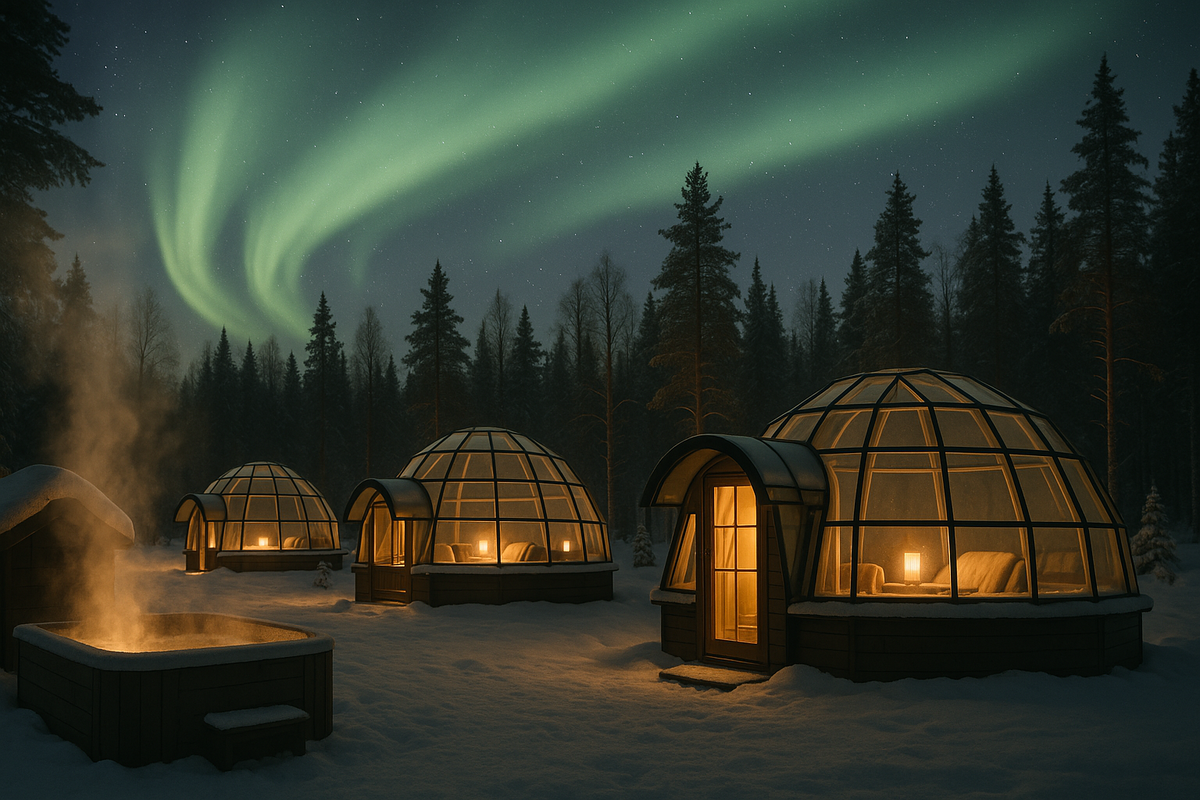
🌟 Finnish Lapland — up to 200 nights of aurora borealis per year
Finnish Lapland is considered one of the most reliable regions for hunting the Northern Lights: in clear weather, the aurora can appear here up to 200 nights a year. Simply put, almost every other clear night, the sky offers a chance to see green waves above the hills and forests, especially if you are north of Rovaniemi.
The season starts around the end of August–September and lasts until the beginning of April: at first, the aurora is visible in the dark evening sky, and in winter, the long nights provide plenty of time for observation. This makes the Northern Lights in Finland an excellent choice for those who don't want to ‘catch a rare opportunity’ but want to plan their trip calmly throughout the winter.
with possible aurora sightings
Finnish Lapland: a stable aurora season
With clear skies, Finnish Lapland can offer the northern lights up to two hundred nights a year. The season usually runs from late August–September to early April, so you have plenty of options for planning your trip.
The farther north you travel from Rovaniemi, the higher your chances of seeing Finnish Lapland northern lights with every clear sky.
📍 Where to find it: Rovaniemi, Saariselkä, Levi, Kilpisjärvi, etc.
The northern lights in Finland are best seen in Finnish Lapland, where resorts are already geared up for winter and the aurora. Each place has its own character: Rovaniemi is suitable for those who want ‘Santa's town’ and a family atmosphere, while more northern resorts such as Saariselkä, Levi, Ivalo or Kilpisjärvi give the feeling of the real north and the silence around it.
So you can choose how wild or, conversely, how ‘resort-like’ your north will be: from a packed programme with parks, museums and children's activities to small cottages in the forest, surrounded only by snow and sky.
Rovaniemi
Rovaniemi is the unofficial “capital” of Finnish Lapland and the famous “Santa city.” You’ll find an airport, hotels, theme parks, and plenty of activities for families. It’s an easy base to combine a festive winter vibe, the zoo, Santa Claus Village, and short trips outside the city where the real northern lights in Finland can appear under dark skies.
Saariselkä & Ivalo
Saariselkä and Ivalo lie farther north than Rovaniemi and are perfect if you want more silence and better odds of truly dark skies. Expect comfortable hotels and cabins, well-maintained trails for skiing and winter walks, and night tours focused specifically on aurora hunting.
Levi
Levi is one of Finland’s best-known ski resorts. By day — slopes, restaurants, and spa time. By night — aurora chasing from viewpoints or nearby dark areas. A great pick if you want active winter fun without sacrificing comfort.
Kilpisjärvi & small lodges
Kilpisjärvi and tiny northern lodges are for travelers who crave maximum solitude. Light pollution is minimal, crowds are few, and the landscape is all fells, lakes, and big dark skies. A beautiful option if you want to feel that Finnish Lapland northern lights are shining just for you.
🧣 The Finnish ‘comfortable’ approach
One of Finland's main distinguishing features is its unique approach to comfort. What many people imagine when they hear ‘glass igloos in Finland’ has appeared here and become popular: small houses or domes with transparent roofs through which you can see the sky, stars and northern lights. In addition, there are cottages with panoramic windows, private saunas, and sometimes outdoor jacuzzis where you can sit in the warmth and watch the green arcs.
During the day, Finnish resorts offer family activities: dog sledding, motorised sleigh rides, snowmobiles, forest walks, spa centres and water parks. The result is a format where, even if the aurora doesn't appear on one of the nights, the trip still feels like a full-fledged winter holiday.
The Finnish approach to winter is all about maximum coziness and thoughtful details. Even a trip “for the aurora” turns into a full holiday where not only the night outings matter, but also how you spend your day.
Glass igloos and domes
Cabins with transparent walls and roofs that let you watch the northern lights without leaving your warm bed.
A sauna in almost every cabin
Traditional Finnish sauna is part of everyday life: many cabins and rooms come with a private steam room.
Family-friendly winter activities
Huskies, reindeer, snowmobiles, spas and water parks — so both kids and adults have plenty to enjoy all day.
Ready-made all-inclusive packages
Transfers, meals, accommodation and excursions are already included — perfect if you don’t want to spend time planning every detail.
🎯 For whom Finland is the best start
Finland is the perfect choice if you are going to see the Northern Lights for the first time and want to start with something familiar and comfortable. It is easy to get to, easy to find hotels and apartments of any standard, and most resorts offer ready-made packages: accommodation, transfers, meals and winter activities.
Finnish Lapland is particularly well suited for families with children and couples who want a winter wonderland, cosiness and predictability. If you don't dream of a complete break from civilisation, but want the northern lights to be part of a well-organised holiday rather than a ‘bonus,’ Finland is likely to be the best point of entry into Scandinavia.
Finland is most often chosen by those who value comfort, predictability, and a true “winter holiday” vibe — not just the aurora chase itself:
If you feel that Finland is the right place for you, the next step is to choose a specific resort and type of accommodation: a classic hotel, a cosy cottage or that very glass igloo under the shining sky. This will determine the level of privacy, your budget and how much time you will spend directly under the starry sky.
For more information about winter routes, resorts and accommodation options, see our [Finland] section, which contains ideas for trips to different parts of Lapland, a selection of hotels and glass igloos, as well as practical advice on choosing seasons and types of holiday.
🧭 How to choose your first country: a quick checklist for beginners
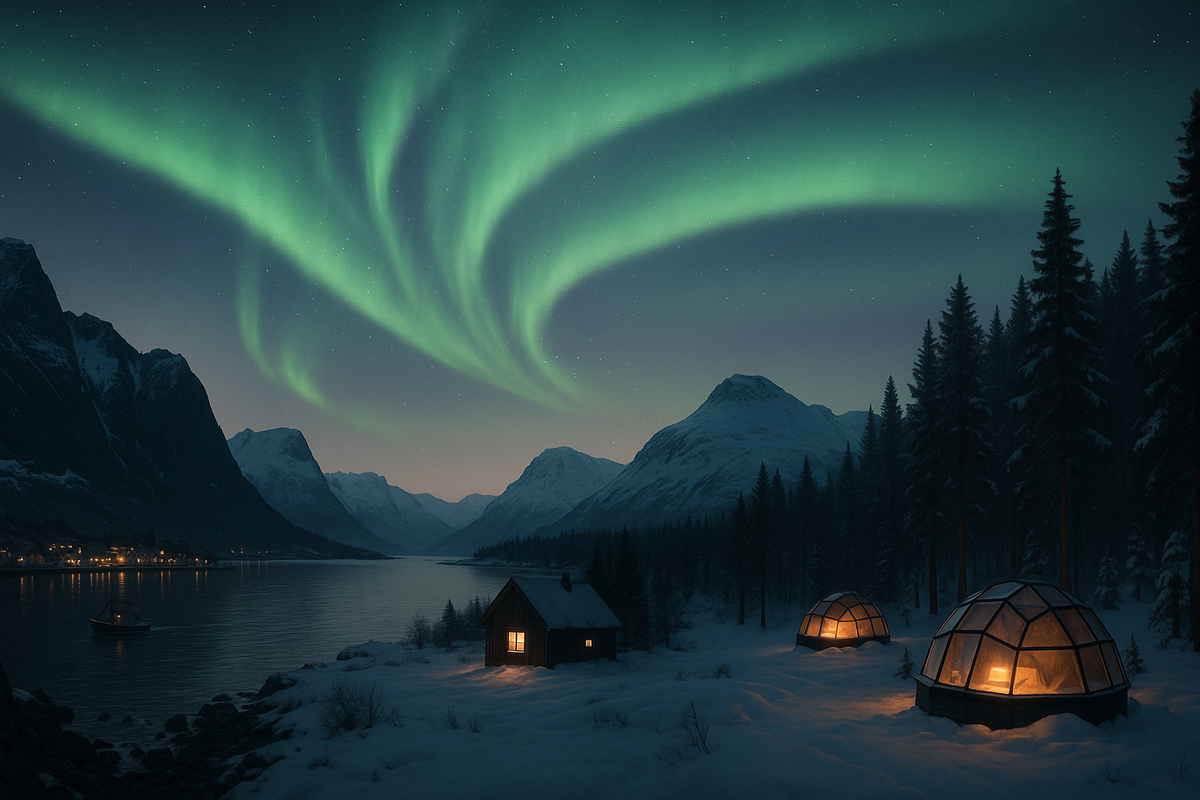
All three countries are great for aurora viewing, so the question ‘which is better for the Northern Lights — Norway, Sweden or Finland?’ arises for almost everyone who is just starting to plan their trip. This section is a short checklist that will help you decide where to go to see the Northern Lights for the first time, based on your time, budget, and desired level of comfort or ‘wild’ north.
Comparison at a glance
👀 Comparison at a glance
Swedish Lapland, Norway or Finland: a quick comparison
| Criteria | Swedish Lapland | Norway | Finland |
|---|---|---|---|
| Chances of seeing the aurora | Very high, especially around Abisko and within the Arctic Circle on clear nights. | High in the north (Tromsø, Lofoten), but coastal weather can be more unpredictable. | Consistently high: Finnish Lapland can offer up to ~200 aurora nights per year. |
| Atmosphere | Quiet, almost “wild” north with fewer people and minimal light pollution. | A vivid, dynamic trip: fjords, sea, active tours and more movement. | Cozy resorts, glass igloos, sauna and spa — maximum comfort. |
| Logistics | Often via Stockholm + train or a domestic flight; the journey may take longer. | Convenient flights to Tromsø and other northern cities, sometimes with connections. | Good flights to Rovaniemi and other resorts; strong transfer and package options. |
| Budget | On average slightly cheaper than Norway with similar baseline comfort. | Usually the most expensive option for accommodation and activities. | Wide range: from simple apartments to premium glass-igloo stays. |
| Extra activities | Silence, scenic walks, photography, husky/snowmobile tours and small lodges. | Fjord cruises, whale safaris, skiing, hiking, islands and dramatic landscapes. | Huskies, reindeer, saunas, spas, water parks, skiing and Santa-themed experiences. |
Swedish Lapland
- Aurora chances: very high, especially around Abisko.
- Atmosphere: secluded “wild” north, fewer people and lights.
- Logistics: Stockholm + train or domestic flight; longer travel time possible.
- Budget: often cheaper than Norway with comparable stays.
- Activities: walks, photography, snowmobiles, sleds, small lodges.
Norway
- Aurora chances: high in the north, but coastal weather is less predictable.
- Atmosphere: fjords, mountains and sea — a more dynamic journey.
- Logistics: good access to Tromsø and other hubs; many ready-made tours.
- Budget: typically the most expensive for lodging and excursions.
- Activities: cruises, whale safaris, skiing, hiking, islands and fjords.
Finland
- Aurora chances: stable; up to ~200 aurora nights in Finnish Lapland.
- Atmosphere: cozy resorts, glass igloos, comfort-focused holidays.
- Logistics: strong flights to Rovaniemi and other airports, easy transfers.
- Budget: from affordable apartments to premium all-in experiences.
- Activities: huskies, reindeer, spas, water parks and family winter fun.
🗺️ Ready-made selection scenarios
Now, here are a couple of simple scenarios. Choose the one that most closely resembles your situation, and use it to decide where to go to see the Northern Lights for the first time.
Ready-made scenarios: where to start
I only have a long weekend
If you only have 3–4 days, it’s best to choose destinations with the simplest logistics and strong infrastructure. For this format, Tromsø in Norway and Rovaniemi in Finland work well: direct or easy flights, plenty of tours, and a real chance to see the aurora on your first night.
Recommended options: Norway (Tromsø), Finland (Rovaniemi).
I want the best odds and the fewest people
If you’re okay with a longer journey and dream of silence, choose Swedish Lapland. Abisko and other parts of the region offer excellent chances for clear skies, low light pollution, and minimal mass tourism — ideal conditions for thoughtful aurora hunting and photography.
Recommended options: Sweden (Abisko, Kiruna, Lapland lodges).
I’m traveling with kids or want glass igloos
For family trips and romantic winter getaways, Finland is often the best fit: glass igloos, resorts with sauna and spa, ready-to-go packages, huskies, reindeer and winter parks. You get a comfortable holiday even if the weather is moody for a couple of days.
Recommended options: Finland (Saariselkä, Levi, Rovaniemi and more).
💡 Tip: don't get stuck on one country
In practice, many travellers quickly stop thinking about whether Norway, Sweden or Finland is best for the Northern Lights and start combining countries. For example, during one holiday, you can spend a few days in Rovaniemi or Levi, and then fly to Tromsø; or combine Abisko with Lofoten to see both peaceful Lapland and dramatic fjords.
A good strategy for a beginner is to choose the country that is easiest and cheapest to get to from your city, go there first, and then, based on your experience, plan your next trip to a neighbouring country. This way, you will gradually see the whole north without trying to ‘cram everything’ into one trip.
You don’t have to choose “either” — you can do “both”
Many travelers combine two countries in one trip: that way you can enjoy very different landscapes and travel formats within the same vacation.
- Finland + Norway: a few days in Rovaniemi or Levi, then a flight to Tromsø for fjords and the sea.
- Sweden + Norway: Abisko and Kiruna for a quiet aurora chase, then onward to the Lofoten Islands or Tromsø.
- Finland + Sweden: part of the route in Finnish Lapland and a few nights in Swedish Lapland for even better odds.
Start with the country that’s easiest for you to reach this season, and add the others next time — the northern lights aren’t going anywhere.
🏡 If you already live in Scandinavia: ideas for weekend trips
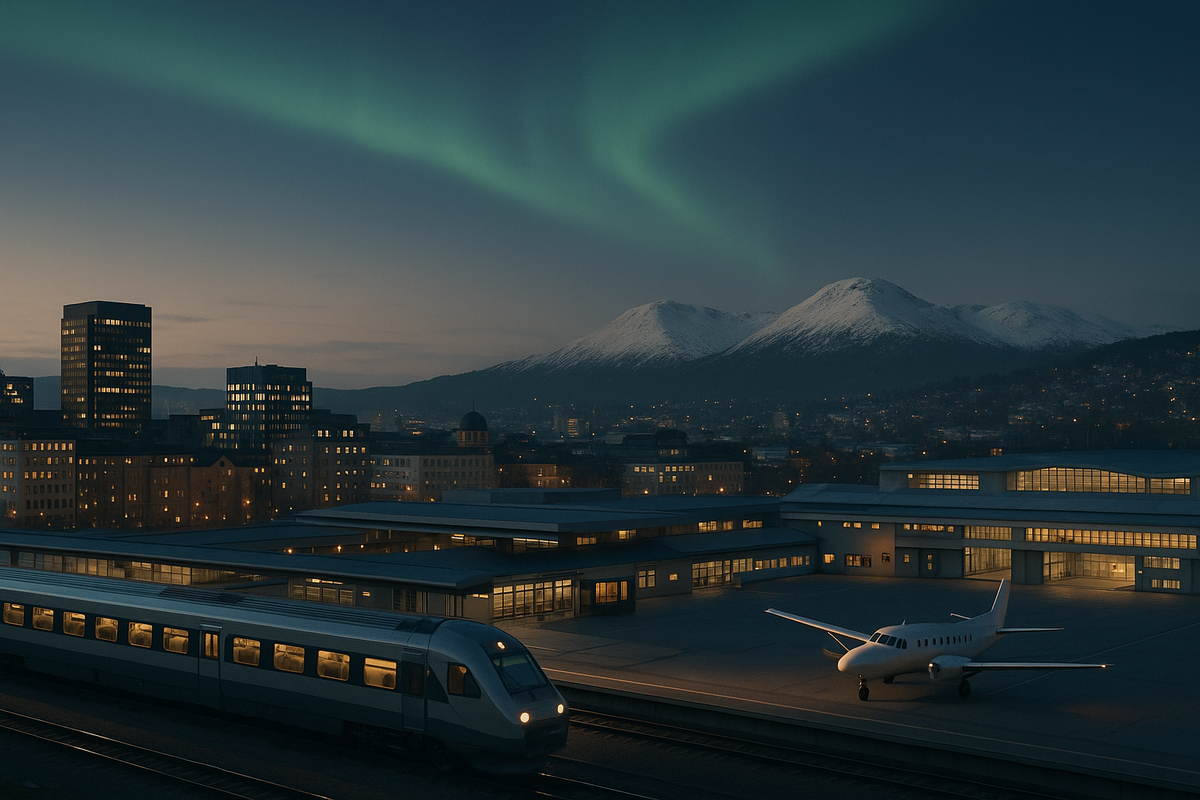
If you live in Oslo, Stockholm, Helsinki or another major city in the region, the Northern Lights are not just a holiday dream, but a very real weekend getaway. Within a night's drive, you can find yourself in Abisko, Tromsø, Lofoten or Finnish Lapland.
Below are some short itineraries and tips to help you quickly plan a 2-3 day trip, from logistics to where to look for forecasts.
🚆 Quick logistics plans
Where to go for the Northern Lights on a weekend if you’re already in Scandinavia
Swedish Lapland: Abisko and Kiruna
- Option 1: overnight train Stockholm → Abisko (Abisko Östra / Abisko Turiststation).
- Option 2: flight Stockholm → Kiruna, then transfer/train to Abisko or a lodge in Lapland.
- Format idea: leave on Friday — two nights under the lights — return Sunday/Monday.
Northern Norway: Tromsø and the Lofoten Islands
- Tromsø: direct or connecting flight Oslo/Bergen → Tromsø, evening tour outside the city.
- Bodø + Lofoten: flight Oslo → Bodø, then ferry or a short flight to the Lofoten Islands.
- Format idea: one evening in town, one day in fjords or on islands, two nights chasing the aurora.
Finnish Lapland: Rovaniemi and further north
- First step: train or flight Helsinki → Rovaniemi (the overnight train is a great way to save time and a night of accommodation).
- Then head north: Rovaniemi → Saariselkä, Levi, Ivalo, or Kilpisjärvi (train, bus, or rental car).
- Format idea: one night en route, two nights in Lapland, and you’re back home for Monday.
💶 How to optimise your weekend budget
How to save on a weekend Northern Lights trip
- Avoid peak dates. Try not to plan your trip around Christmas, New Year, and school holidays — outside these periods, flight and accommodation prices are noticeably lower.
- Check overnight trains and book early. An overnight train can replace a hotel and save travel time, while early-bird fares from low-cost airlines and rail companies are often much cheaper.
- Choose simple but smart accommodation. Apartments, hostels, and cabins near departure points are often better value than “one-night fairy-tale hotels” — especially if you’ll be out on a tour until late.
- Compare tours vs. car rental. If you’re traveling with friends, a 1–2 day car rental and самостоятельные выезды to darker areas may cost less than several organized tours per person.
🌠 Mini-guide to the aurora forecast for locals
How to follow the forecast when the North is close by
For people living in Scandinavia, the easiest way to plan aurora trips is to go “based on the forecast.” It’s important to check not only the KP index, but also cloud cover, sunset time, and the moon phase.
- Use local websites and apps. Check cloud maps and the KP index in Northern Lights apps and national weather services — this helps you spot where clear skies are expected at night.
- Watch webcams in key spots. Live cameras around Abisko, Tromsø, Rovaniemi, and other resorts can show whether the sky is active right now and how clear it looks.
- Plan a 1–2 day window. Follow the forecast in advance, but be ready to decide at the last minute: sometimes the “perfect window” for clouds and activity opens for just one night.
- Don’t forget darkness. The less city light around you (and the later you leave town), the better you’ll see even a moderately bright aurora.
🧩 Practical tips that work in any country
Regardless of where you end up going — Norway, Sweden or Finland — the basic principles of how to prepare for a trip to see the Northern Lights remain the same. It is important to allow enough nights, plan your itinerary, dress appropriately, protect your equipment from the cold, and approach the north with respect — then your chances of a successful trip will increase significantly. Below is a compact cheat sheet for planning.
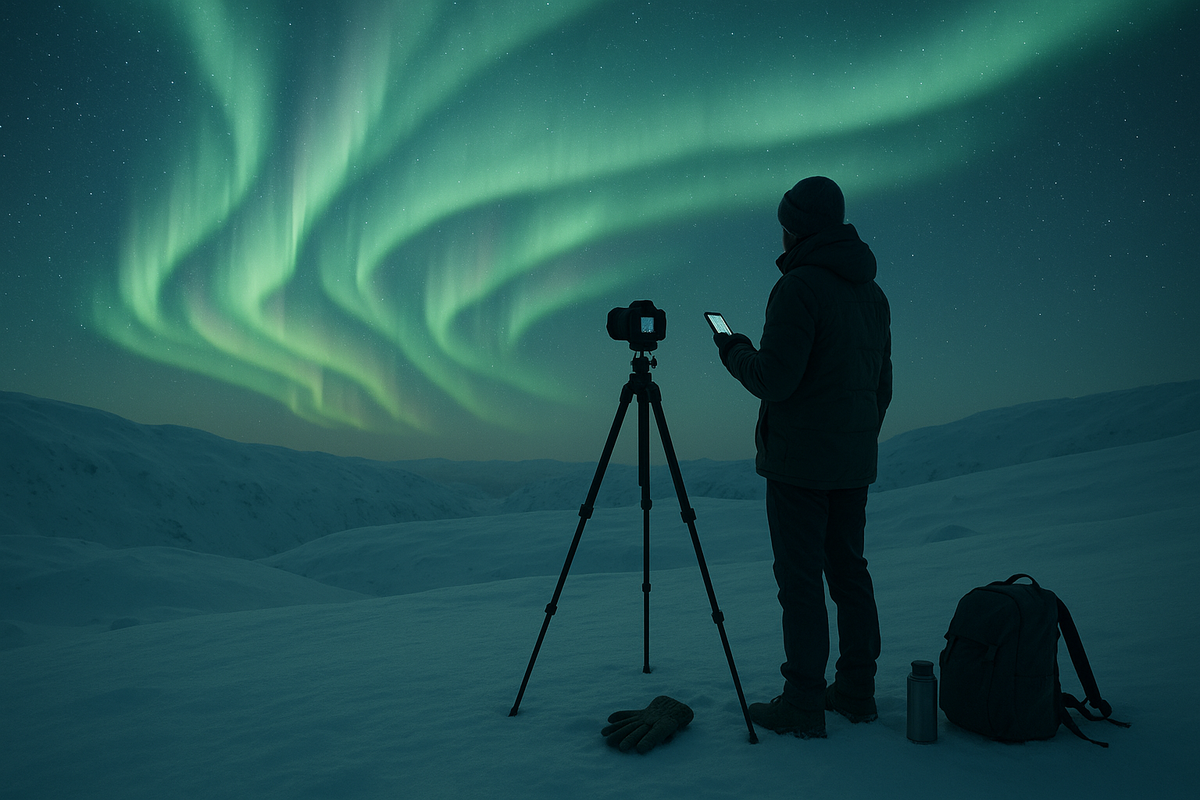
🌙 How many nights to plan for and how to build your itinerary
For a trip to see the Northern Lights, it is best to plan at least 3–5 nights in the region. One night is a gamble: the lights may not coincide with the weather, or you may simply be tired after the journey. With 3–5 nights, you have a buffer for cloudy weather, as well as the opportunity to alternate active night-time excursions with more relaxed days — dogs, snowmobiles, skiing, walks around the resort.
Sample 4–5 night plan
Getting to know the North
Arrival, check-in, a light evening tour or a nearby viewing spot to get a feel for the place, the rhythm, and the weather.
Active aurora chase
Your main outing: choose a tour or rent a car, head farther away from light pollution, and dedicate the evening to searching for the aurora.
Focus on daytime activities
During the day — huskies, snowmobiles, skiing or spa. In the evening — a short trip not far from the resort, or rest if the previous night ran late.
Buffer for the weather
Extra nights increase your chance of catching clear skies if the first nights were cloudy and let you repeat a successful shooting style or route.
🧤 Equipment and safety in cold weather
When you think about how to prepare for a trip to see the Northern Lights, the first thing to consider is clothing and safety. The nights are cold and often windy, and you spend most of your time standing still, taking photos and waiting. Layered clothing, warm non-slip footwear and basic care for your equipment will make your night-time hunt much more enjoyable and safer.
What to pack: for you and your gear
For you
- Layered clothing. A base layer (thermal underwear), a warm layer (fleece/wool), and a windproof outer layer.
- Warm boots with good grip. Winter boots, thick socks, and, if possible, ice cleats for slippery surfaces.
- Hat, scarf/buff, mittens. Thin gloves under mittens help you handle a camera or smartphone.
- Thermos and a snack. Hot tea and a small bite make waiting much more comfortable.
For your equipment
- Spare batteries. They drain faster in the cold—keep extras close to your body.
- Protection from moisture and snow. A simple cover or even a plastic bag can help protect your camera and phone.
- Lens cloth. For wiping off frost and snowflakes.
- Be careful when going indoors. Let your gear warm up inside the bag to avoid condensation.
Remember that in winter above the Arctic Circle, daylight can be very limited—or it may even be polar night. Plan when you will eat, rest, and recharge your devices between nighttime outings.
📸 How to photograph the Northern Lights
The question ‘how to photograph the Northern Lights’ arises for literally everyone: both those who travel only with a smartphone and those who own cameras. The good news is that modern phones with night mode are already capable of a lot, and a camera with simple manual settings gives even more freedom. It is important to remember that what you see with your eyes often appears paler than in photos — the camera ‘collects’ more light due to the long exposure, and this is normal.
Quick settings for photographing the Northern Lights
Exact settings depend on the brightness of the aurora and your gear, but these basic values work well as a starting point for both smartphones and cameras.
| Parameter | Smartphone | Camera |
|---|---|---|
| Mode | Night mode or Pro/Manual, if available. | Manual mode (M) or shutter priority. |
| Shutter speed | Around 1–5 seconds (depending on brightness and whether you have a tripod). | About 5–15 seconds: the brighter and faster the aurora moves, the shorter the exposure. |
| ISO | Usually 800–3200 to avoid excessive noise. | Most often 800–3200, depending on scene brightness and your sensor’s noise performance. |
| Focus | If possible, lock focus at infinity or on a bright star. | Manual focus on stars/infinity, or pre-focus in daylight on a distant object. |
| Support/tripod | A tripod or a stable support (rock, railing, wall) is highly recommended to avoid blur. | A tripod is essential; ideally use a timer or remote to avoid shaking the camera. |
If you don’t have a tripod, find a stable surface and press your phone or camera against it, then set a 2–3 second timer — this alone can noticeably improve image quality.
🤝 Ethics: respect for nature and Sámi culture
The north is not only a beautiful backdrop for photographs, but also home to people, animals and an entire culture. Many of the areas you visit to see the northern lights are traditional Sámi lands with reindeer herding and their own rules. It is important to treat them with the same respect you show to nature and people in your own country.
Ethics of Northern Lights travel
What to do
- Choose tours and guides who work with local communities and respect regional traditions.
- Ask for permission before photographing people, their homes, and private property.
- Follow marked trails and signs, especially in reindeer herding areas.
- Take your trash with you and leave the place as you found it — or cleaner.
What to avoid
- Don’t get too close to reindeer, don’t feed them, and don’t scare them with flashes or noise.
- Don’t enter private pastures or land without the owners’ permission.
- Don’t drive off roads and trails on snowmobiles or cars where it’s prohibited — it harms nature and local livelihoods.
- Don’t leave traces behind: litter, cigarette butts, damaged moss, or young trees.
🔗 Where to go next: travelling around Scandinavia
The Northern Lights are often just the first reason to visit Scandinavia. But then you'll want to return — for the fjords, the coastline, winter hygge, the cities and small coastal villages. This section is a brief guide to where to go next if you've already chosen your first country for aurora hunting and want to expand your itinerary.
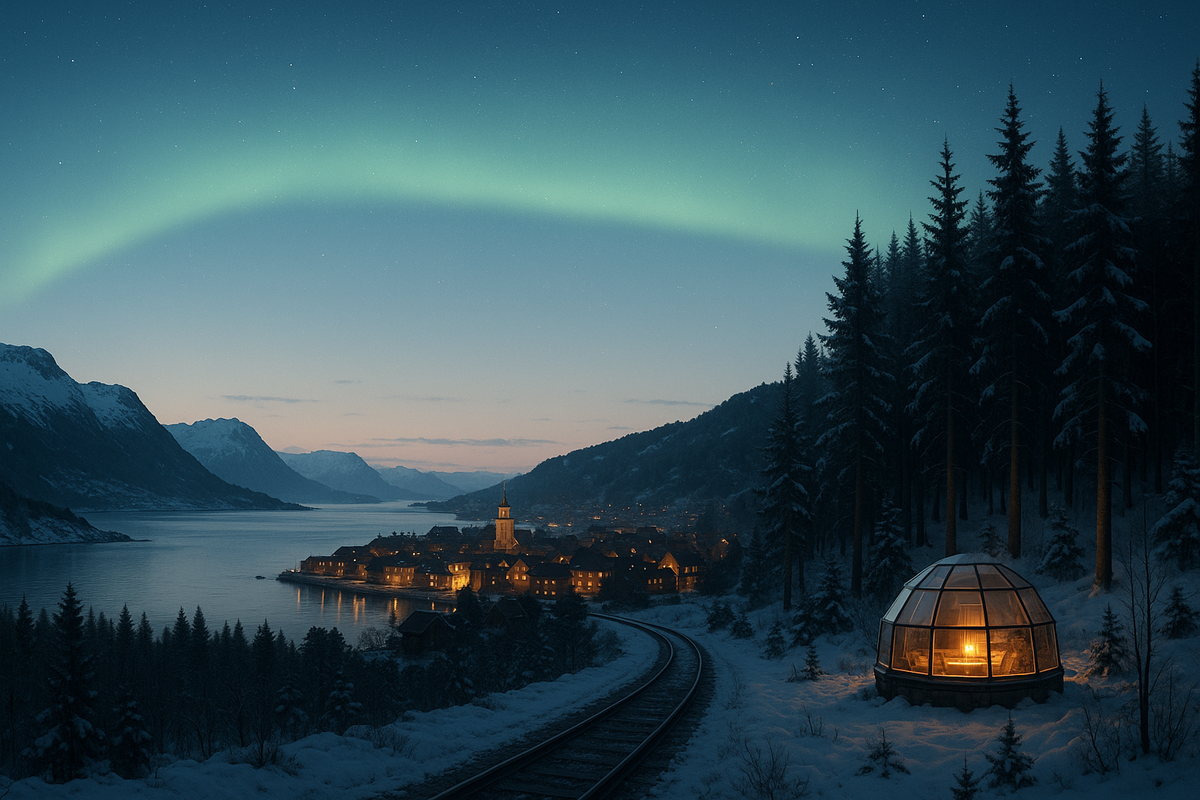
Expand your route beyond the “aurora hunt”
If the Northern Lights were your starting point, you can explore Scandinavia in different ways: through fjords and coastline, Christmas markets, or a deeper dive into Finnish Lapland. Here are three directions that are easy to add next.
Norway
Planning to continue along the fjords and coast, adding cruises, mountains and small seaside towns to your Northern Lights trip? Check our detailed guide to [Norway] — you’ll find ideas for sea routes, road trips and ways to combine them with northern cities.
Denmark
Want to spend winter holidays with cozy hygge vibes, Christmas markets and strolls along glowing streets? Explore ideas in [Denmark] — from Copenhagen to smaller towns that are easy to add to a northern route.
Finland
If Finnish Lapland and glass igloos inspired you, start with our overview of [Finland]. You’ll find routes around the resorts, winter getaway ideas and combinations of Lapland with cities and the Lake District.
There isn’t one single “perfect” country for the Northern Lights — there’s a best match for your goals, budget and travel style. What matters most isn’t guessing the “ideal spot,” but actually making it north, giving yourself a few nights under dark skies, and letting yourself fall in love with the region.
The beauty of Scandinavia is that you can return again and again: start, for example, with Finland, go to Norway next time for the fjords, and then discover the quiet of Swedish Lapland. Choose your first starting point — and the North will reveal the rest over time.

0 comments
Log in to leave a comment