



🏝 Aurora Sky Station
🔭 Aurora Sky Station — one of the best places in Sweden to see the Northern Lights
Aurora Sky Station is one of the most famous places in Sweden for watching the Northern Lights, and it is also surprisingly accessible for travelers visiting Scandinavia for the first time. The station is located near the village of Abisko in Swedish Lapland and is often listed among the best places in the world to see the Northern Lights. In winter people travel here specifically for aurora viewing, while in other seasons the Arctic landscapes and calm northern atmosphere attract visitors. The trip can be short, even just one or two nights, but it is better to plan several days to increase the chances of clear skies. It is also important to decide in advance where to stay and how to plan your route according to the season and your interests. Below is a compact guide that helps organize the journey step by step without making the trip feel overwhelming.
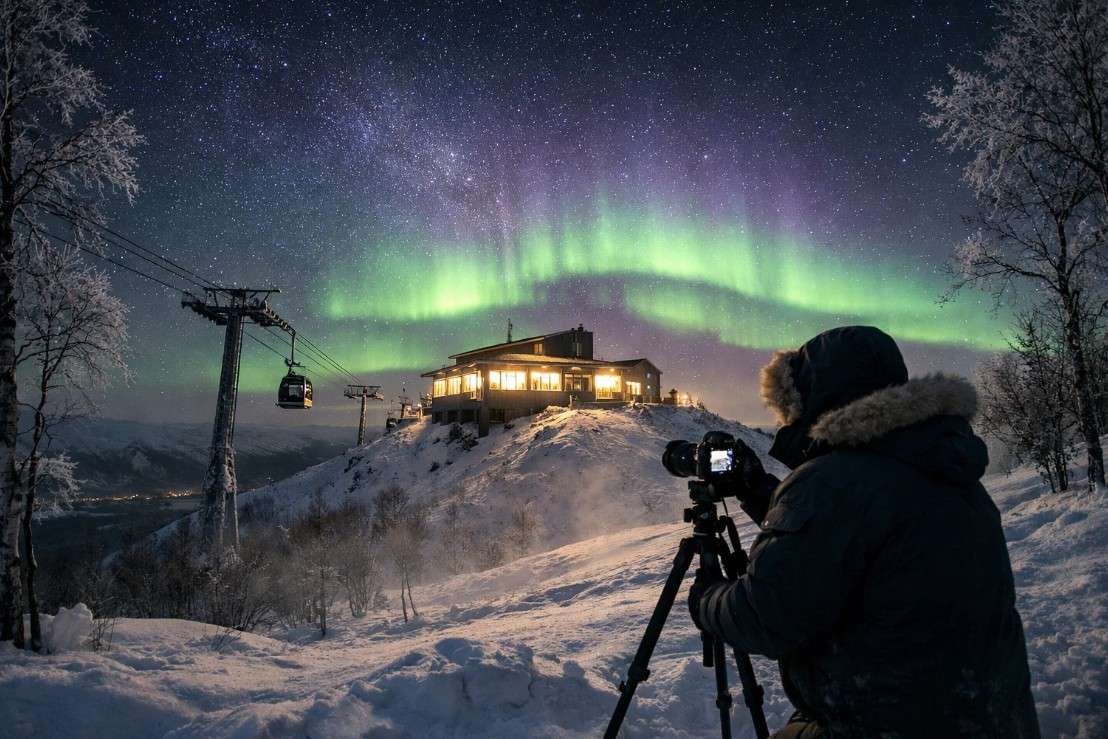
Sweden • Lapland • Northern Lights
Aurora Sky Station: a short guide for your first trip to the North
When to travel, where to stay, and how many days to plan — without unnecessary details.
✨ Where Aurora Sky Station is located and why it is special
This place is located near Abisko in northern Sweden and is often considered a gateway to Swedish Lapland. The station sits on Mount Nuolja and is famous for its observation terrace, which visitors reach by cable car. The region is known for the “Blue Hole of Abisko,” periods when the sky is often clearer than in surrounding areas. For travelers this simply means a higher chance of seeing the Northern Lights without driving long distances. Even if the aurora does not appear, the Arctic landscape and atmosphere make the visit memorable. It is also a great option for those who want a dramatic northern experience without organizing a complex expedition.
🧭 Location and the cable car experience
Aurora Sky Station is connected to the village of Abisko and the nearby national park, so most trips here are built around nature and scenic viewpoints. The cable car ride quickly brings visitors above the treeline and closer to wide open horizons. At the top you can feel the real Arctic climate, and even a short walk feels like a small adventure. The station usually offers warm indoor areas, which is especially helpful for travelers visiting the north for the first time. Conditions on the mountain can be significantly colder than below, so proper clothing and timing are important.
It is best to check the cable car schedule in advance so you do not arrive when it is closed. If you travel without a car, staying nearby can make evening logistics easier. Photographers should bring a tripod and keep camera batteries warm because cold weather drains them quickly. Strong winds can make the temperature feel even lower, so hats, scarves and warm gloves are essential. Watching the aurora is not a race but a quiet waiting experience where patience often matters more than speed.
If you are traveling with friends or family, agree on a backup plan in case of clouds. A relaxed evening walk in the national park or a cozy dinner can still make the day memorable. In general the simpler the logistics, the more enjoyable the Arctic night becomes. That is why many travelers choose Aurora Sky Station as their first place to experience the Northern Lights in Sweden. It is a destination where comfort and wild nature meet in a balanced way.
🌙 When to visit: the Northern Lights season
The Northern Lights season in Sweden is usually associated with the period when nights are dark enough and skies are relatively clear. In the Abisko region the main viewing window runs from early autumn until the beginning of spring. Autumn offers milder temperatures, while winter brings snowy landscapes and very long nights. Early spring can combine brighter daytime activities with still-dark evenings for aurora viewing. Your choice of season also affects the style of your trip, as some visitors focus on photography while others prefer combining aurora watching with winter activities. If the main goal is to see the Northern Lights, planning several nights increases your chances.
Quick overview of the Northern Lights season
- September–November: milder weather, fewer visitors, and dark skies.
- December–February: the peak of winter with long nights and lots of snow.
- March: brighter days but still good chances to see the aurora.
It is best to plan 2–3 nights because northern weather can change quickly.
🧳 How to plan your route depending on season and interests
A good trip to Aurora Sky Station starts not with tickets but with a simple question: are you traveling mainly to see the aurora or to explore Lapland with the Northern Lights as a bonus. If the aurora is your priority, it is best to minimize travel and stay close to Abisko so you can quickly go out when the sky clears. If you prefer a more varied trip, you can include Kiruna, winter tours and scenic train journeys. Travelers looking for relaxation might prefer a slower itinerary with nature walks and several nights in the same place. For first-time visitors to Scandinavia it is usually easier to focus on one region rather than trying to see everything in a few days. The best strategy is always to have a main plan and a flexible backup.
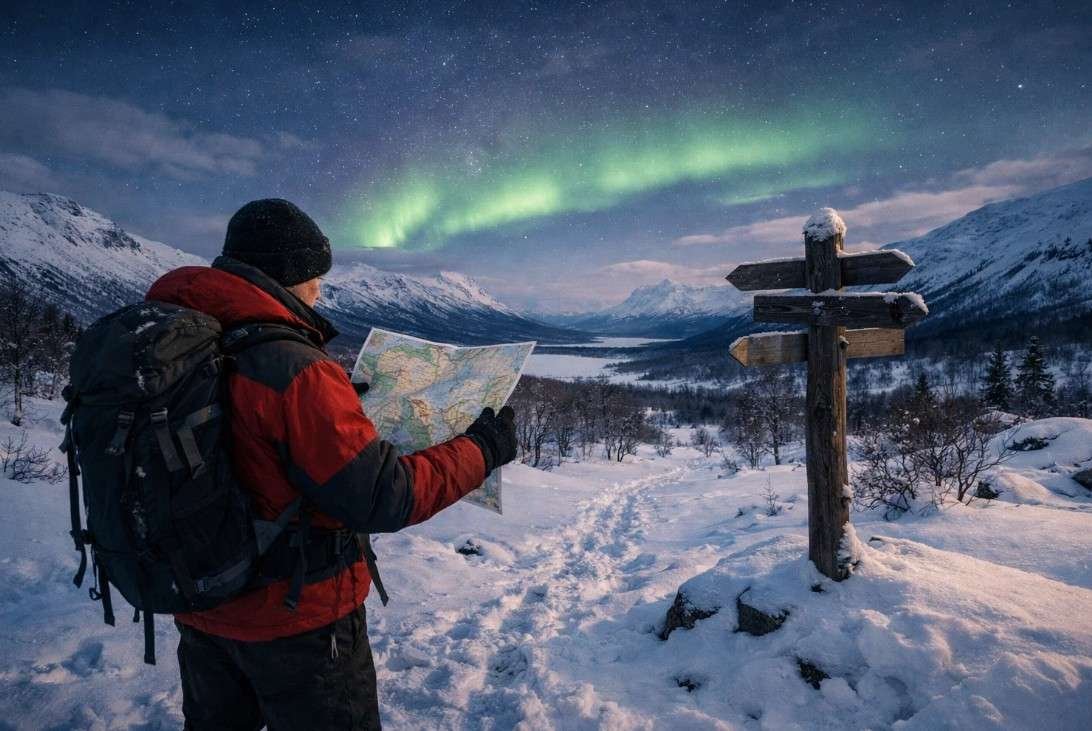
🎒 A route focused on aurora hunting
If seeing the Northern Lights is your main goal, use Abisko as your base and plan two or three nights in the area. This approach leaves evenings free for aurora viewing instead of long travel days. Daytime activities can include short hikes or visits to viewpoints in the national park. Such an itinerary works well for travelers who want to enjoy the experience calmly and possibly photograph the lights. Less travel often means more chances to catch a clear sky.
Warm clothing is essential because aurora watching involves standing still outside. Bring insulated boots, thermal layers and a warm jacket. Photographers should also bring a tripod and spare batteries. If forecasts are uncertain, choose evenings with clearer skies and keep daytime plans flexible. Sometimes skipping a long excursion is better than being too tired at night.
For newcomers to Scandinavia it is important to remember that the aurora can never be guaranteed. Plan the trip so you enjoy the destination itself, not only the result. Even within a small area the sky conditions can vary, so moving a few kilometers can help. Guided tours can also be useful because local guides know where conditions are best. In many cases the simplest itinerary turns out to be the most effective.
🏡 Where to stay: Abisko, Kiruna or a combined option
Choosing where to stay can make a big difference because long night drives in cold weather are rarely enjoyable. Abisko is convenient because it is close to both the national park and Aurora Sky Station. Kiruna offers more infrastructure such as hotels, restaurants and shops, and it is easier to reach by plane. A combined itinerary works well for travelers who want both comfort and nature, although it is best not to change accommodation too often. Many first-time visitors choose Kiruna as their travel hub and Abisko as the main place for aurora viewing. If your priority is quiet nature, staying near the national park can be a better choice. The most important factor is keeping evening logistics simple.
Abisko
Minimal travel time, close to the national park and Northern Lights viewing spots.
Kiruna
More accommodation and infrastructure, easy to reach by plane.
Combination
1–2 nights in Kiruna and 2 nights in Abisko to combine city comfort and nature.
⏳ How much time to plan: one night, 2–3 days or longer
A trip to Aurora Sky Station can be short, but fewer days mean greater dependence on the weather. One night is more like trying your luck while still enjoying Arctic scenery. The most comfortable option for many travelers is two or three days, which allows several chances to see the lights. If you want to explore more of the region, including Kiruna and nearby landscapes, four or five days works better. For a first trip to Scandinavia it is often wise not to overload the itinerary. The northern climate and travel distances can feel different from other parts of Europe. A balanced schedule helps keep the journey relaxed and memorable.
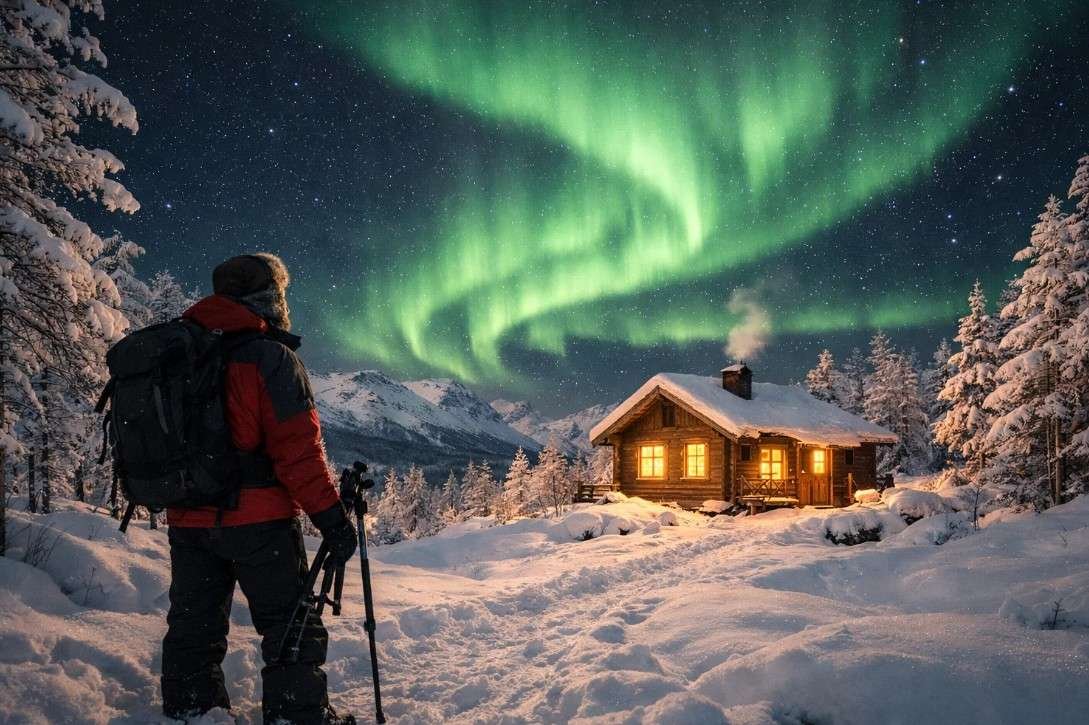
❄️ Practical tips for a first trip to northern Sweden
If this is your first visit to Scandinavia, preparation and simplicity will make the trip easier. Check cloud forecasts and aurora activity reports before heading out. Dress in layers and focus on warm shoes because cold feet are common in Arctic conditions. Plan evenings so you can quickly step outside if the sky clears. Photographers should decide in advance whether they will use a phone or camera and bring a tripod. The most important advice is to keep your schedule flexible so the trip remains enjoyable rather than stressful.
Checklist before the trip
- Plan for 2–3 nights
- Warm shoes and layered clothing
- Tripod or stable support
- Spare batteries kept close to the body
- Cloud forecast + aurora forecast
- A backup plan for cloudy nights
❓ Questions and answers
Sometimes yes, but planning two or three nights significantly increases your chances.
No, the aurora can be seen around Abisko as well, but the station provides a convenient observation point with great views.
Choose Abisko for simpler evening logistics, while Kiruna offers more infrastructure and travel connections.
December to February usually offers the longest nights, although autumn and March can also be very good.

0 comments
Log in to leave a comment