



✨ Lapland: Kiruna/Abisko
✨ Lapland: Kiruna and Abisko — Gateway to Swedish Arctic
Kiruna and Abisko are a perfect pairing for a first trip to northern Sweden. Kiruna offers comfort, transport links, and solid infrastructure, while Abisko delivers raw nature and the feeling of true Arctic space. It’s easy to combine smooth logistics with a national-park experience in one itinerary. The scenery changes fast, from forests and lakes to mountain valleys and snowy plateaus. That’s why Swedish Lapland appeals both to international visitors and to Scandinavians looking for a reset. If you’re visiting Scandinavia for the first time, the Kiruna/Abisko combo is a clear and low-stress starting point.
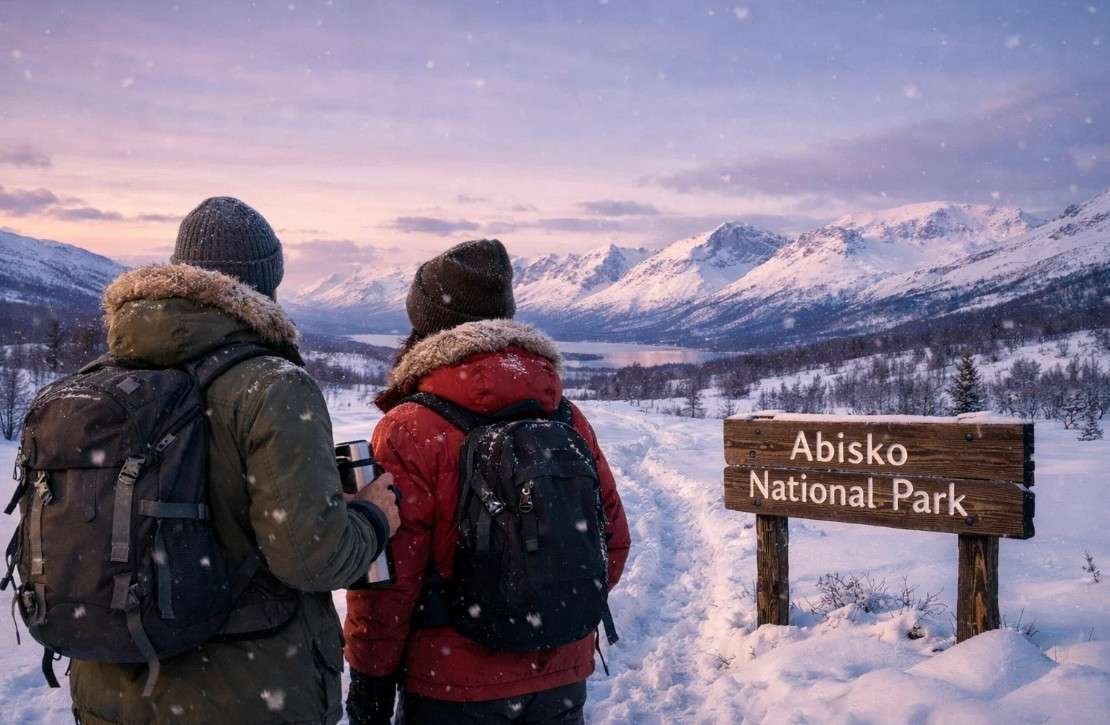
❄️ When to go: Seasons and the mood of Lapland
The best time to visit Swedish Lapland depends on what you want to feel and do. Winter brings deep snow, blue twilight, and classic Arctic magic. Spring adds longer days and makes outdoor plans easier and more flexible. Summer arrives with the midnight sun and turns Lapland into a hiking paradise. Autumn paints the landscape in gold and brings back dark nights for the first auroras. For the strongest experience, pick your season around your interests, not just the temperature.
🌙 Winter: Northern Lights and snowy adventures
Winter in northern Sweden is when Kiruna and Abisko truly shine. Kiruna is an easy starting point, with more accommodation options, tours, and transport connections. Abisko is often chosen for its skies and the chance to spot the Northern Lights on clear nights. During the day you can ski, walk through wide snowy valleys, and try classic winter activities. In the evening, the best ritual is a warm drink and a patient watch for green waves above the mountains.
In winter, it helps to plan several nights in the region rather than betting everything on one evening. The aurora depends on weather, and a single night might not work out. Two attempts are the minimum, while three or four nights feel ideal. Clothing matters: layers, warm socks, and wind protection make all the difference. Don’t overpack your days—Lapland rewards a slower rhythm. This is the season when “the real North” feels most intense.
If Scandinavia is new to you, winter can sound intimidating, but it’s comfortable with the right gear. Transport and hotels are warm, and you can keep walks short and frequent. The most memorable moments often happen without rushing, in silence on a trail or beside a frozen lake. In Abisko, step a bit away from bright lights when you watch the sky. A tripod and warm gloves for photography make the evening easier. Here, winter is not a test—it’s a format for adventure.
🧭 How to choose your route by interests
In Lapland, build your itinerary around one main desire: auroras, hiking, quiet nature, or winter fun. Kiruna works as a practical hub with tours and services, while Abisko is the pure nature escape. If you want the simplest plan, travel to Kiruna and continue by train to Abisko. It’s a very friendly region for car-free travel. Keep in mind that distances in the North feel different, especially in winter. The simpler your route, the more energy you’ll have for the experience.
🧳 First-timer route: comfort + nature
For a first visit to Swedish Lapland, avoid overcomplicating your trip with too many stops. Start in Kiruna to settle in, adjust to the climate, and sleep well after the journey. It’s also a good place to sort out gear and book an activity if you want one. Then move on to Abisko—this short, scenic train ride is part of the adventure. This order helps you transition from “practical base” to national-park calm.
A beginner-friendly approach is two bases, not five pins on a map. You’ll waste less time on check-ins and hauling luggage. If your style allows it, you can leave some items in Kiruna and travel lighter to Abisko. In Abisko, the point is to walk, watch the sky, and enjoy the silence. Keep at least half a day open with no fixed plans. Lapland feels strongest when you have time to simply be inside the landscape.
If the Northern Lights are your main goal, plan multiple nights around Abisko. Don’t chase the perfect forecast for a single evening—give yourself a time buffer. Have a simple “Plan B” for windy or snowy nights: short walks, a cozy café, and a viewpoint close to where you stay. For first-timers, the best rule is simplicity: fewer places, more attempts. That’s how Lapland becomes a real journey rather than a checklist. And that’s exactly why people come back.
- Arrive in Kiruna — check in, easy walk, gear prep.
- 1 day in Kiruna — one activity/tour, early rest.
- Transfer to Abisko — train ride, check in, evening aurora attempt.
- 1–2 days in Abisko — trails, views, weather windows for the sky.
🏡 Where to base yourself: Kiruna or Abisko
A good base makes Lapland easy, especially if Scandinavia is new to you. Kiruna is simpler for arrivals and has more accommodation choices across budgets. Abisko wins on quiet, nature, and the feeling of living inside a national park. If you want activities and services, staying in Kiruna with day trips can work well. If hiking or aurora nights are your priority, spend at least a couple of nights in Abisko. For most travelers, the best option is splitting nights between the two.
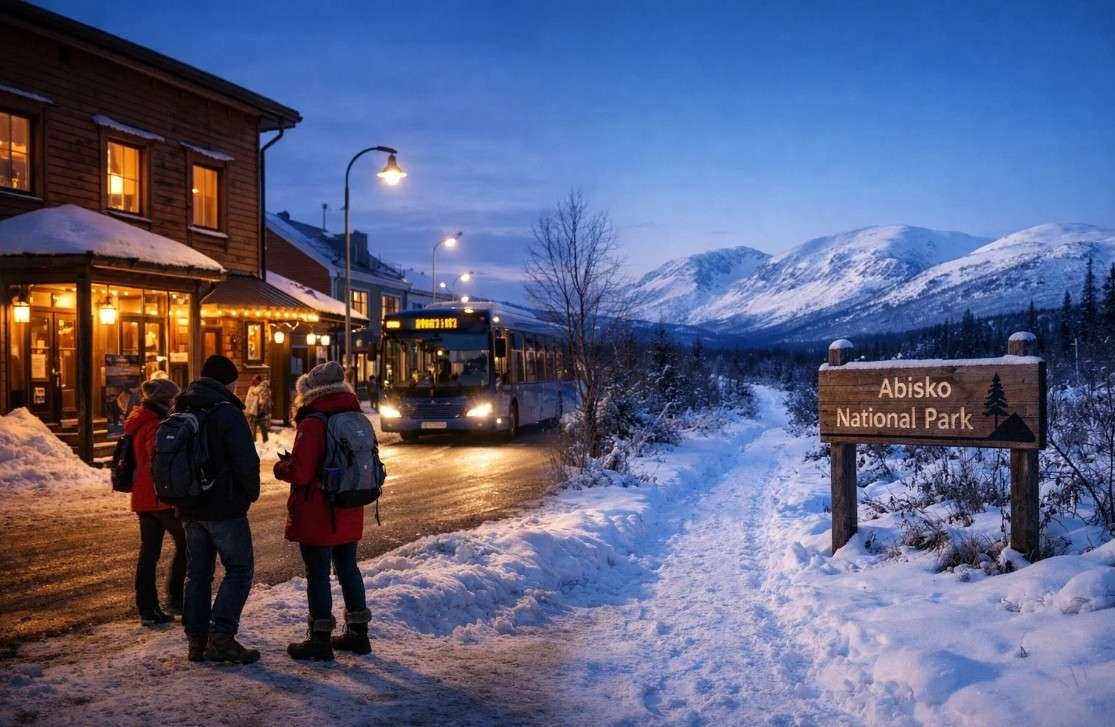
🏨 Kiruna: comfort, services, and logistics
Kiruna keeps your trip stable and beginner-friendly. It’s easier to find a hotel or apartment here, and you’ll have a solid choice of cafés and shops. The town is a common starting point for winter tours and day trips. If you’re worried about cold, gear, or complicated logistics, Kiruna is the simplest place to begin. Spending your first night here helps you settle into the North’s pace.
Another advantage is flexibility. If the weather changes suddenly, you can adjust your plans without feeling stuck. That’s especially helpful on short trips when you want to keep control of your schedule. A town base also means less daily packing and unpacking. Many travelers use Kiruna as an “anchor” and Abisko as the “emotion” of the trip. The result feels full, but not exhausting.
For Scandinavia-based residents doing a weekend escape, Kiruna is also a practical short base. You can fly or take the train, have an active day, and then move on without stress. If you’re planning ice-related experiences or winter activities, keeping it centered in town is convenient. And when you want silence, Abisko is an easy switch. This balance is one of the best things about Lapland. The key is choosing your pace rather than trying to do everything.
| Criteria | Kiruna | Abisko |
|---|---|---|
| Comfort & services | More options | Simple, more basic |
| Nature on your doorstep | Usually requires a trip | Inside the national park vibe |
| Northern Lights | Depends on conditions | Often chosen for the skies |
⏳ How much time to plan
In Lapland, it’s better not to cram your schedule—otherwise you’ll see the North mostly through a window. A short trip of 1–2 days is enough to taste the atmosphere and hit a couple of key spots. The most comfortable format is 3–4 days: you get walks, time to rest, and multiple chances for aurora nights. If you want hiking depth or full winter activities, 5–7 days is easier and calmer. Weather can shift quickly in the Arctic, so extra time often equals extra experiences. The slower you plan, the more Lapland gives back.
⌛ 3–4 days: the sweet spot for Kiruna + Abisko
Three to four days is the best balance, especially for a first Scandinavia trip. You have time not only to arrive, but to actually live the place rather than rush through it. In this format, it’s easy to do one active day in Kiruna and two days in Abisko. You’ll have at least two nights for aurora attempts. And you’ll still have room for the slow walks that often become your favorite memories.
This timing also gives you flexibility for weather. If one day is windy or snowy, your whole trip doesn’t collapse. You can move the longer hike, do a short route, and save the “big day” for later. That’s mentally comfortable when you’re new to Arctic conditions. The trip feels confident and easy, not stressful.
Another plus is simple logistics without burnout. You avoid constant moving and keep your energy for the experience. You can allow yourself a lazy morning and still see the essentials. For Scandinavia residents, it’s perfect for a long weekend. For travelers coming from farther away, it’s a smart first step before committing to a longer North route. Lapland rewards the unhurried traveler. And this time frame hits that sweet spot.
🚆 How to get to Kiruna and Abisko
Getting to northern Sweden can be part of the adventure rather than a hassle. The most atmospheric option is the train: you fall asleep in the south and wake up closer to the Arctic. A faster option is flying to Kiruna, which saves time on shorter trips. Between Kiruna and Abisko, traveling by train is easy and scenic, and it’s one of the best car-free ways to see northern landscapes. For first-time Scandinavia visitors, this kind of logistics feels calm and straightforward. Ideally, arrive with a free first evening so you can start without rushing.
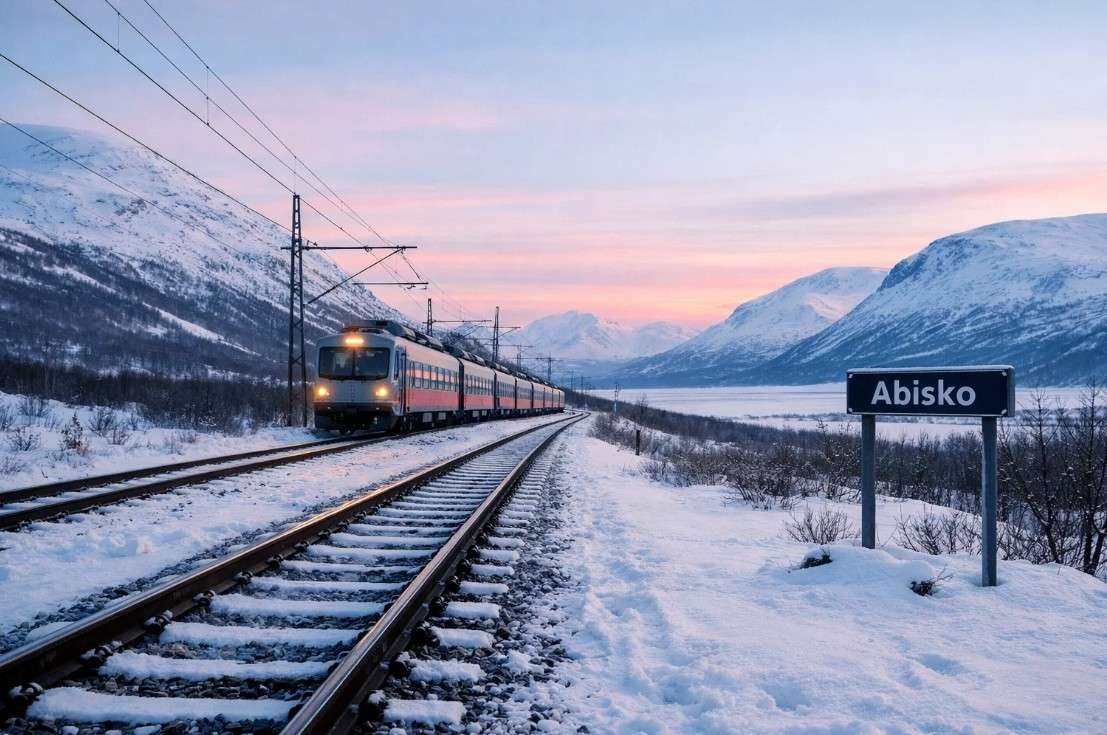
🚉 Train or flight: choosing the least tiring option
If you enjoy the journey itself, the train to northern Sweden offers a rare sense of “moving into another world.” It removes driving stress and lets you rest right away. Flights win on speed, especially when you have limited days and want more time in Abisko. Choose not only by price, but by how you handle early departures and connections. For a first visit, the simplest, most direct option often feels best. Less stress at the start means a better trip overall.
The Kiruna–Abisko link is also great because you don’t need a rental car. The train makes it easy to change your base and avoid winter driving entirely. If you’re chasing auroras, plan your transfers for daytime and keep your evenings free. That way you don’t lose the hours when the sky might suddenly “switch on.” Think about arrival times so you’re not dragging luggage around in the dark. The North rewards a calm pace.
For Scandinavia-based travelers on short breaks, flights can maximize time on the ground. Still, trains often win for mood and give you a stronger “travel story.” For beginners, the simplest rule is fewer connections, more enjoyment. Pick the route that doesn’t make you anxious or rushed. Then Kiruna and Abisko feel like part of a narrative, not a logistical puzzle. And that sets the right tone for everything that follows.
- Short trip (up to 4 days): fly to Kiruna, then take the train to Abisko.
- Atmospheric & slow: train north + one night to recover on arrival.
- Car-free: base in Kiruna and add a couple of Abisko nights for nature and skies.
🌌 Practical tips for your first Lapland trip
In Lapland, it’s not only where you go but how you prepare. Dress in layers because temperature and wind can change quickly. Plan your days with both movement and rest, especially in winter. For auroras, keep evenings flexible and avoid locking everything into a single hour. Winter daylight is short, so start daytime walks earlier and leave evenings open for sky watching. The simpler your daily routine, the more energy you’ll have for real impressions.
🧤 Clothing, daylight, and a weather “Plan B”
The main rule of northern travel is simple: preparation makes everything easier. A base layer, an insulating layer, and wind protection work better than one “super warm” jacket. Don’t forget hands and feet—warm socks, solid boots, and mittens are essential. Winter daylight is limited, so decide in advance what you want to do in the morning and midday. Keep evenings for aurora watching, but without pressure to “see it tonight.” That mindset makes the experience far more enjoyable.
Weather is part of Lapland, not an obstacle. Sometimes the best day is one hour outside and then tea while watching mountains from somewhere warm. A “Plan B” can be basic: a short route, a nearby viewpoint, a calm evening. For auroras, step away from strong artificial light and give your eyes time to adjust. Photos are easier with a tripod and a night mode, but the magic works even without a camera. Don’t turn the sky into an exam—let it be a gift.
If Scandinavia is new to you, don’t worry about “not seeing everything.” Lapland works by accumulation: the calmer you are, the stronger it feels. Often the biggest moments aren’t tours, but sudden light, silence, and space. Try to sleep earlier so you have energy for morning walks. Don’t overload every day with activities, especially if you’re moving between Kiruna and Abisko. And keep at least one evening purely for the sky and quiet. That’s what people return for.
❓ Q&A
Yes—Abisko is often chosen for clear skies and strong chances to spot auroras in season.
Ideally 3–4 days, so you have time for walks and several aurora evenings.
For comfort and services—Kiruna; for nature and quiet—Abisko; the best option is splitting nights.
No—this route works well with trains and transfers, especially if you want a calm, easy trip.

0 comments
Log in to leave a comment