



🌌 Kiruna/Abisko logistics
✨ Why travel to Kiruna and Abisko
Kiruna and Abisko are one of the most memorable routes for discovering the north of Sweden. A trip here gives you a sense of real Scandinavia: wide-open space, silence, snow, mountains, and that distinctive northern light. This route works well both for a first trip to the north and for a short but unforgettable getaway from another part of Scandinavia. In winter, people come here for the northern lights and snowy activities, while summer is ideal for hiking and the midnight sun. Kiruna is convenient as a transport base, while Abisko is valued for its nature and national park atmosphere. That is why it makes sense to see them together as one compact and logical journey.
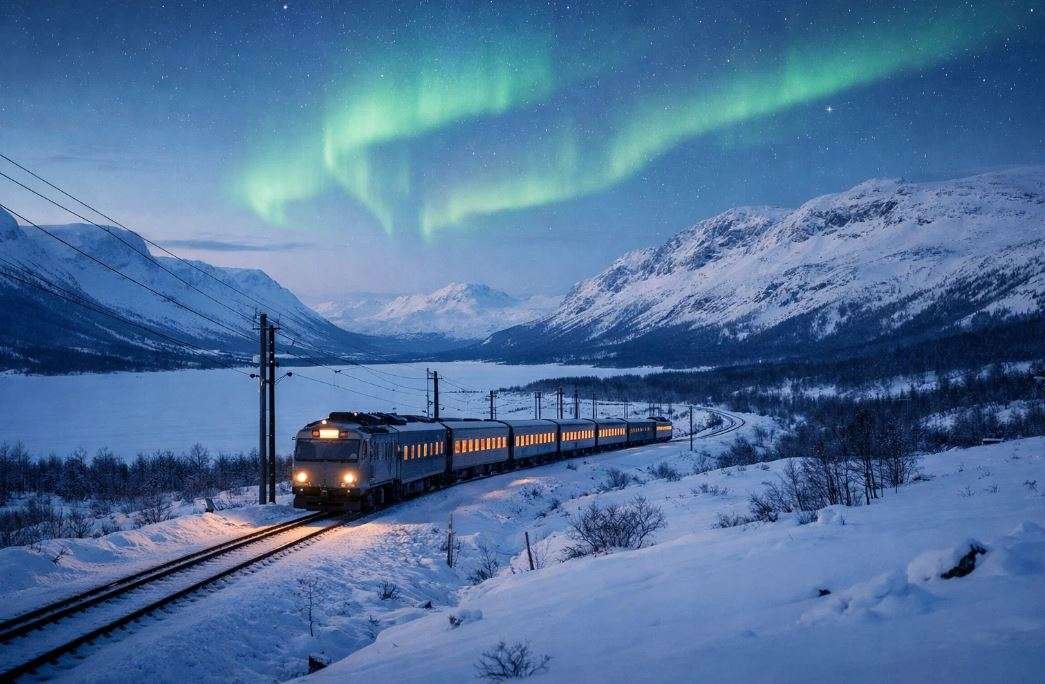
🌌 Why this route is so popular
Kiruna and Abisko have long been considered a classic northern Sweden trip. It is easy to feel the scale of Lapland here and see a very different side of the country. Many travelers choose this route for a first introduction to the Arctic without overly complicated logistics. It suits solo travelers, couples, and small families alike. Even a short trip here feels like a real adventure.
In winter, the main attraction is the northern lights and the snowy landscapes. In summer, Abisko turns into a convenient base for walks and hiking, while Kiruna remains an important transport point. For people living in Scandinavia, it is also a convenient format for a short but rewarding holiday. The route does not require overly complex planning if you understand its basic logic in advance. That is why it is especially good for a first trip north.
🧭 Where Kiruna and Abisko are located and how to connect them
Kiruna is located in the north of Sweden and serves as the region’s main transport hub for travelers. Abisko lies farther west, closer to the mountains and the Norwegian border, so the journey there already feels like part of the experience. It is easy to travel between them by train, bus, or car, and the journey itself does not feel too long. That is why many travelers do not choose one or the other, but combine both in one trip. This format lets you see both the practical side of the north and its more natural, almost protected side. For a first trip, it is one of the clearest and most successful routes in northern Scandinavia.
🚆 Distance and the real logic of the route
The distance between Kiruna and Abisko makes the combination very convenient even for a short trip. The journey usually takes around one and a half to two hours depending on the type of transport and the season. That means you do not need to spend a whole day just on getting from one place to another. The route is easy to fit even into a four- or five-day journey. This compactness is exactly what makes the destination so attractive.
Most often, the journey begins with arriving in Kiruna. It is easier to get oriented there, there are more accommodation options, and it is simpler to handle basic transport details. After one or two nights, travelers head to Abisko for nature, views, and a calmer rhythm. There is also the reverse option, where Kiruna remains mainly a transport point and the main base is moved to Abisko. In any case, the combination of these two places remains one of the most convenient in northern Sweden.
📍 Quick route logic
- Fly or arrive in Kiruna
- 1–2 nights for adjustment and excursions
- Transfer to Abisko for 2–3 nights
- Return via Kiruna or continue the journey
✈️ How to get there: plane, train, or car
Your choice of transport depends largely on your budget, your time, and the style of trip you prefer. Flying usually wins on speed and convenience, especially if the trip is short. The train offers a more atmospheric experience and helps you really feel the distances of northern Sweden. A car gives you more freedom, but it also requires confidence behind the wheel and an understanding of seasonal conditions. For a first trip, a combination of plane and train is often the best option. Once your priorities are clear, the logistics feel much easier than they seem at first.
🛫 Flying via Kiruna
A flight is the fastest way to reach the region, especially if time is limited. Most routes go via Stockholm and then continue with a domestic flight to Kiruna. This option works well for a winter trip of just a few days when you want to reduce travel time. It is also convenient for travelers coming from other parts of Scandinavia or Europe. After landing, you can continue the route almost immediately.
The advantage of flying is that it saves energy and makes the trip more predictable in terms of timing. For first-time travelers, this is often the calmest option. The downside is that it can be more expensive, and good tickets sell out quickly during high season. That is why it makes sense to look at the full chain right away: flight plus transfer or onward journey. This helps build the whole route into a smoother itinerary.
🚉 Night train and the journey north
The train to Kiruna is chosen by those who value the atmosphere of the journey and a gentler start to the trip. A night train means you do not lose a full separate day and the transfer itself becomes part of the experience. For many people, it is one of the most beautiful parts of traveling through northern Sweden. This format appeals both to tourists and to Scandinavian residents who want a calmer style of travel. It pairs especially well with a further trip onward to Abisko.
The big advantage of the train is that it lets you experience the northern route more vividly than a flight. It is a good option for a slower trip or for travelers trying to fly less. You do need to remember that the journey takes significantly longer, so for a very short break a flight is usually more practical. But for many travelers, this becomes the most memorable option. It suits people who want to feel the north already on the way there.
🚗 When it makes sense to rent a car
A car makes sense if you want flexibility and do not want to depend on timetables. It is useful for travelers planning stops along the way, photo breaks, and a wider route around the north. This option is especially attractive in summer and early autumn, when roads are easier and the days are longer. For a couple or a small group, renting a car can also make financial sense. But for a first winter trip, it is not always the best fit.
By car, it is easier to combine Kiruna, Abisko, and other points in the region in one journey. At the same time, northern weather demands caution and a calm driving style. If your main goal is a simple and easy trip without extra stress, a car is not always the best choice. Public transport between Kiruna and Abisko already works quite logically for a basic route. That is why it is best to rent a car only when you truly need that freedom.
❄️ How to choose a route by season and interests
The season affects not only the weather here, but the whole character of the journey. The very same route feels like two completely different trips in winter and in summer. That is why it is better to decide first what kind of experience you want, and only then build the logistics around it. Some travelers care most about the northern lights and snow, while others want hiking, long daylight hours, and calm walks. If you build the route around your interests, it will be not only more convenient but also much more rewarding emotionally. This is especially important for beginners, because northern Sweden reveals itself differently in every season.
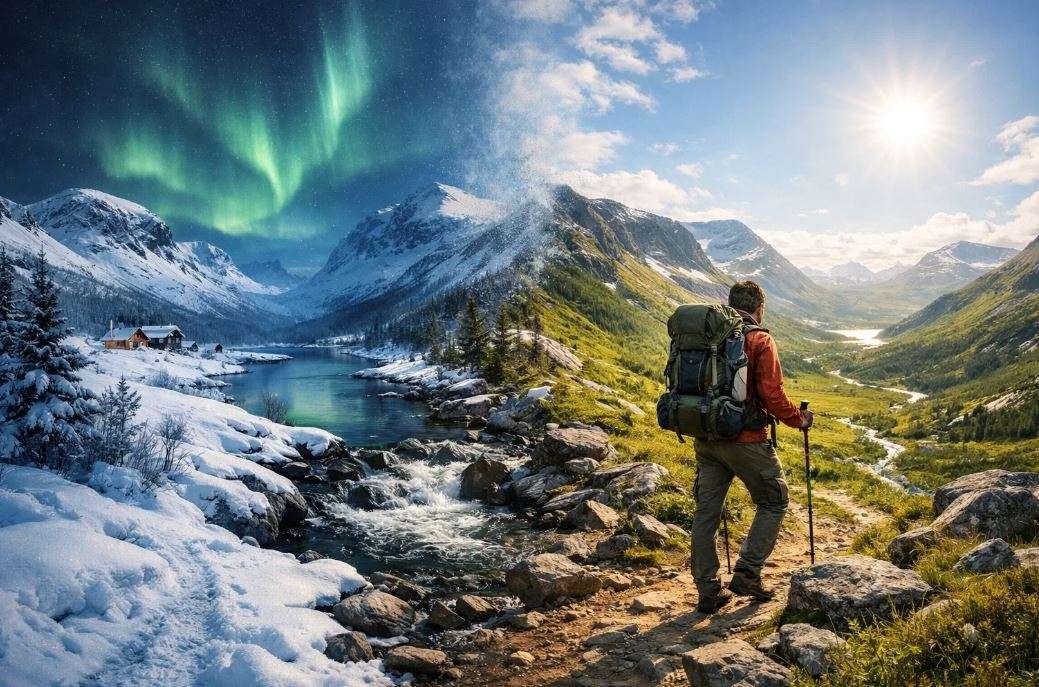
🌌 Winter: northern lights and snowy experiences
Winter is the most popular season for trips to Kiruna and Abisko. This is when people come for the northern lights, Arctic scenery, and the feeling of a true polar winter. The route suits travelers who dream of snow, frozen landscapes, and dark skies lit by green waves. In winter, Abisko is especially valued because it is often chosen for aurora borealis viewing. Kiruna, meanwhile, remains a convenient base for arrival and extra activities.
In a winter itinerary, it is important to allow a little more time for every move. It is better not to try to fit everything into two days, especially if this is your first trip. Ideally, you should divide your time between the town and the more natural part of the route. In winter, it is also especially useful to book hotels, excursions, and convenient transport in advance. This approach makes the trip calmer and more balanced.
☀️ Summer: hiking and the midnight sun
A summer route is chosen by travelers who want to see the north without extreme cold. At this time, the region becomes an excellent destination for walks, hiking, and peaceful time in nature. Abisko is especially attractive in summer because it offers access to trails, lake views, and long daylight hours. The journey feels easier, and moving between places becomes simpler. For a first introduction to the north, this is also a very strong option.
In summer, you can plan a more active route and move more freely between locations. At this time of year, Abisko often becomes the main base, while Kiruna serves as the transport gateway to the region. A summer trip does not require as much special gear as winter, but preparation still matters. If hiking is your goal, it helps to decide in advance how many days you are willing to walk and how intense you want the route to be. That will help you choose the right balance between Kiruna and Abisko.
🍂 Shoulder season: fewer people, more details to consider
The shoulder season can be very appealing for people who dislike crowds and want a quieter trip. At this time, the north looks especially atmospheric and slightly less touristy. But this is also when logistics require more attention than in winter or summer. Some services may operate on a more limited schedule, and the weather can change suddenly. That is why the route needs to be especially realistic.
The advantage of the shoulder season is that the trip often feels more intimate and calmer. At the same time, it is better not to overload the itinerary with too many transfers. It is wiser to choose a simple structure with one base and a few key activities. For a first journey, the shoulder season works only if you are comfortable with some flexibility. The main thing is to choose the route according to your interests, not only according to a beautiful picture.
Northern lights, snow activities, and atmospheric short days.
Hiking, the midnight sun, easier logistics, and long walks.
Fewer people, more flexibility, and more attention to route planning.
🏨 Where it is better to stay: Kiruna or Abisko
Your choice of base directly affects the rhythm of the whole trip. If you want convenience, more accommodation options, and an easier start, Kiruna is often the better choice. If nature, quiet, and Arctic atmosphere matter most, Abisko is more appealing. In practice, many travelers do best with a combined option using both places as bases. That makes the route both comfortable and more emotionally rewarding. For a first visit, this is often the smartest way to see the north without feeling overloaded.
🏙️ Staying in Kiruna
Kiruna is a good choice because it makes the start of the trip easier and less stressful. The town is convenient after a flight or train arrival, when you want to breathe out and settle into the trip calmly. It is usually easier to find more accommodation options and services here. This is helpful for travelers who do not want to head straight into the more remote nature part of the route. For the first one or two nights, this is often the most comfortable choice.
Kiruna also works well for travelers who want to combine nature with more urban logistics. From here, it is easy to arrange excursions and gradually move farther west. If the trip is short, it can even make sense not to change accommodation too often. But if your main goal is nature and the northern lights, staying only in town may not be enough. The choice depends on what you want most from the trip.
🌄 Staying in Abisko
People choose Abisko for its sense of space, silence, and closeness to nature. Here, the trip becomes slower, more contemplative, and very northern in mood. It is a great place for travelers who want to wake up near the mountains, step onto the trails, and spend less time in an urban setting. In winter, Abisko often becomes the main point of the route for northern lights viewing. In summer, it is especially good as a base for walks and hiking.
Staying in Abisko gives you a deeper immersion into the natural side of the region. But there is also a trade-off: there is less infrastructure here than in Kiruna. That is why it is important to book accommodation in advance and think through the transport before and after check-in. If your goal is to minimize transfers and spend several rich days in nature, Abisko is an excellent choice. But if you want a softer start, it is better to stay in Kiruna first.
🔄 A combined option
A combined setup usually works better than either extreme. It allows you to use Kiruna as a comfortable starting point and Abisko as the emotional highlight of the trip. With this approach, the journey develops naturally and does not feel too abrupt. First you deal with transport and practical matters, then you shift into the nature part of the trip. That is why this format is especially good for a first visit.
Usually, one or two nights in Kiruna and two or three nights in Abisko are enough. This balance is especially convenient in winter, when you want to give yourself more chances for good weather and a calmer pace. It also helps protect the trip from timetable changes or weather issues. Once you are already in Abisko, you can focus completely on nature and the experience itself. For many people, this is the most universal and practical format.
⏳ How many days to allow for the trip
It is better to decide the length of the trip not by looking at the map, but by thinking about how you want to experience the route. On paper, Kiruna and Abisko may seem close, but the north rewards a slower pace and a little extra time. If the schedule is too tight, the trip can easily turn into nothing more than a series of transfers. It is far more pleasant to leave space for the weather, for rest, and for spontaneous moments. Even a short trip becomes better when you do not try to fit in too much. For a first visit, it is especially important to choose a realistic rather than a maximum version of the route.
📅 Minimum, ideal, and comfortable trip length
A minimum option is two or three days, but that works only for travelers who are ready for a very compact plan. This format usually revolves around one main goal, such as seeing the northern lights or having a short introduction to Abisko. In this case, the logistics need to be very clear, with no long pauses and no random decisions. It can work for a weekend or a quick getaway from another part of Scandinavia. But for a first visit, it may still feel a little too fast.
Most often, four or five days is considered the ideal length. That gives you time to arrive calmly, spend time both in Kiruna and Abisko, and leave some margin for seasonal details. A comfortable trip lasts five to seven days, especially if you enjoy more active plans or want to be less dependent on the weather. Even without a full week, you can put together a very successful route if you do not overload it. The main thing is to leave room not only for travel time, but for the actual feeling of being in the north.
🕒 How many days to choose
For a quick route with one main goal
The best balance for a first trip
A calmer format with room for weather and activities
🎒 Practical logistics tips
A good trip north almost always starts with a few simple decisions made in advance. Here, it helps to look at the route not only romantically but also practically. It is important to think about the season, transport timetables, arrival times, and how ready you are for weather changes. The farther north you go, the more valuable extra time and a calm rhythm become. At the same time, the logistics do not have to be difficult if you do not try to build an overloaded itinerary. A few basic rules can make the whole trip much easier.
🧤 What helps avoid unnecessary stress
The first rule is to book key elements in advance, especially in winter. That includes accommodation, night trains, flights, and popular activities. In the north, good options are not unlimited, and that becomes especially noticeable during high season. Once the foundation of the trip is already in place, everything else feels much calmer. For a first trip, this gives a very important sense of reliability.
The second rule is not to make your connections too tight. Even if everything looks compact on the map, it is better to leave time for transfers and adjustment. Comfortable clothing and footwear also matter, as does understanding how much time you will spend outdoors. Before departure, it is worth checking confirmations, schedules, and the basic transfer plan once again. This makes the route calmer and helps avoid overloading yourself on the spot.
📱 What else is worth keeping in mind
It is also worth deciding in advance what rhythm of travel suits you best. Some people want a route full of activities every day, while others are happy with one main excursion and the rest of the time left for walking. Both approaches are good if they match your real energy and expectations. In the north, it is usually better to under-plan a little than to overload yourself. That makes the trip feel lighter and freer.
And finally, it helps to leave some room in the itinerary for the weather and for the mood of the trip itself. Sometimes the best evening happens not because it was strictly planned, but simply because you were not in a rush. Northern Sweden reveals itself especially well in a calm rhythm. That is why logistics here are needed not for rigid control, but for freedom within a clear structure. That is what makes a Kiruna and Abisko trip genuinely enjoyable.
✅ Conclusion: how to build the ideal route for a first trip
The best Kiruna and Abisko route is not the longest one, but the one that matches your season and interests most logically. First, it is worth deciding why you are going: for the northern lights, winter experiences, hiking, or simply for the northern atmosphere. After that, it becomes easier to choose the transport, the base, and the trip length. For a first visit, a simple setup without too many transfers usually works best. Kiruna gives you an easy gateway into the region, while Abisko provides that strong natural highlight that draws so many people here in the first place. If you build the route calmly and realistically, northern Sweden will be remembered not for complications, but for the feeling of a big and beautiful journey.
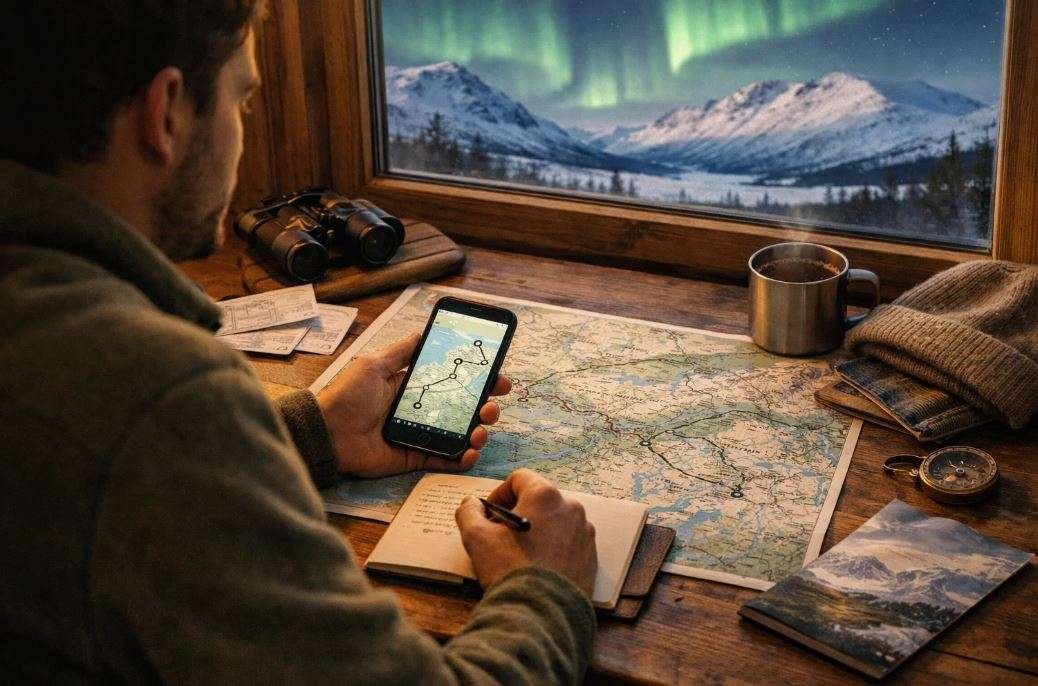
🧩 A universal setup for beginners
If this is your first trip to northern Sweden, it is better to choose a clear and not overloaded format. The most convenient scenario is to fly or arrive in Kiruna, spend a short time there, and then continue to Abisko. This route does not require overly complicated coordination while still feeling rich enough. It works well both in winter and in summer if you adjust the focus slightly to the season. That is why this option so often turns out to be the most successful for beginners.
In winter, it makes sense to focus on a calm pace and extra time for the weather, while in summer the emphasis can be on nature and long walks. But in both cases, the same logic works: do not try to see everything at once. It is better to choose a few strong experiences and enjoy them without rushing. If time is short, focus on one main impression, and if you have more time, combine Kiruna and Abisko in one route with two bases. This approach may look simple, but it is exactly what works best in the north.
✔️ Short checklist before the trip
- Choose the season according to your interests
- Decide what matters more: speed, atmosphere, or freedom
- Choose your base: Kiruna, Abisko, or both
- Allow a realistic number of days
- Leave some margin for time and weather
❓ Questions and answers
The easiest way is usually to fly via Stockholm if speed matters and the trip is short.
Yes, it is easy to do by train or other public transport.
For a first visit, it is usually most convenient to combine Kiruna and Abisko in one journey.
The best balance for a first trip is usually around four or five days.
The most popular period is the winter season, when the nights are long and dark.
Yes, in summer it is excellent for hiking, walking, and discovering northern nature.
Only if you want maximum freedom and feel confident on northern roads.
It is ideal for people who want to see northern Sweden for the first time without overly complicated logistics.

0 comments
Log in to leave a comment