



✨ Discounts & classes
🚆 Why It’s Worth Traveling Around Sweden by Train
Trains in Sweden make it possible to see the country in a calm, comfortable, and hassle-free way. This format works well both for tourists planning their first trip to Scandinavia and for people already living in the region who want an easy weekend getaway. Rail connections between major cities are well organized, so it is easy to combine several destinations in one journey. Traveling by train lets you enjoy the scenery without worrying about the road, parking, or car rental. It is especially pleasant to travel between Stockholm, Gothenburg, Malmö, and the northern regions, where the views themselves become part of the experience. If you want to travel around Sweden affordably and comfortably, the train is often one of the most practical options.
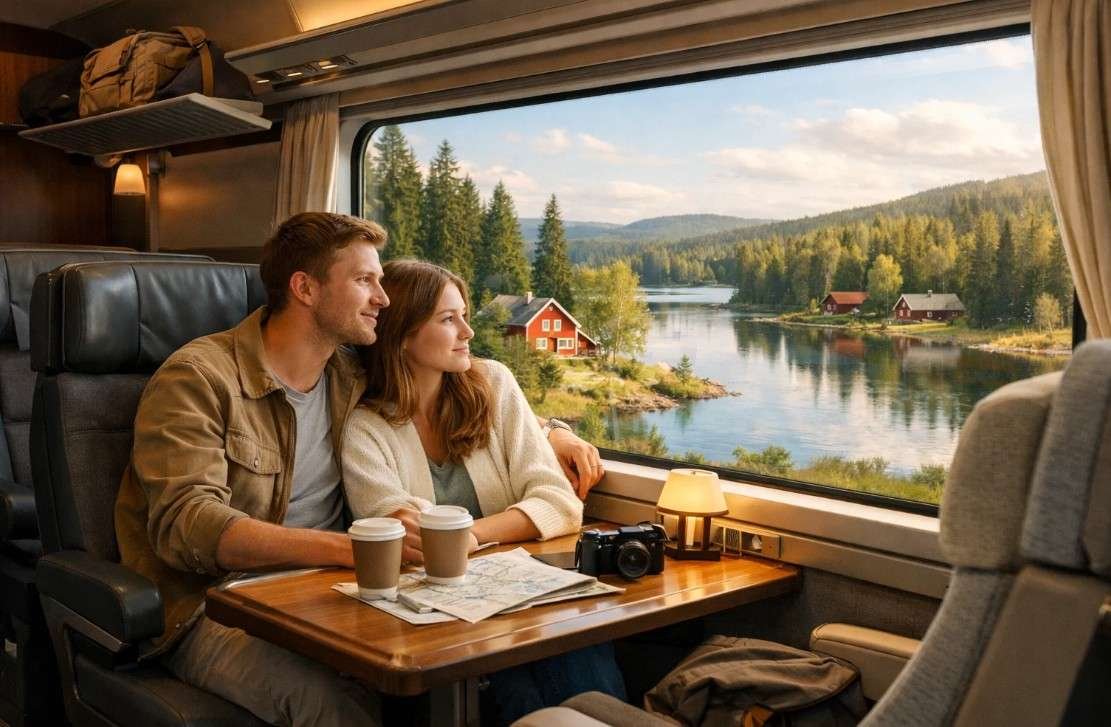
🌿 Who This Type of Trip Is Best For
Traveling by train in Sweden is convenient for people who value predictability and comfort. You do not need to understand complicated roads, search for parking in the city center, or monitor changing road conditions. This is especially important in winter, when conditions in the north can shift quickly. A train helps you get from city to city without extra stress. For a first trip to Scandinavia, this is a very clear and relaxed format.
This way of traveling suits couples, families, solo travelers, and residents of Scandinavia who want a short change of scenery. During the day, you can travel between cities, and by evening, already be walking around somewhere new. Train trips are easy to combine with museums, waterfront walks, food stops, and nature routes. Many people choose trains precisely because they save energy. This becomes especially noticeable on a busy 3–5 day itinerary.
Another advantage is flexibility across seasons and interests. In summer, you can build a route through southern Sweden and coastal cities. In autumn and winter, trips to central and northern regions feel especially atmospheric. In spring, it is easy to discover cities with short transfers and a softer pace. That is why trains in Sweden work both for a short break and for a full journey across the country.
🎟️ Train Classes in Sweden: What’s the Difference
Choosing a train class in Sweden affects not only the ticket price but also your overall travel experience. For short routes, many travelers are perfectly fine with a basic level of comfort, while on longer journeys, more space and quiet can matter a lot. That is why it helps to understand the difference between first class and second class before booking. If this is your first trip, it is useful to consider journey length, time of day, and your personal habits on the road. Some people care most about Wi-Fi and power outlets, while others value a quiet atmosphere and fewer nearby passengers. The right class choice helps you travel around Sweden affordably without feeling that you paid too much or saved too much at the expense of comfort.
💺 Second Class: A Practical Option for Most Travelers
Second class on Swedish trains is usually the most popular choice for tourists and for people who often travel between cities. It offers a good balance between price and comfort. These carriages usually have comfortable seats, space for luggage, and a calm atmosphere. For a journey of several hours, this is more than enough. That is why second class is considered the most versatile option.
If you are planning a trip on the Stockholm–Gothenburg route, Stockholm–Malmö, or journeys across southern Sweden, second class is often the best solution. It becomes especially attractive with early booking, when prices are noticeably lower. It is also a convenient choice for family trips and routes with several stops. You can save money on tickets and use that budget for accommodation, museums, or food. For a first introduction to Swedish train travel, this class is an excellent fit.
When choosing second class, it helps to look not only at the price but also at the route length. If the trip lasts 2–4 hours, the difference from first class may not feel significant for many travelers. If the journey is longer, it is worth thinking about your own comfort in advance. It is also useful to reserve seats early if a window seat or a quieter area matters to you. This approach makes even budget-friendly travel in Scandinavia comfortable and enjoyable.
✨ First Class: More Space and More Calm
First class suits those who want a more comfortable trip and prefer a quieter atmosphere. These carriages usually offer more personal space and less general noise. This is useful for business trips, long routes, and winter travel, when you want the journey itself to feel especially relaxing. For some travelers, this format is particularly valuable on northern routes. There, the travel times are longer, and comfort is felt more clearly.
First class can be a good choice if you are building a 5–7 day itinerary around Sweden and planning several intercity train journeys. In that case, the extra comfort pays off in how you feel during the trip. This option is often chosen by couples, older travelers, and people who want to work quietly while traveling. If quiet, space, and a smoother-feeling journey matter to you, this class is worth considering. It becomes especially noticeable on routes to northern Sweden.
Still, first class is not always necessary. On short routes, the difference may feel less important than on longer ones. That is why it helps to look at journey time, season, and personal priorities before booking. If the trip is short, second class may be the smarter option without overspending. If the route is long and intense, first class can make your trip around Sweden feel lighter and more comfortable.
💸 What Discounts Can You Get on Tickets
Train discounts in Sweden are one of the best ways to make travel much more affordable. Even on popular routes, good prices can often be found if you book early and stay flexible with your schedule. Many travelers overpay simply because they buy too late or do not check the available offers. It is important to compare not only dates but also departure times, since early or less busy departures are often cheaper. For both Scandinavian residents and tourists, it is useful to know which types of discounts appear most often. This approach helps you plan your budget better and travel around Sweden without unnecessary extra costs.
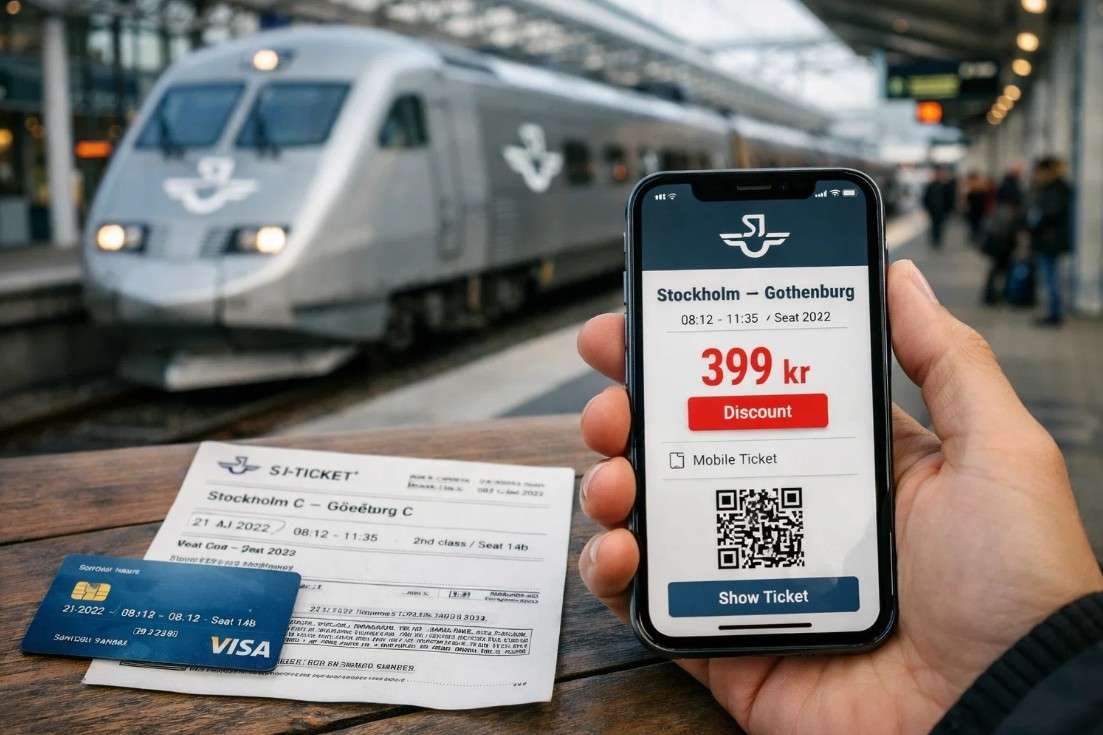
📅 Early Booking and Flexible Travel Dates
The biggest ticket discounts in Sweden usually appear when you book early. The earlier you choose your train, the better your chances of finding a lower fare. This is especially important on popular routes between Stockholm, Gothenburg, and Malmö. During holiday periods and summer, the best prices disappear faster. That is why it is better to look for tickets well in advance rather than the day before departure.
Flexibility with time also helps save money. Sometimes a difference of just one or two hours gives you a much better price without reducing comfort. If you are not tied to a strict schedule, you can often find a more affordable departure. This is especially useful for weekend travel and short train trips in Sweden. It is one of the simplest and most effective ways to get cheap train tickets.
When planning a trip around Scandinavia, it helps to check several nearby dates right away. That makes it easier to see the full pricing picture. Sometimes a weekday trip is noticeably cheaper than one on Friday or Sunday. This is especially relevant during high season and school holidays. Even a small amount of date flexibility can significantly reduce the total cost of your journey.
👨👩👧👦 Youth, Family, and Seasonal Offers
Discounts often depend not only on when you book but also on the passenger category. Young travelers, students, and families often get more favorable options. For people living in Scandinavia, this is a practical way to travel more often, and for tourists, it is a chance to stay within a comfortable budget. It is especially useful to check available offers before major holidays and the summer season. These are often the periods when promotional fares are the most attractive.
Family train trips around Sweden are easier to plan in advance because seat choice and fare type directly affect the total cost. If you are traveling with children, it helps to consider not only price but also departure time, route length, and number of transfers. The simpler the logistics, the more comfortable the whole trip will be. Sometimes it makes more sense to pay a little extra for a direct train than to save money on a less convenient route. This is especially important for a first trip around Scandinavia.
Seasonal offers work especially well for travelers choosing a route based on their interests and the time of year. In summer, it is convenient to plan trips around the south and between the major cities. In autumn, city routes can be combined with nature-focused journeys. In winter, northern Sweden becomes more appealing, where the journey itself turns into part of the experience. That is why it makes sense to think about discounts and seasonality together rather than separately.
🧭 How to Choose a Route by Season and Interests
A route around Sweden should be chosen not only by looking at the map but also by considering the time of year, your travel pace, and your personal interests. The same region can feel completely different in summer, autumn, or winter. If you want more city experiences, southern and central routes with shorter journeys are a good match. If nature is the priority, northern Sweden and longer rail routes offer a very different kind of trip. For a first visit, it is especially helpful not to overload the itinerary and to keep the logistics simple. The better your route matches the season and your expectations, the more vivid and relaxed your Scandinavian journey will feel.
☀️ Summer and Shoulder-Season Routes
In summer, it is easy to build a route between Stockholm, Gothenburg, and Malmö. The journeys between these cities fit well into a short 3–5 day trip. You can combine city walks, museums, cafés, waterfront areas, and day trips. This format is especially good for people visiting Sweden for the first time. It helps you see different sides of the country without spending too much time on the train.
In spring and autumn, it is pleasant to choose a route with a moderate pace. At that time, there is less rush, and the cities feel calmer and more atmospheric. The shoulder seasons are great for travelers who enjoy architecture, food, and relaxed journeys. You can choose one city as a base and take train trips to nearby destinations. This is a comfortable way to travel without overloading your schedule.
For Scandinavian residents, summer and shoulder-season routes also work well because they are easy to turn into a weekend trip. You do not need a long holiday to get new impressions. It is enough to choose one city as a base and add one or two extra stops. This approach saves both energy and money. At the same time, the journey still feels full and rewarding.
❄️ Winter and Northern Routes
In winter, routes to northern Sweden become especially memorable. This type of journey suits travelers who want to see a different rhythm of the country, more nature, and the feeling of the true Scandinavian north. It is a good choice for those drawn to snowy landscapes, quiet surroundings, and an unusual atmosphere. The journey itself becomes part of the adventure. That is why it is especially important on these routes to think carefully about train class and total travel time.
If you are heading north for the first time in winter, it is better not to try to cover too many places in one trip. It makes more sense to choose one northern region and stay there for several days. That way, the trip feels complete rather than tiring. This matters especially for travelers who want to experience Scandinavia without rushing. Northern routes reveal themselves best in a slower format.
When choosing a winter route, it is useful to think in advance about your interests. Some travelers care more about nature and silence, while others want a mix of urban comfort and short excursions. That affects where you should stay and how much time to set aside. If you simply want a first taste of the north, 3–4 days may be enough. If you want to experience it more deeply, it is better to plan at least 5–7 days.
🏙️ Where to Base Yourself During the Trip
Your choice of base has a strong effect on how comfortable and logical your whole Sweden itinerary will feel. For a first trip, it is usually better to choose a city from which you can make short outings without changing accommodation too often. This approach makes the journey calmer and helps you feel the rhythm of the country better. Your base city should be chosen according to the season, your interests, and the total length of the trip. Some travelers care more about museums and city life, while others want convenient access to nature routes. If the base is chosen well, even a compact trip through Scandinavia can feel rich and thoughtfully planned.
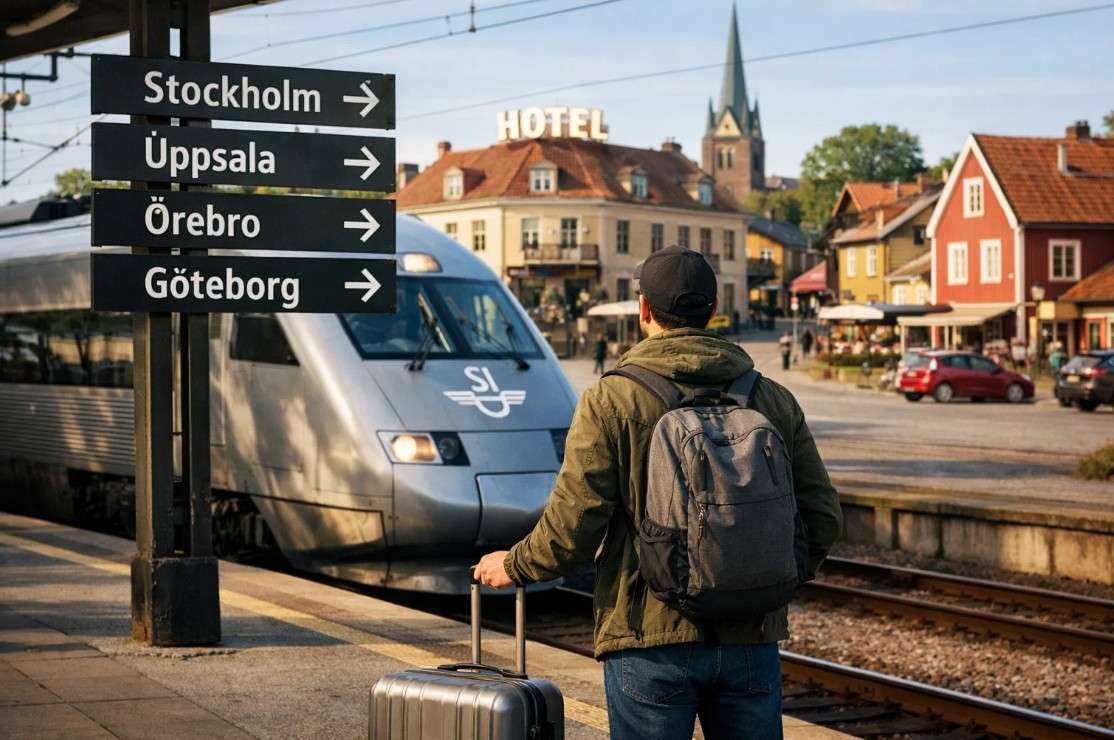
🌆 Stockholm as the Most Versatile Base
Stockholm is one of the most convenient choices for a first trip to Sweden. It is easy to combine time in the city itself with short journeys to other places. The city works well for travelers who want to see classic urban Sweden with water, islands, museums, and a lively atmosphere. It is also a very natural place to begin a countrywide itinerary. For many travelers, it is the clearest and easiest starting point.
If you have 3–5 days, Stockholm can become your main base with one more city added to the route. This format works especially well in spring, summer, and early autumn. You do not spend too much energy constantly moving between hotels, yet you still get to see more than one destination. It helps keep a good balance between exploration and rest. For a first trip around Scandinavia, this is a very comfortable option.
Stockholm is also a strong choice because it offers flexibility in both budget and travel pace. You can build a busy cultural itinerary or leave more time for walks and calmer neighborhoods. It is a base that works for both a short break and a longer journey. If you are still unsure which region to choose, starting with Stockholm is especially sensible. It helps you settle into the rhythm of traveling in Sweden with ease.
🌊 Gothenburg, Malmö, and Other Convenient Bases
Gothenburg suits travelers who enjoy a calmer urban pace and want to combine city impressions with trips around the western part of the country. It works especially well for short weekend escapes and itineraries lasting a few days. It is easy to build a trip here without feeling overloaded. The city appeals to people who value coziness, food, and a more relaxed atmosphere. It is a strong alternative to the more obvious routes.
Malmö is a good base for travelers who want to explore southern Sweden and feel the closeness of the rest of Scandinavia. This option works especially well in summer and in the warmer shoulder seasons. Routes from here are often easy to plan and do not require long travel times. That is a major plus for a compact trip. This city suits those who want to travel calmly and without complicated logistics.
If you are interested in the north of the country, it is better to stay closer to your chosen region rather than trying to combine it with southern Sweden in one short trip. The north opens up better when you have time to stay in one place. This is especially important in winter and on 4–7 day itineraries. In that format, the trip feels deep rather than rushed. That is why your base should not only be convenient but also match the overall idea of the journey.
⏳ How Much Time to Set Aside for the Trip
The length of your trip is best determined not by the number of cities but by the pace that truly feels comfortable to you. For a first trip to Sweden, it is important not to try to fit too much into a short amount of time. Even two cities can leave a great impression if the route does not turn into a constant rush. Timing also depends on the season, your interests, and the length of the train journeys themselves. Some people are happy with an active weekend, while others want a full week-long itinerary. Well-planned timing makes a Scandinavian trip feel inspiring rather than exhausting.
🗓️ A Short Trip of 1–3 Days
If you only have a few days, it is best to choose one city and at most one additional destination. This format works especially well for Scandinavian residents and for tourists who want to get to know Sweden without taking a long holiday. You will have time to arrive, walk around, see the main sights, and avoid feeling tired from the journey. It is an ideal option for a first test trip. It helps you understand what pace suits you best.
For 1–2 days, it makes sense to focus on direct and shorter rail journeys. The fewer transfers, the better the whole trip will feel. This is especially important in winter and on a busy weekend schedule. Such a route does not require complicated preparation, yet it still gives vivid impressions. Short journeys often become the best beginning for longer trips later on.
A 3-day format already gives you more freedom. You can combine one base city with another destination without making the route too intense. It is important to leave time not only for travel but also for rest, food, walks, and a slower introduction to the place. Then the trip will be remembered not only for the sights but also for the overall atmosphere. For a first journey in Sweden, this is a very successful option.
🧳 A Route of 4–7 Days and More
If you have 4–5 days, you can create a more complete itinerary with two or three stops. This format is especially convenient for traveling around southern and central Sweden. The train journeys will not feel too tiring, while the number of impressions increases noticeably. It is a good balance between depth and variety. For many travelers, this length turns out to be the most comfortable.
With 6–7 days, you can already include longer rail journeys and choose a route more closely based on your interests. For example, you can combine an urban part of the trip with nature-oriented or northern destinations. But even with this amount of time, it is useful not to overload the plan. Fewer cities often mean a better experience in each part of the route. In that case, your Scandinavian trip will feel much more harmonious.
If the journey lasts longer than a week, you can allow yourself a looser pace and more complex geography. But for a first article, a first route, and a first introduction to Sweden, 3–7 days is usually enough. This amount of time helps you understand the country without getting tired from travel and frequent hotel changes. It also makes it easier to choose the right train class and find better-value tickets. In the end, the trip becomes both practical and inspiring.
🎒 Practical Tips for a First Trip Around Scandinavia
Your first trip to Sweden will be much easier if you think through a few basic things in advance. It is important to understand when to book tickets, which class to choose, and how packed your itinerary should be. Many first-time travelers try to see too much in too little time and end up tired halfway through the trip. It is far better to create a compact but comfortable plan. That leaves more energy for impressions, walks, and the train journeys themselves. A practical approach is especially important for people discovering the transport system and the logic of Scandinavian travel for the first time.

✅ What Helps You Avoid Unnecessary Stress
Try to choose a route that matches both the season and your real interests. There is no need to add the north just because it looks beautiful in photos if you only have 2–3 days. It is better to make the trip compact and logical. That way, you will not waste energy on overly long train journeys. This is the main principle of a successful first trip around Sweden.
Buy your tickets in advance if your dates are already clear. That gives you a better chance of finding good prices and convenient departure times. If the trip falls on weekends, holidays, or in summer, this becomes especially important. It is also the right moment to decide whether you need first class or if second class is enough. This kind of preparation makes the whole journey calmer.
Another useful tip is not to change your base too often. One well-chosen city often offers more comfort than three quick overnight stops in a short timeframe. If you want to see more, it is usually better to add one day trip. That helps keep a balance between movement and rest. This is exactly the format that often turns out to be the most pleasant.
🧩 How to Build a Comfortable Route Without Overloading It
Start by asking yourself what matters most to you on this trip. Some people want city life, food, and architecture, while others prefer nature, quiet, and long train rides through beautiful landscapes. Once your priority is clear, it becomes easier to choose the season, the base, and the trip length. This saves time already at the planning stage. It also makes the route feel more coherent from the beginning.
Do not try to make the trip perfect in every possible way. On a first journey, it is especially valuable to leave room for simple pleasures: coffee at the station, an unhurried walk, a beautiful view from the train window. These details are often remembered more strongly than anything else. A good route is not the one with the most stops, but the one that truly feels comfortable for you. In Sweden, this principle works especially well.
And finally, remember that comfort is also part of saving money. Sometimes a slightly more expensive but direct ticket is better than a cheaper and exhausting option. The same applies to your base city, train class, and travel pace. If the route is built wisely, the impressions will be brighter and the fatigue much lower. And that means you will want to travel around Sweden again and continue discovering Scandinavia.
- Choose a route that fits the season and do not overload the itinerary
- Compare first and second class based on the journey length
- Check discounts and look at nearby travel dates
- Choose one convenient city as your base
- Leave extra time for transfers, rest, and walks
❓ Questions and Answers
For most routes, second class is enough, while first class is better for longer journeys.
It is best to book in advance, especially if you are traveling in summer, on holidays, or over weekends.
Stockholm is often the most versatile and convenient option.
3–5 days is usually ideal so you can see several places without rushing.
In summer, southern and urban routes are easier, while in winter, northern and more atmospheric long-distance routes work best.
Yes, early booking, flexible dates, and discounts can noticeably reduce your travel costs.

0 comments
Log in to leave a comment