



💳 Congestion tax basics
🚗 What is Trängselskatt and why is it needed
Trängselskatt is an urban road charge in Sweden that is collected when entering and leaving certain zones. For a first trip around Scandinavia, this topic may seem complicated, but in practice the system is quite clear. It was created to reduce traffic jams, ease the pressure on central areas, and make traffic in large cities calmer. It is important for tourists to know about this charge in advance because it affects the final cost of car rental and the overall route budget. This system is also useful for residents of Scandinavia because it helps them plan everyday trips and seasonal journeys more effectively. If you understand how Trängselskatt works in Sweden, you can choose a convenient route, a base for your stay, and avoid overpaying for unnecessary entries into the city.
📍 Who especially needs to know about this charge
If you are going to Sweden for the first time, it is better to take Trängselskatt into account already at the route planning stage. This is especially important for those who want to rent a car at the airport and head straight into the city. Many tourists are used to counting only the rental price, fuel, and parking. But in Sweden, road charges can also become a noticeable part of the expenses. The more times you enter a charging zone, the higher the total amount for the trip will be.
For residents of the region, this system also plays an important role, especially during trips to work, to the airport, or on weekend outings to nearby areas. On weekdays, the charges are usually felt more strongly than on relaxed days off. If a person lives near a major city, the time of departure can affect expenses just as much as the route length. That is why many people adjust their trips to hours with lower traffic. This approach helps save both time and money.
🕒 Where and when Trängselskatt applies
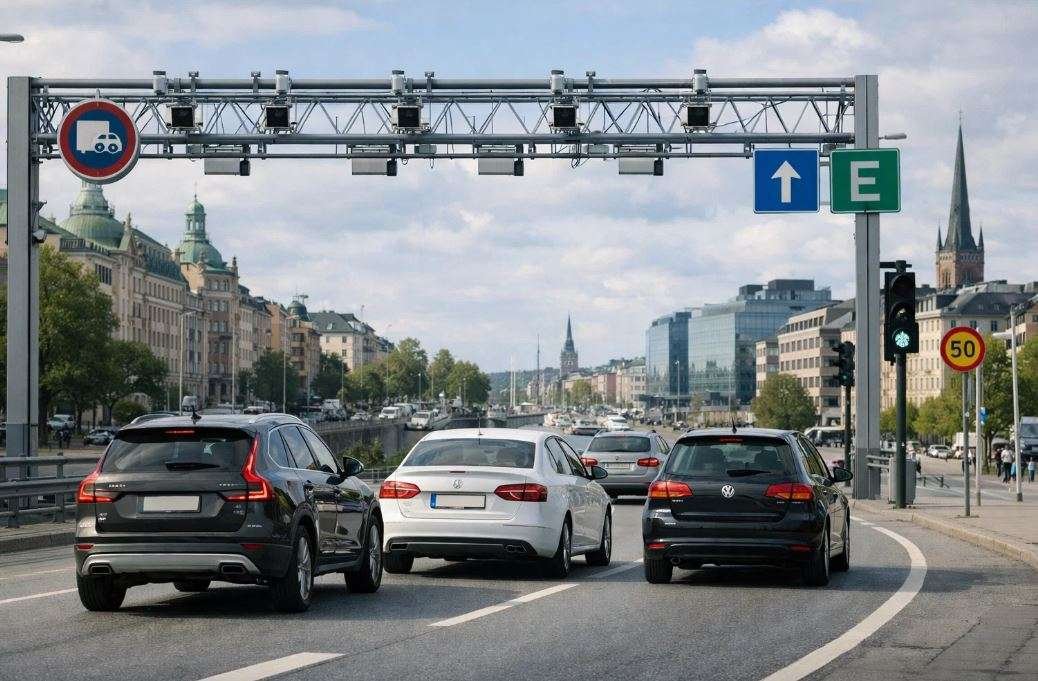
Trängselskatt does not apply throughout the whole country, but primarily in large cities where regulating the flow of cars is especially important. For travelers, this means that not every car route in Sweden automatically becomes more expensive. In practice, this most often refers to Stockholm and Gothenburg, where control points and cameras are installed. The amount of the charge depends on the time of day, not only on the fact of entering the zone itself. Because of that, the same road can cost differently at different times. If you understand the geography of the charging zones in advance, you can build your route more flexibly and calmly.
🕒 Time of operation and pricing
The road charge system works during certain hours, and this is especially important for those who enter the city in the morning or closer to the evening. Usually, the most noticeable intervals are connected with weekdays, when the flow of cars is especially high. At that time, the entry cost may be higher than during calmer hours. For a tourist, this means one simple rule: the closer you are to rush hour, the more carefully you need to look at your route. Even a small shift in departure time sometimes creates noticeable savings.
The season also affects the way the trip feels, even if the basic principle of the charge remains understandable and logical. In summer, many people choose car routes around Sweden because it is convenient to combine cities, coastline, and nature stops. During the warm season, the load on the roads can feel different, especially in popular tourist destinations. On holidays and weekends, the trip often feels easier and calmer. For a first trip to Scandinavia, it is convenient to plan entry into major cities outside the busiest intervals.
🗺️ Congestion charging zones
In Stockholm, the charging points are mainly connected with entry into the more central and heavily used parts of the city. This does not mean that the whole city becomes inconvenient for driving, but such zones should not be ignored. If your accommodation is in the city center, it is important to understand in advance how many times you will cross the control points. Sometimes it is more convenient to leave the car closer to the outer districts and continue by public transport. This option often reduces stress and helps you enjoy the city better.
In Gothenburg, the principle is similar, but routes for drivers can differ depending on the district they stay in and the direction of the trip. For those traveling through western Sweden, knowing about these zones is especially useful. Sometimes the charges appear not where the driver expects them, but on a familiar transit section. That is why before the trip, it is worth checking not only the city map but also the exact road to your accommodation or parking place. The more clearly you understand your driving pattern, the easier it is to avoid unnecessary expenses.
- In which city Trängselskatt applies
- What time you plan to enter and leave
- Whether your accommodation is inside the charging zone
- How many times during the day you will cross the control points
- Whether it is possible to do part of the route by public transport
💳 How the road charge is paid
The main convenience of Trängselskatt is that the driver does not need to stop at a barrier or look for a payment machine. The system works automatically and reads the vehicle number plate when passing a control point. For tourists, this is convenient because a trip around Sweden remains calm and does not turn into a chain of small payments on the road. But precisely because the process is automated, it is important to understand in advance how the charge will be calculated and who will issue the bill. When renting a car, this amount usually goes through the rental company, and the conditions can vary. The earlier you clarify the payment procedure, the fewer unpleasant surprises there will be after returning the car.
Automatic system
The cameras register the vehicle number plate, and on the basis of this data, a road charge is calculated for a specific passage. For the driver, everything looks very simple because no action is needed when crossing the zone. There is no need to tap a card, buy a ticket, or confirm the payment manually. Because of this, many tourists do not even notice at first that they have already entered the charging system. But calm driving does not change the fact that the charge will still be recorded.
For local residents, this format has long become familiar because it saves time and makes traffic flow smoother. For visitors to the country, there is only one important thing: to understand that inattention does not cancel the charge. If your route passes through the city center several times a day, the system will see each crossing. That is why it is better to think in advance about whether you really need a car for the whole route. Sometimes one day without a car in the city center turns out to be the most convenient decision.
🌍 What is important for tourists and rental cars
If you rent a car in Sweden, be sure to check how exactly the rental company handles Trängselskatt. Some rental providers include such payments in a separate bill after the trip. Others add not only the charge itself but also a service fee for processing it. For a tourist, this is an important detail because the final amount may turn out to be higher than expected. It is better to understand this before signing the contract than after returning the car.
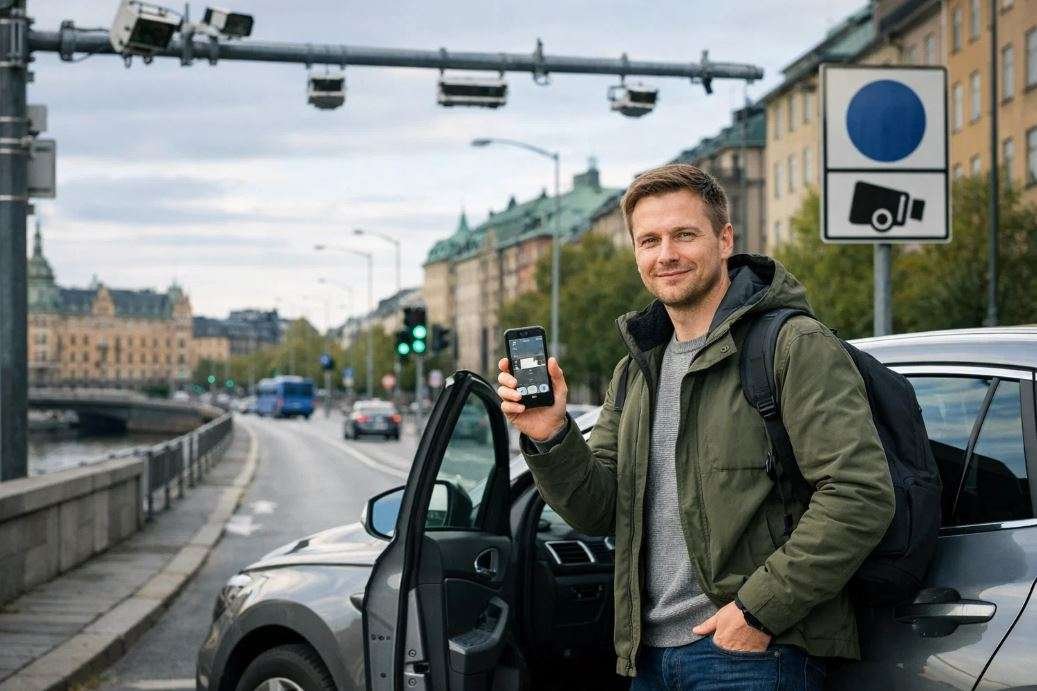
Foreign number plates and rented vehicles are not exempt from the system. If a car enters a charging zone, the charge will still be applied according to the city rules. That is why, when planning a Sweden plus Denmark or Norway route, it is worth checking not only bridges, ferries, and parking, but also city charges. This is especially useful for short trips of three to five days, when every additional expense is felt more clearly. Good planning makes a car trip around Scandinavia much more enjoyable.
💡 How to avoid unnecessary expenses
It is not always possible to avoid all road charges, but it is quite realistic to reduce them. The main rule is not to drive into the city center out of habit if there is no real need for it. In Sweden, it is often possible to find a convenient combination: part of the trip by car, and the final part by train, tram, or metro. This format is especially good for a first introduction to Stockholm or Gothenburg. It helps reduce stress caused by traffic, parking, and extra charges. If the route is adjusted to the time of day and the purpose of the trip, Trängselskatt stops being a problem and becomes simply one understandable expense among others.
🛣️ Route planning
It is better to build a route not only according to distance on the map, but also according to the logic of the day. If you need the city center for a walk, museums, or a meeting, it is not always wise to enter it by car. Sometimes it is more выгодно to choose parking outside the most crowded districts. Then the trip becomes easier, and the expenses for charges and parking are lower. This approach is especially convenient in large cities where public transport works reliably.
If the car is really needed for a full route with several stops, it is important to reduce the number of unnecessary crossings of the charging zone. It is useful to combine errands by district in advance instead of driving back and forth through the city. For a tourist, this is also a saving of time because less of it is spent on the road and on looking for a parking space. As a result, the day feels lighter and better organized. A well-planned route almost always wins over spontaneous driving.
📅 When it is better to go
The time of the trip affects the final budget no less than the choice of the city itself. If you enter the necessary part of the city outside the busiest hours, you can noticeably reduce expenses. For calm travel around Sweden, days when you are not tied to a strict schedule are especially convenient. Tourists can use this advantage most easily during a holiday by shifting their trips to a more comfortable time. That way, the road itself feels more pleasant, and the city welcomes you in a calmer mood.
Seasonal logic also helps. In summer, many people travel on longer routes and more often choose a base not in the very center, but in freer districts or suburbs. In autumn and spring, it is convenient to combine cities with short trips into nature without overloading the route with unnecessary entries into the city. This is also relevant for residents of Scandinavia, especially during weekends and short interregional trips. The calmer the pace of the journey, the easier it is to control expenses.
This reduces the number of chargeable entries and makes the trip calmer.
Shifting your departure time often helps reduce total costs.
A car plus a metro or tram ride is often more convenient than driving into the center.
This way, you will not cross the same charge points several times.
🌍 How to fit Trängselskatt into a Scandinavia route
For a first trip around Scandinavia, it is important to look at Trängselskatt not as a problem, but as part of the overall logistics. If the route is built thoughtfully, such charges do not interfere with the journey and do not spoil the impression of Sweden. On the contrary, they encourage you to choose more convenient bases, distribute the days reasonably, and feel the rhythm of the city better. This is especially useful for those who want to combine city travel, nature, coastline, and trips between countries. In that case, each stop works for the overall experience instead of turning into chaotic driving through the center. A good route around Sweden almost always wins over a plan that is too tight and rushed.

🧭 How to choose a route according to season and interests
If you are interested in museums, cafés, architecture, and short walks, it is better to focus on an urban route with minimal use of the car in the center. For this format, it is convenient to stay near a transport hub and use the car only for trips outside the city. If, however, the main goal of the trip is nature, coastline, small towns, and viewpoints, the car becomes much more useful. In that case, the effect of Trängselskatt is usually lower because the city center of a major metropolis is not the main part of the route. This approach is especially good for those who want to see a wider side of Sweden.
The season helps determine the right focus. In summer, it is easy to build long routes with stops by the water, in national parks, and in small coastal towns. In winter, it is more logical to make a base in one city and add short trips so that you do not get tired of the road. In spring and autumn, it is convenient to combine city travel with one or two full driving days. The better the route matches your interests and the time of year, the more comfortable both the charges and the overall logistics feel.
🏨 Where to base yourself
For Stockholm and Gothenburg, it is often more profitable to stay not in the very center, but in an area with good transport and an easier exit to the main roads. This is especially convenient if you are traveling by car but do not want to cross charging points every day. A base outside the center gives more flexibility because you can alternate a city day and an excursion day without extra fuss. For tourists, this is also a chance to find calmer accommodation. This format is especially good for trips lasting several days.
If the route includes several countries, it is worth choosing a base in a way that does not waste energy on constant reorganizing. For example, southern Sweden is convenient to combine with a trip through Copenhagen, and the western part of the country with stops around Gothenburg. It is important that the accommodation works for the route instead of complicating it. A good base saves not only money, but also attention and energy. That is especially valuable on a first trip around Scandinavia.
⏳ How much time to allow
For a first introduction to Sweden and its city logistics, it is reasonable to allow at least three days. That is enough time to calmly understand how the city works, avoid rushing, and not make too many unnecessary transfers. If you want to combine the city with nearby areas, it is better to plan four to five days. Then you can leave one day for walking without a car and another for a driving route outside the center. This rhythm makes the trip more varied without overloading it.
If several regions are in your plans, or a combination of Sweden plus a neighboring country, it is better to have five to seven days. In this format, it is easier to account for charging zones, ferries, bridges, parking, and rest between drives. This is especially important for travel by car, where a comfortable pace directly influences the impression of the trip. The less rush there is in the route, the easier it is to make practical decisions along the way. For Scandinavia, this almost always works in your favor.
✨ Practical tips for a first trip
Before your first car trip around Sweden, it is useful to write down all the main expenses in advance: rental, fuel, parking, road charges, and possible toll bridges. Such a list immediately makes the route clearer and helps you compare different options realistically. If you are visiting Scandinavia for the first time, do not overload the plan with too many cities. It is better to choose one main region, one convenient base, and several logical excursions. Then Trängselskatt will not feel like a confusing rule, but simply like one technical detail of the route. The nicest part of such preparation is that it gives you more freedom during the journey itself.
❓ Questions and answers
It is an urban road charge for entering and leaving certain zones.
Primarily in Stockholm and Gothenburg.
Yes, the charges are also applied to rental vehicles.
Yes, if you avoid unnecessary entries and plan your trips outside the busiest hours.
It is often more convenient to base yourself outside the center, near good public transport.
Three to five days is usually optimal for one region and a calm route.
Yes, especially if you want to see not only the city, but also nature, coastline, and small towns.

0 comments
Log in to leave a comment